Antillean Adventist University Ranks Second in Social Mobility Among U.S. Southern Institutions
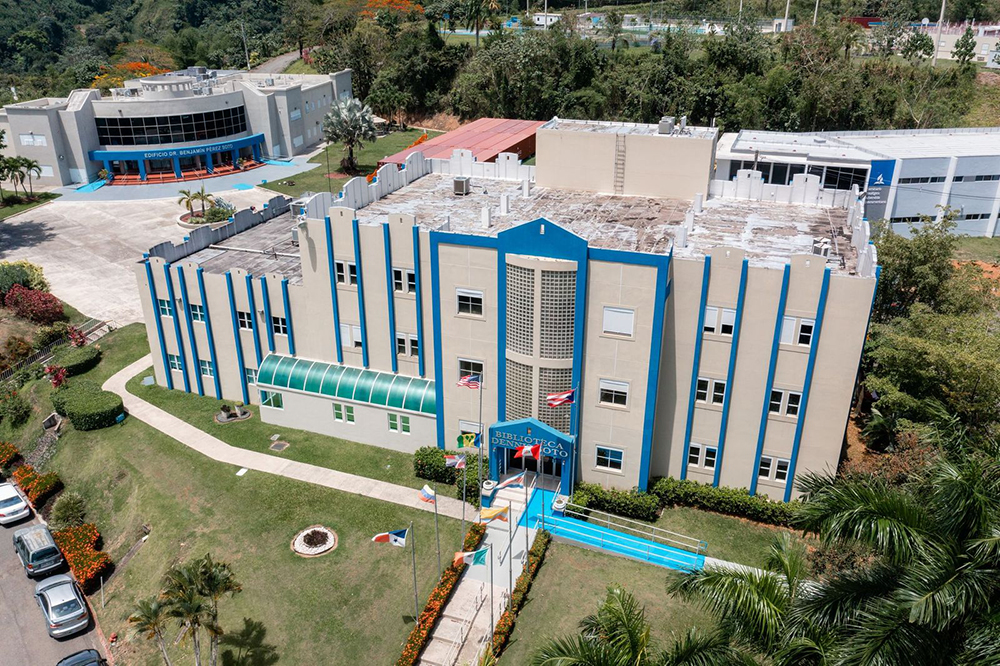
A drone view of Antillean Adventist University in Mayagüez, Puerto Rico, recently ranked second in the U.S. South for social mobility by U.S. News & World Report. [Photo: Antillean Adventist University]
December 9, 2025 | Mayagüez, Puerto Rico | Lorell Varela and Inter-American Division News Staff
A Seventh-day Adventist educational institution in Puerto Rico was recently ranked second in the “Top Performers on Social Mobility” category for the southern region of the United States. The renowned U.S. News & World Report, one of the most prestigious evaluation systems in U.S. higher education, recognized Antillean Adventist University (AAU), located in Mayagüez, Puerto Rico, for its success in elevating student outcomes.
“Being the second institution with the greatest impact on social mobility in the entire South of the United States, among more than 300 universities evaluated, confirms the school’s commitment to educational fairness and reaffirms its position as the university with the greatest cultural diversity in Puerto Rico,” said Dr. Edwin Hernández, AAU president.

Dr. Edwin Hernández, president of Antillean Adventist University, says the school’s No. 2 ranking in social mobility reflects its commitment to educational fairness and student success. [Photo: Antillean Adventist University]
Importance of the Recognition
The U.S. News & World Report study analyzes thousands of institutions annually using rigorous and verifiable metrics.
Educational experts explained that social mobility refers to a university’s ability to transform the economic trajectory of its students, especially those from low-income families. In the U.S. News & World Report ranking, the social mobility indicator measures how many students with Pell Grants an institution not only enrolls but also graduates, helping break cycles of economic hardship and opening access to better opportunities.
A Pell Grant is a federal grant for undergraduate students with exceptional financial need and does not need to be repaid unless certain conditions are not met. Award amounts depend on factors such as financial need, cost of attendance, and enrollment status.

Students capture a moment together on the Antillean Adventist University campus, where a diverse student body contributes to the institution’s strong social-mobility ranking. [Photo: Antillean Adventist University]
According to Hernández, the recognition is more than a ranking; it reflects an institution’s ability to transform lives, particularly those of students from low-income families. “It measures how many of them we manage to enroll, accompany, and graduate, breaking cycles of economic limitations and opening new life opportunities,” he said. “This recognition inspires us to continue expanding our support services, strengthening our financial aid, and promoting a comprehensive educational model that responds to the real needs of our students.”
Hernández also highlighted the connection between education and a life of service. “At AAU, we firmly believe that education should be a bridge to new opportunities and an instrument to serve the community,” he emphasized. “With this achievement, the school reaffirms its mission to serve as an engine of hope and transformation in Puerto Rico, the Caribbean, and the global community we represent.”
To learn more about Antillean Adventist University its programs initiatives and activities, go to uaa.edu