When Mission Transforms Missionaries
What a recent trip to Indonesia taught us about selfless service and true connection.
January 13, 2025 | San Jose, Costa Rica | Frank Artavia, for Inter-American Division News
“And how shall they preach unless they are sent?” (Romans 10:15).
This biblical text has been my old companion in my missionary endeavors. Together with my wife, we have read it, shared it, and taught it. However, in a recent mission trip to Indonesia, that verse also became a deeply real experience, lived through exhausted feet, busy hands, and a full heart.
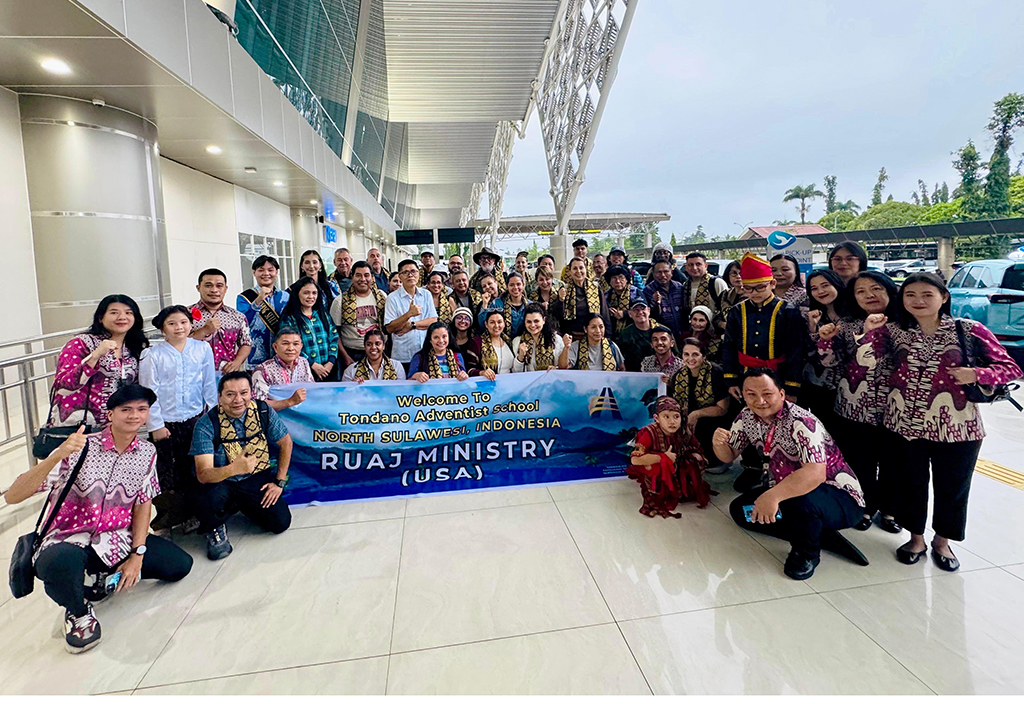
Church leaders and local church members greet the Ruaj Ministry team during a December visit, partnering with medical staff from Manado Adventist Hospital to provide medical services to the community in North Sulawesi, Indonesia. [Photo: Sergio Romero]
Sometimes as missionaries, we go around wishing to share about the second coming of Jesus, while forgetting that around two thirds of the world’s population does not even know about His first coming or His ministry. Indonesia is one of those countries, part of what it is known as the 10/40 Window, a region of the world where Christians are a minority.
For my wife and I, this trip was our sixth mission trip with the Ruaj ministry, but we knew from the beginning it would be different. Each missionary project has its own purpose and way of leaving a mark in you. This time, however, we felt that God was not only sending us to serve, but also to be transformed as a married couple.
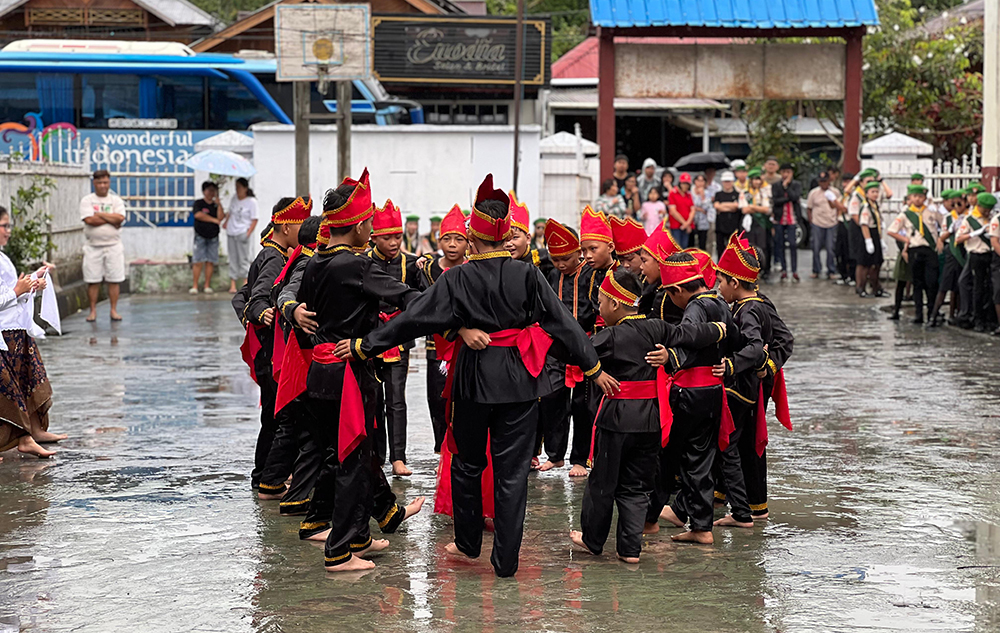
Students from Tondano Adventist School perform a folkloric dance as they welcome medical and volunteer staff during a community impact outreach. [Photo: Dayana Acosta]
On November 18, 2025, we left Costa Rica for Indonesia. It took us almost 90 hours to get there. Arriving in Manado, North Sulawesi, we were exhausted, but the warm welcome we received soon put our exhaustion in the background. Cultural representatives, education and tourism officers, and local leaders welcomed us on behalf of the governor. It was a clear sign that when mission is done with respect, excellence, and genuine love, bridges are built even beyond the church.
When I arrived at the Tondano Adventist School, the impact was even greater. Children formed a human fence as members of the local Pathfinder Club marched, smiling and singing. My wife Dayana remembers that moment. “My eyes filled with tears as I witnessed their pure, selfless love that embraced us.”
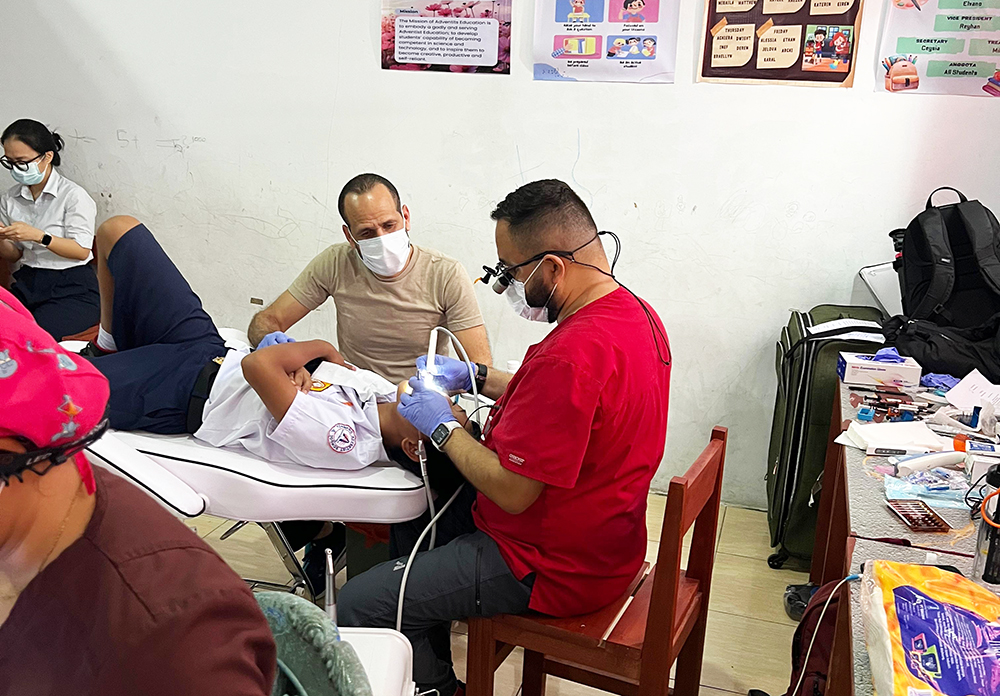
Frank Artavia, dentist and medical missionary, treats a patient during the recent outreach organized by Ruaj Ministry in Indonesia. [Photo: Dayana Acosta]
As cross-cultural missionaries, we enjoy being on what is known as the “frontline,” that is, the first line of contact with the people we wish to reach. The mission is not only about arriving, but about living together, listening, learning, making mistakes when pronouncing new words and laughing together. Many times, we do not speak the same language, but the language of love always manages to cross any barrier.
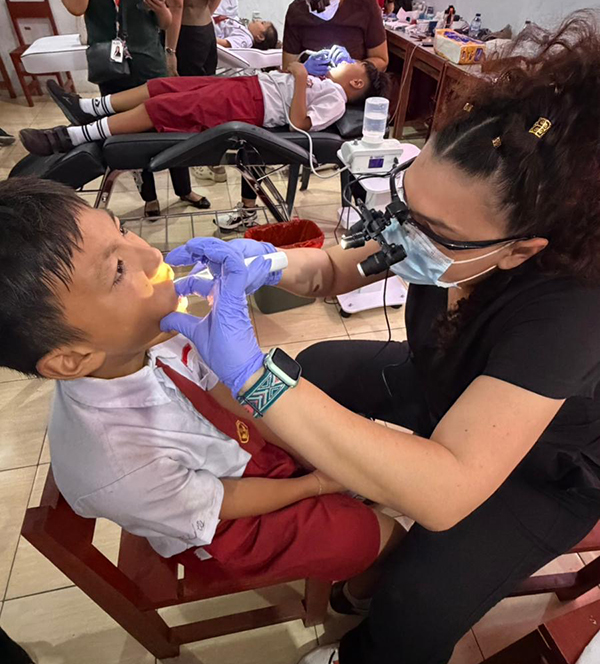
Dayana Acosta assists in polishing children’s teeth as part of a dental outreach during the mission trip. [Photo: Arnaldo Cruz]
The work was comprehensive, providing medical, dental, pediatric, ophthalmological, and lifestyle care in collaboration with Manado Adventist Hospital. The Ruaj Ministry mission group also supported construction, electrical work, cooking, art programs, and evangelism.
My experience in the missionary medical field allowed me to adapt to restricted conditions and difficult environments, always trying to offer the best humane treatment possible. Dayana not only provided her support in the artistic field but also had an active role in the dental team as an assistant. She participated closely in each procedure, organizing the medical supplies and calming patients down, especially the younger ones.
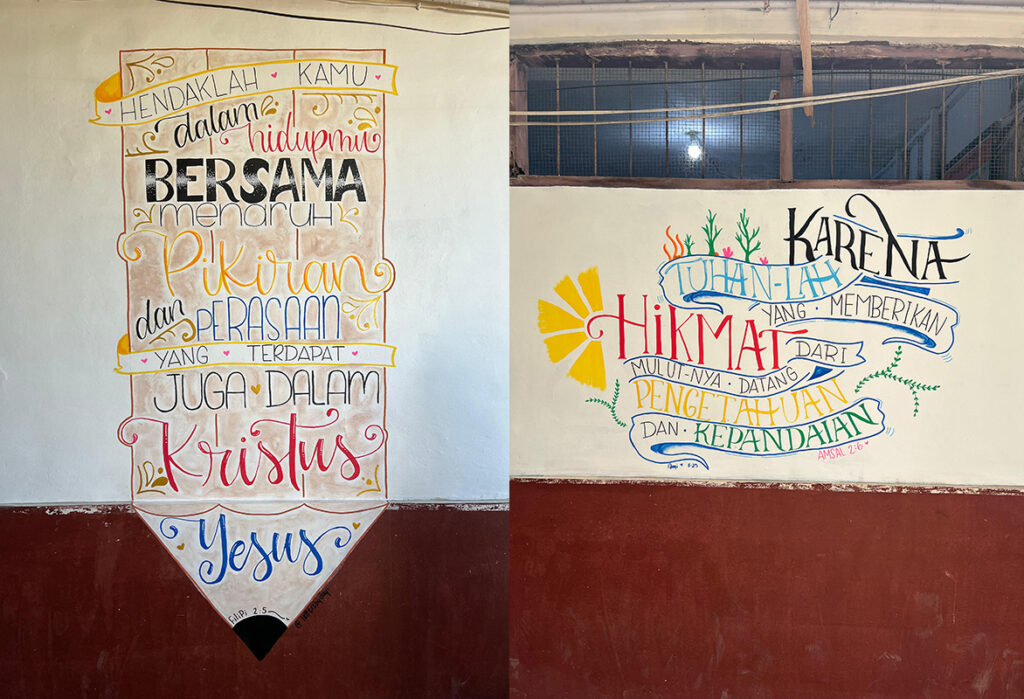
Finished signs with encouraging Bible verses, painted by Dayana Acosta and other volunteers on school walls. [Photo: Dayana Acosta]
One of the cases that touched us the most was a 24-year-old who smiled shyly. He had both of his front teeth joined by a previous treatment and hidden cavities. With great care and with the resources available, we reversed his previous treatment to then accomplish a full teeth restoration.
When the young person saw himself in the mirror, his expression changed completely. Not only did he regain his smile but his confidence. From that day on, he did not stop smiling, and we understood once again that mission also restores dignity and hope.
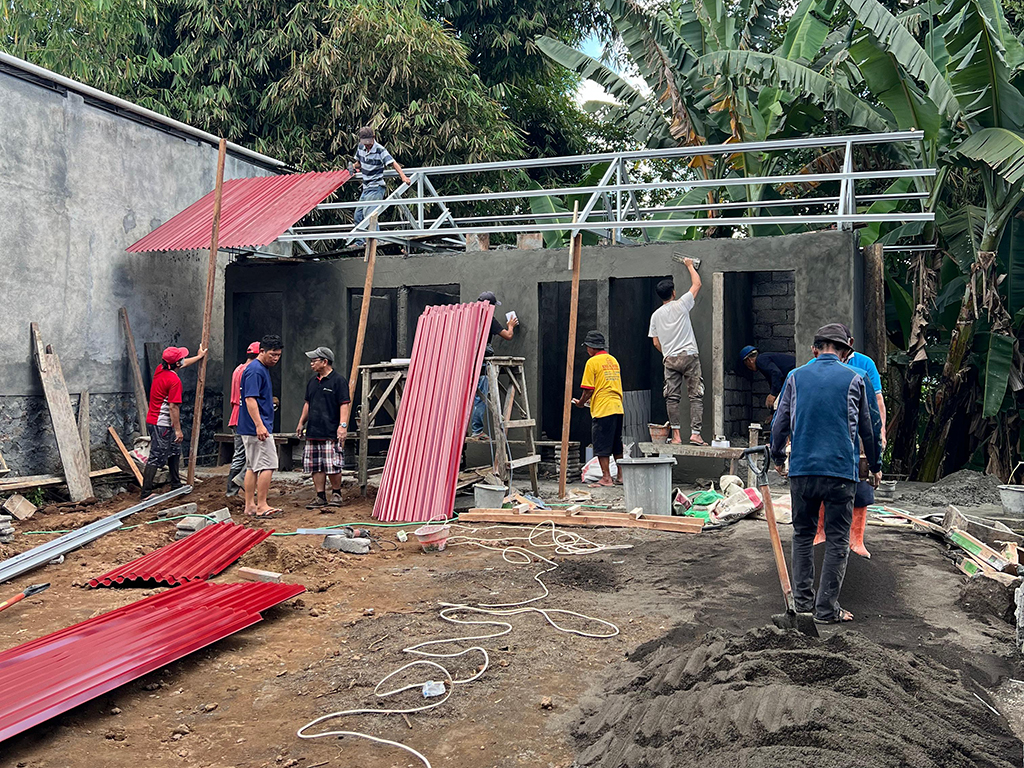
Volunteers help build bathroom facilities at Tondano Adventist School. [Photo: Courtesy of Frank Artavia]
There were days of total improvisation. On one occasion, the dental equipment stopped working. Even though we lack full technical knowledge, we took the equipment apart and managed to temporarily repair it with what we had at hand. Mission teaches to solve problems, trust and not give up.
Dayana was also in charge of making four murals with biblical verses in the local language. “I always try to write Bible verses in the language of people’s hearts,” she said. “While I was painting the letters, children approached, read, asked questions, and celebrated being able to understand what was on the wall.” Each mural became a space of connection, joy, and silent gospel and she shared how many children hugged her, gave her small letters, chocolates, or toys to express their gratitude.
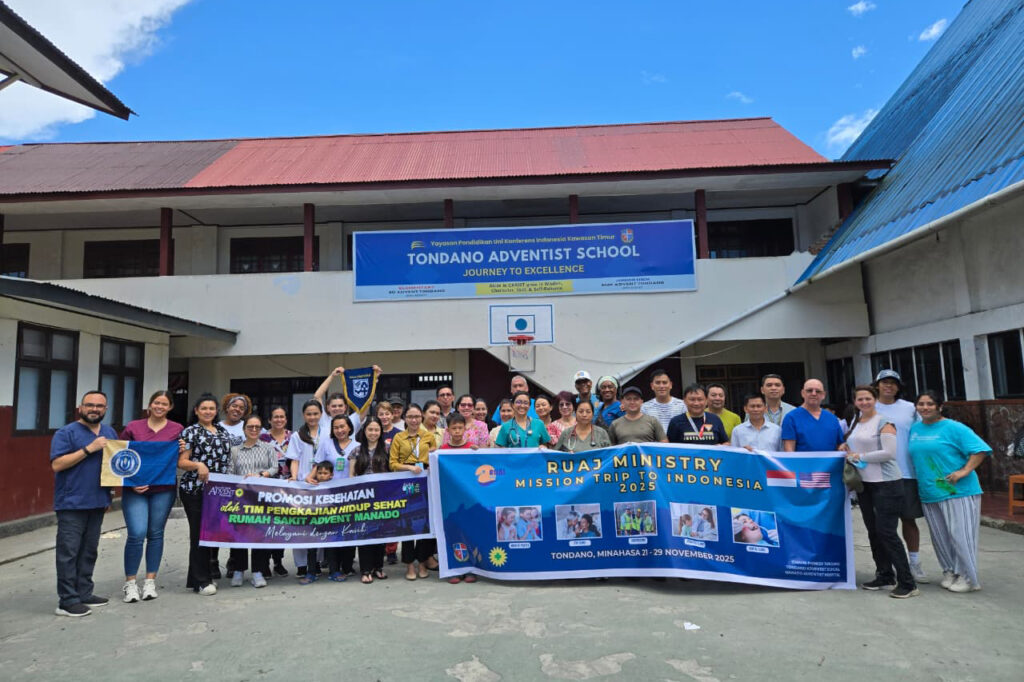
Members of the Ruaj Ministry team and medical staff gather after completing a two-week outreach that provided medical care and support to hundreds of people at Tondano Adventist School in Indonesia in late November and early December. [Photo: Courtesy Frank Artavia]
A Transforming Enterprise
The Indonesia mission trip was a unique blessing. It strengthened our marriage as it provided us with the opportunity to serve together once again, which reminded us why we chose to be a team in mission instead of acting independently. Between the unforeseen events, fatigue, and long work hours, we learned to support each other with a look, a word, or a silent gesture. Watching my wife serve with such commitment, both in the dental field and in art and interaction with children, renewed the admiration and gratitude I felt for her.
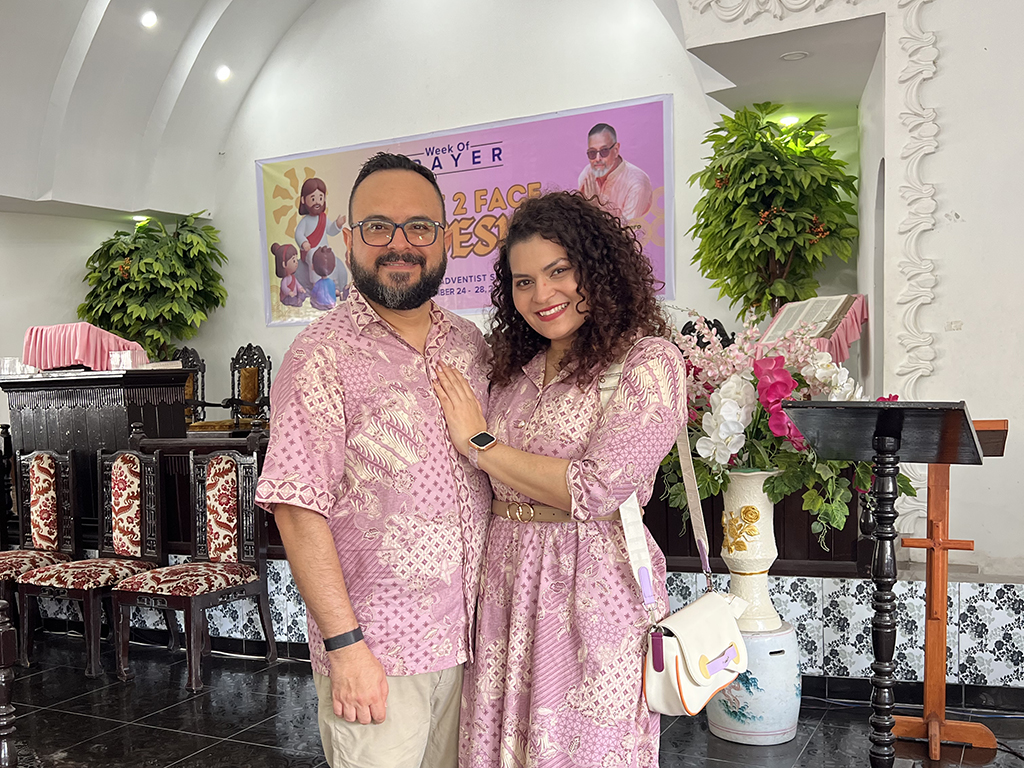
Frank Artavia and his wife, Dayana, wear traditional Indonesian attire during a recent mission trip with the Ruaj Ministry. [Photo: Courtesy Frank Artavia]
As a couple, we had already been part of mission initiatives in Albania, Bangladesh, Cambodia, Costa Rica, and India. In 2026, we are planning to serve in Thailand. Indonesia, however, will be forever engraved as a place where we remembered that mission not only transforms communities; it also transforms those who say “yes” to the call.
Frank Artavia is a dentist who, together with his wife, Dayana, has extensive experience in cross-cultural mission service. The couple served for nearly six years at the Adventist clinic in Bangladesh. Now living in their home country of Costa Rica, they travel throughout the Inter-American Division territory, providing training in cross-cultural mission.