Interpreting Ellen White’s Writings
Using “common sense” and the story of Sarah Peck.
February 17, 2026 | Silver Spring, Maryland, United States | Merlin D. Burt for Adventist Review
“Train up a child in the way he should go; even when he is old he will not depart from it,” (Prov. 22:6).
In 1974 Paul Roesel, a teacher at La Sierra University and a day-care director for the University church, was asked to conduct research for the General Conference Education Department on Ellen White’s counsel regarding the education of young children. In the course of his research, he brought to the White Estate’s attention an important interview between the St. Helena Sanitarium school board and Ellen White on January 14, 1904. This important interview, now manuscript 7, 1904, was shared with the church in the Review on April 24, 1975. Part of the interview was published for more permanent reference in book 3 of Selected Messages.[1] This story reveals important principles on how to correctly study and interpret Ellen White’s inspired counsels.
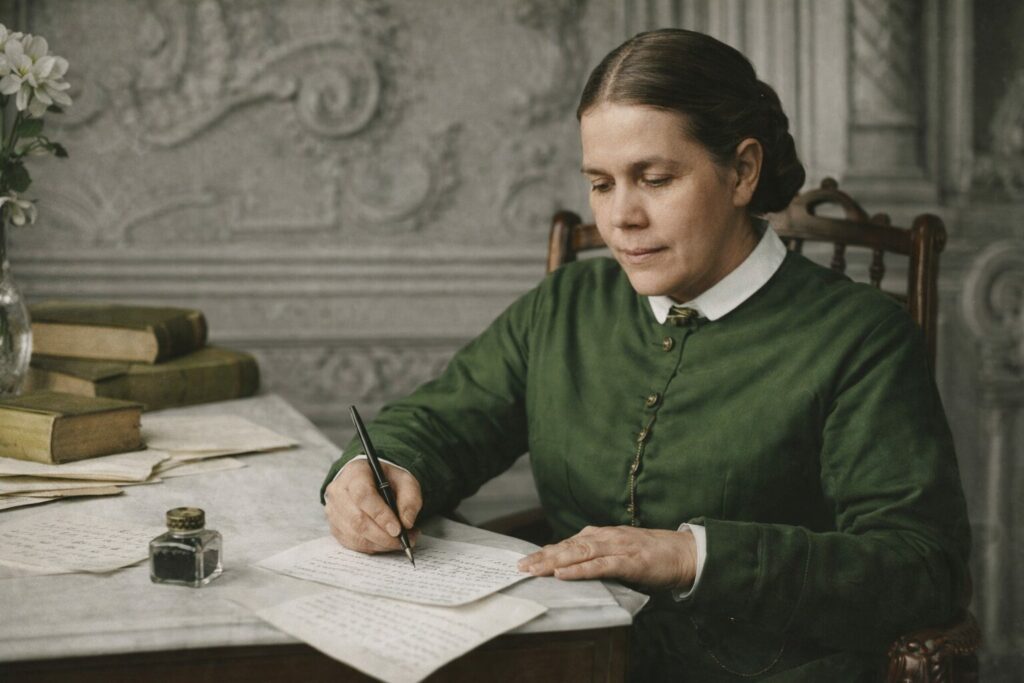
[Image generated by ChatGPT/AR]
Ellen White wrote in 1872, “Parents should be the only teachers of their children until they have reached eight or ten years of age.”[2] This led many parents and Adventist schools to not allow children into church schools until they reached that age. But many parents were not able to properly educate their children during their earlier years before they began school.
Sarah Peck was the schoolteacher at the little one-room Seventh-day Adventist school connected with the St. Helena Sanitarium in northern California, United States. Because many of the parents who worked at the sanitarium had young children who did not have adequate parental attention, Sarah thought to organize a small preschool class for these children under 8 years of age. This raised questions in light of Mrs. White’s counsel in the Testimonies, so the school board met with Ellen White to ask her advice about what they should do. She said: “Mothers should be able to instruct their little ones wisely during the earlier years of childhood. If every mother were capable of doing this, and would take time to teach her children the lessons they should learn in early life, then all children could be kept in the home school until they are eight, or nine, or ten years old.”[3]
“But when I heard what the objections were, that the children could not go to school till they were ten years old, I wanted to tell you that there was not a Sabbathkeeping school when the light was given to me that the children should not attend school until they were old enough to be instructed. They should be taught at home to know what proper manners [morals] were when they went to school, and not be led astray. The wickedness carried on in the common [public] schools is almost beyond conception.”
She continued: “That is how it is, and my mind has been greatly stirred in regard to the idea, ‘Why, Sister White has said so and so, and Sister White has said so and so; and therefore we are going right up to it.’ God wants us all to have common sense, and He wants us to reason from common sense. Circumstances alter conditions. Circumstances change the relation of things.”[4]
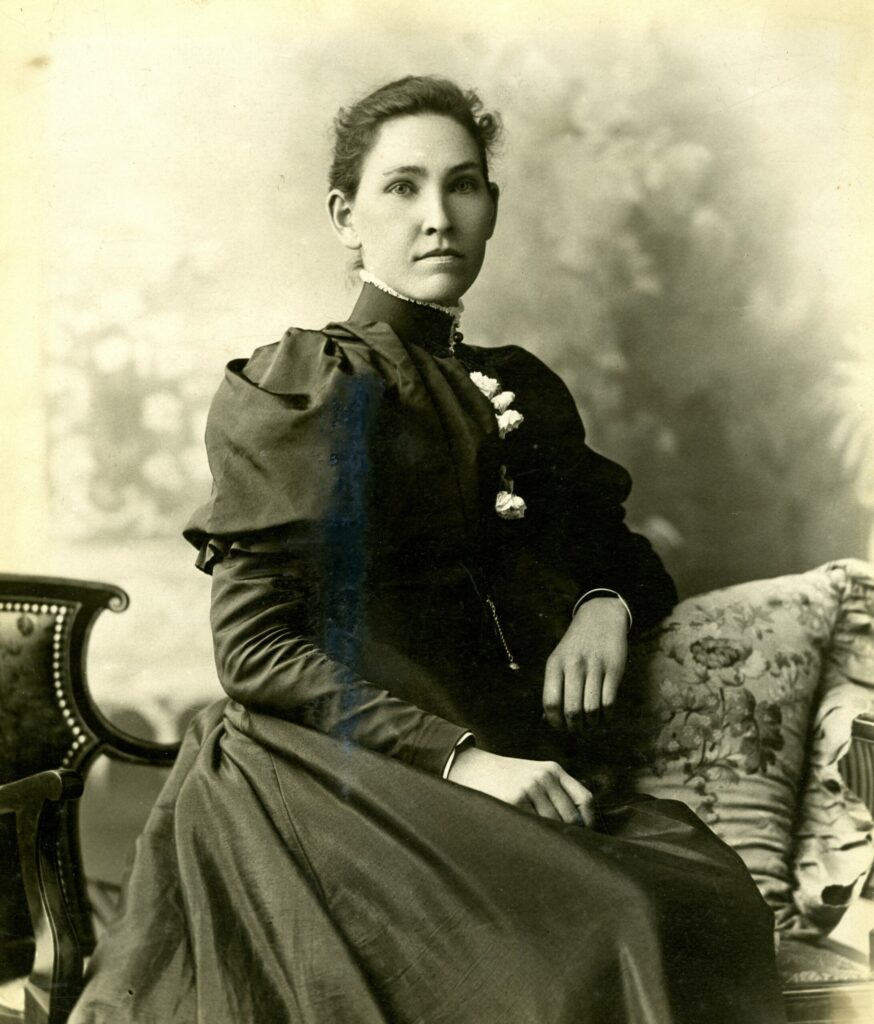
Sarah Peck, 1880s. [Photo courtesy of Center for Adventist Research]
Ellen White’s inspired counsels are based on Bible principles that are timeless, but she applied her specific counsels in a way that accommodated for parental inability or neglect, considered the historical setting, and recognized childhood developmental differences. The Spirit of Prophecy calls for parents to be responsible for the training of their children while at the same time urging the church to provide elementary schools and also preschools.
Ellen White appealed: “Teach them [little children] the Bible. Have that as one of their living, practical points of education. That is what it ought to be.”[7]
“We must educate our children so that we can come up to the gates of the city and say, ‘Here am I, Lord, and the children that Thou hast given me.’ We must not come up without our children to hear the words ‘Where is My flock, My little flock, that I gave you—that beautiful flock that I gave you, where are they?’ And we reply they have been left to drift right into the world, and so they are unfitted for heaven. What we want is to fit them for heaven so we can present the little flock to God and say, ‘I have done my best.’ ”[8]
The Spirit of Prophecy counsels are based on timeless biblical principles. They must be carefully studied and will provide amazing insights that will make us better parents and guide the church in its educational ministry. But these counsels must be interpreted correctly and applied with sanctified common sense.
[1] Ellen G. White, Selected Messages (Washington, D.C.: Review and Herald Pub. Assn., 1958, 1980), book 3, pp. 214-226.
[2] Ellen G. White, Testimonies for the Church (Mountain View, Calif.: Pacific Press Pub. Assn., 1948), vol. 3, p. 137.
[3] Ellen G. White, Selected Messages, book 3, pp. 214, 215.
[4] Ibid., pp. 216, 217.
[5] Ibid., p. 219.
[6]Ibid., p. 220 (see also Ellen G. White, “Interview on Age of School Entrance,” manuscript 7, Jan. 14, 1904, retrieved from https://egwwritings.org/book/b14069).
[7] Ellen G. White, Manuscript Releases (Silver Spring, Md.: Ellen G. White Estate, 1990), vol. 6, p. 372.
[8] Ibid., p. 373.
Merlin Burt, Ph.D., is the director of the Ellen G. White Estate in Silver Spring, Maryland, United States.