Adventist University in Jamaica Launches Fruit Tree Program After Hurricane Melissa
Northern Caribbean University-led long-term program aims to plant more than 10,000 trees to strengthen food security in western Jamaica.
March 10, 2026 | Mandeville, Jamaica | CCMPR, Nevicia Bernard and IAD News Staff
Natural science students and faculty from Northern Caribbean University (NCU) in Jamaica recently planted 100 fruit trees in Cave district, Westmoreland, as part of a broader initiative to restore vegetation and strengthen food security in communities affected by Hurricane Melissa late last year.
The tree-planting effort marks the pilot phase of a larger project led by the university’s College of Natural and Applied Sciences, Allied Health and Nursing (CNASAHN), which aims to plant more than 10,000 fruit-bearing trees across Jamaica’s western parishes over the next several years.
The initiative supports Jamaica’s Vision 2030 goals for sustainable development and food security while providing practical opportunities for students to apply scientific knowledge in service to communities.
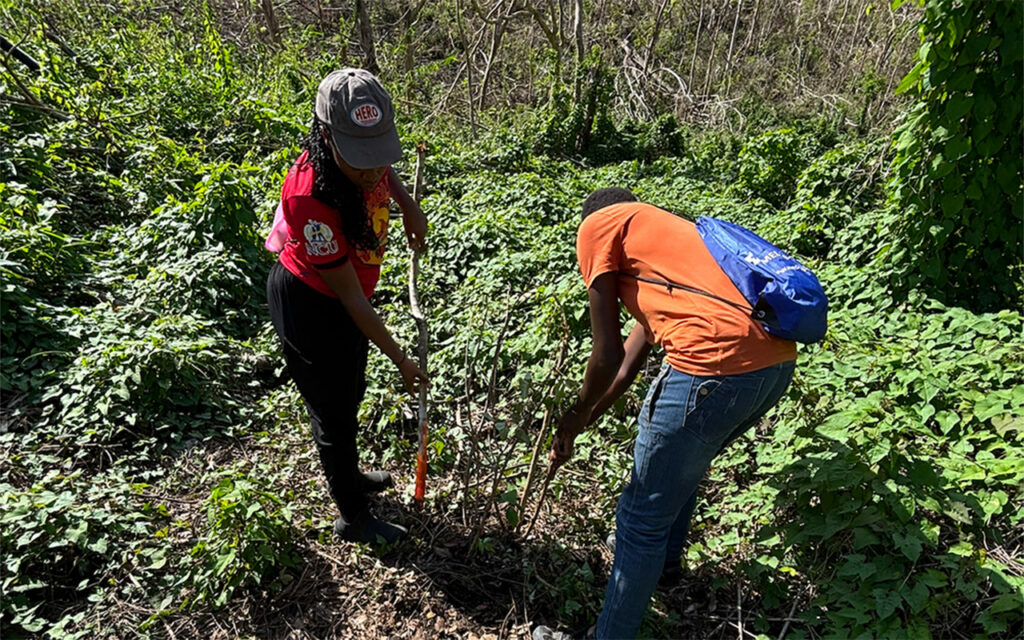
Two Northern Caribbean University students plant a fruit tree in western Jamaica as part of the university’s long-term initiative to restore vegetation and strengthen food security following Hurricane Melissa. [Photo: Northern Caribbean University]
Twenty-five students from NCU’s Department of Biology, Chemistry and Environmental Science joined faculty members and residents on December 2 to plant 100 breadfruit trees in a three-mile basin in Cave district, an area surrounded by ponds that help maintain soil moisture.
The seedlings were donated by the international nonprofit organization Trees That Feed Foundation, which partners with communities worldwide to combat hunger through agroforestry.
“In Cave, we lost trees, including fruit trees, during the hurricane,” said project lead Nadia Washington-Daley, lecturer in the Department of Biology, Chemistry and Environmental Sciences and a resident of the community.
“The breadfruit tree was the obvious first choice for our pilot project because it is a staple that directly improves food security for community members,” she explained. “By partnering with groups like the Trees That Feed Foundation, we are not just planting trees; we are laying the groundwork for long-term economic and nutritional stability.”
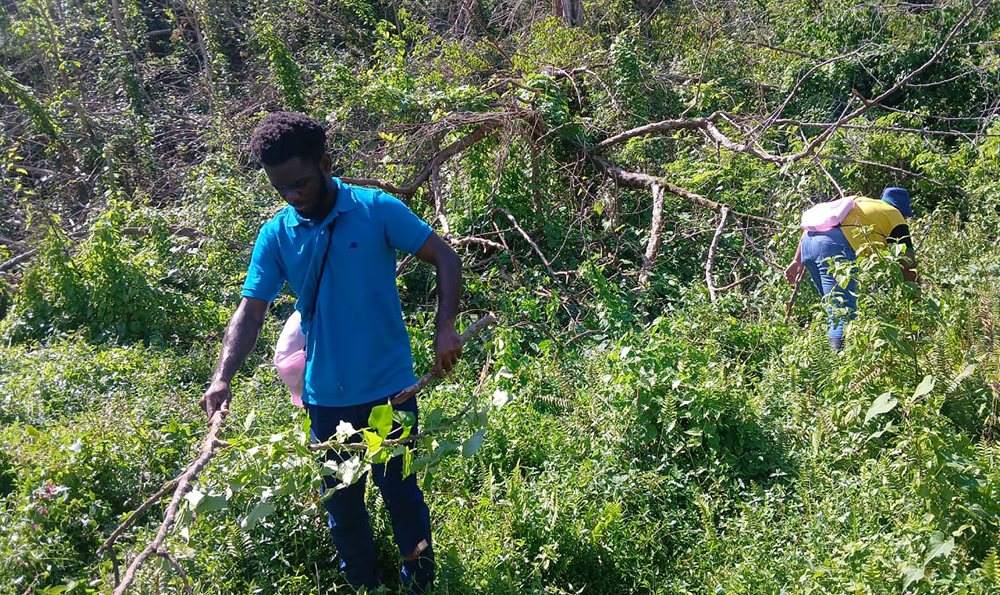
Students survey the area before digging a hole to plant a fruit tree as part of Northern Caribbean University’s tree-planting initiative in western Jamaica. [Photo: Northern Caribbean University]
A Strategy for Long-term Impact
The planting initiative forms part of a scientifically guided reforestation and agroforestry strategy designed to restore ecosystems while strengthening local food systems.
According to the project proposal, approximately 60 percent of the trees will be fruit-bearing varieties, including breadfruit, ackee and mango, while the remainder will consist of native timber and ornamental species aimed at restoring biodiversity and ecological services.
The project will include soil analysis to determine the most suitable tree species for each location, as well as partnerships with organizations such as the Jamaica Forestry Department, the National Environment and Planning Agency (NEPA), and Trees That Feed Foundation.

Seedlings from a local farm are transported to the planting site for Northern Caribbean University students to plant as part of the university’s long-term fruit tree initiative in western Jamaica. [Photo: Northern Caribbean University]
Major planting campaigns are expected to begin in late 2026 during the rainy season, with continued planting and monitoring extending into 2027.
Academic Service Meets Community Engagement
University leaders said the initiative reflects the college’s service-oriented academic framework known as CNASAHN Serves.
“We are using our academic knowledge in the sciences to heal the land and support our neighbors,” said Dr. Caroline McLean, interim dean of CNASAH.
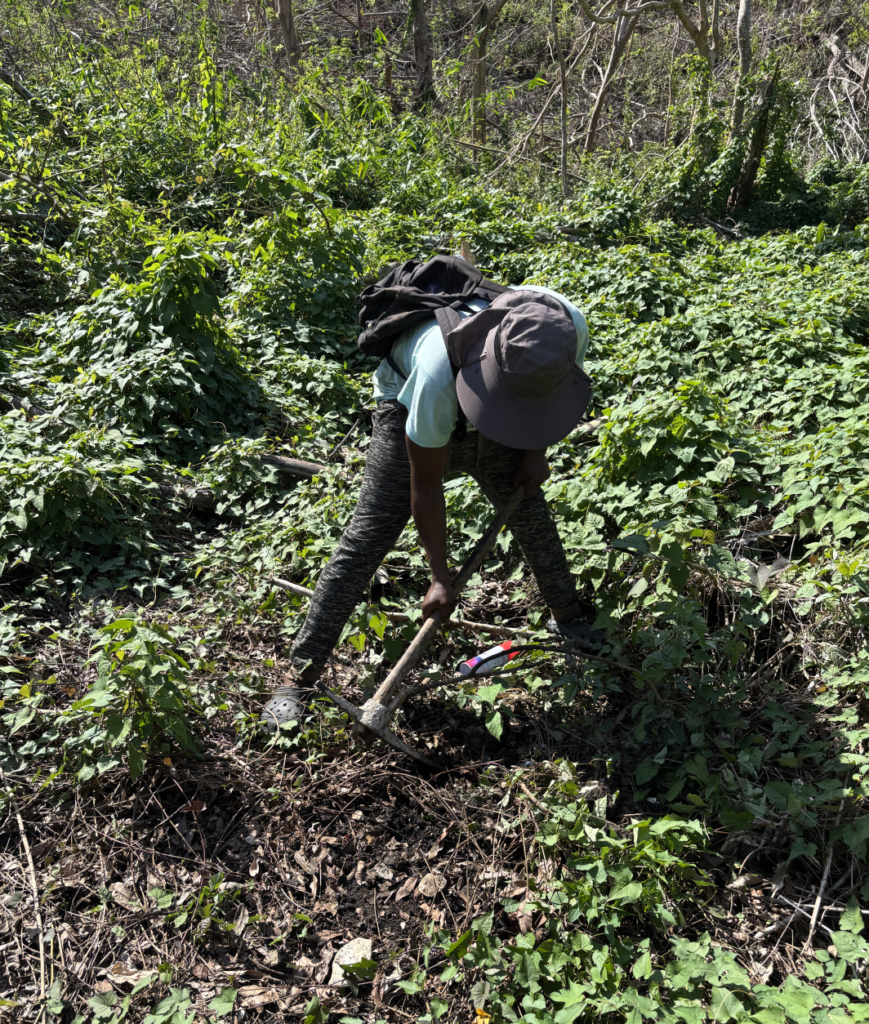
An NCU student digs a hole to plant a fruit tree during the university’s tree-planting initiative in western Jamaica. [Photo: Northern Caribbean University]
McLean explained that the program will continue expanding across Jamaica’s western parishes, with NCU monitoring the trees’ growth and environmental impact over time.
Student Involvement Continues to Grow
The pilot planting involved 25 students, but organizers say the long-term project will engage a much broader cross-section of the university community.
Students and faculty from disciplines including biology, chemistry, environmental science, nutrition, public health, engineering and computer science are expected to contribute through research, monitoring and community outreach.
The initiative will also be integrated into course curricula, allowing students to participate in hands-on environmental service learning.
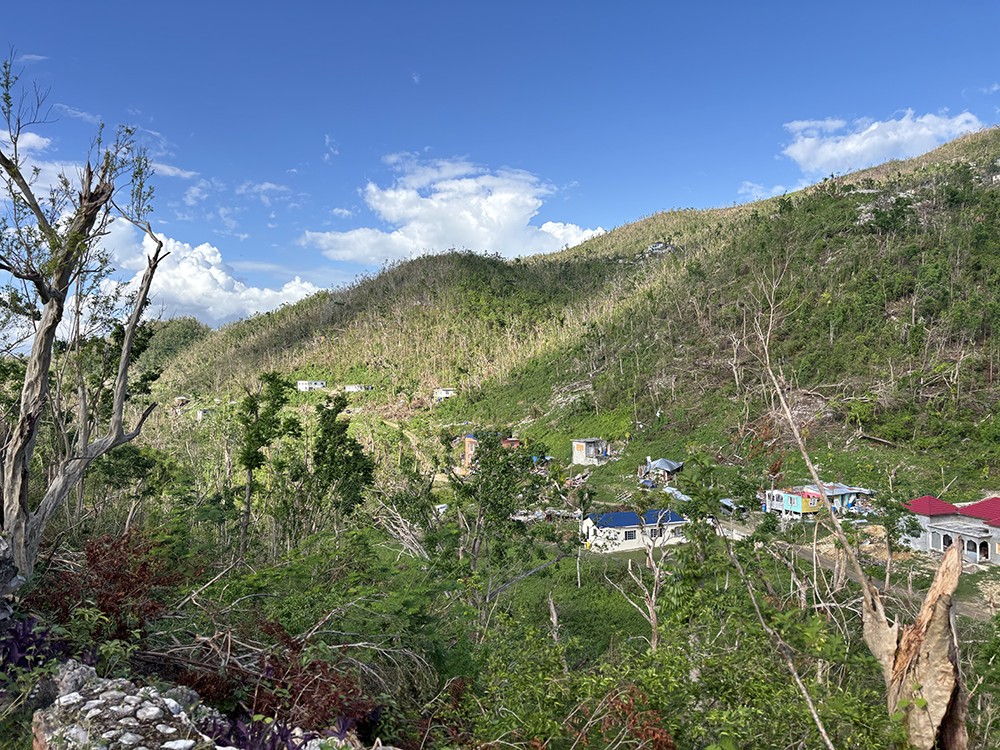
View of the Cave community in western Jamaica, which was impacted by Hurricane Melissa in October 2026. [Photo: Northern Caribbean University]
“The experience taught me that relief isn’t just about addressing immediate needs,” said Anthia Adderley, an NCU student who participated in the planting. “It’s about serving future generations by establishing roots—literally—that they can reap from.”
She added that restoring fruit trees such as breadfruit also helps preserve cultural traditions in Jamaica’s rural communities.
“It will be rewarding to watch these trees grow and see the community take ownership of them,” Adderley said.
Another student participant, Nickia Mullings, described the experience as both humbling and inspiring.
“Standing in Cave, Westmoreland, to plant trees was deeply satisfying,” Mullings said. “It was a reminder that stewardship of the earth is not optional—it’s our shared responsibility.”
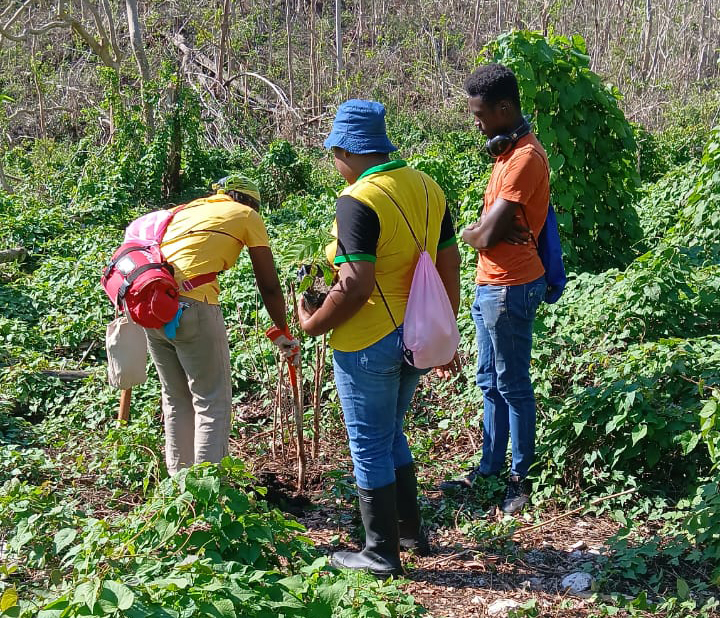
Students dig holes to plant fruit trees as part of Northern Caribbean University’s tree-planting initiative in western Jamaica. [Photo: Northern Caribbean University]
Community Partnership Central to Success
Community involvement is a central component of the project’s long-term strategy.
Residents will participate not only in planting but also in the selection of tree species and ongoing maintenance efforts. Educational sessions on sustainable agriculture and nutrition will also accompany planting activities.
By prioritizing fruit trees, organizers said the initiative ensures communities directly benefit from the harvest, creating incentives for long-term care and sustainability.
What began as a small pilot project in Cave district is expected to expand into a multi-year effort combining environmental restoration, food security and student service.
As Washington-Daley noted, the initiative goes beyond planting trees.
“We are creating a model where science, community partnership and service come together,” she said. “Our goal is to ensure these trees, and the benefits they provide, continue serving communities for many years to come.”