How an Adventist Health Food Company Is Leveraging AI to Share Its Message
Australia and New Zealand’s Sanitarium is making the most of new technologies.
March 2, 2026 | Punta Cana, Dominican Republic | Marcos Paseggi, Adventist Review
Artificial intelligence (AI) has made significant strides in images and video during the past couple of years, and the Sanitarium Health Food Company in Australia and New Zealand is tapping into some of those new possibilities, according to the company executive general manager Todd Saunders. In a presentation during the 2026 Adventist Health Food Association (AHFA) Conference in Punta Cana, Dominican Republic, Saunders and Rachel Glasbergen, who leads The Alternative Dairy Company for Sanitarium, shared how the company is leveraging AI use to streamline the company ads across platforms and what they have learned along the way.
In their February 10 presentation, Saunders and Glasbergen highlighted the opportunities, challenges, and possibilities of AI in the area of marketing and advertising. They did it by sharing some case studies based on their experience of The Alternative Dairy Company, a brand under Sanitarium that produces specialized, barista-grade plant-based milks, including oat, almond, soy, and coconut. Designed for cafés, their products are crafted for superior frothing and latte art, and in many cases use locally sourced ingredients.
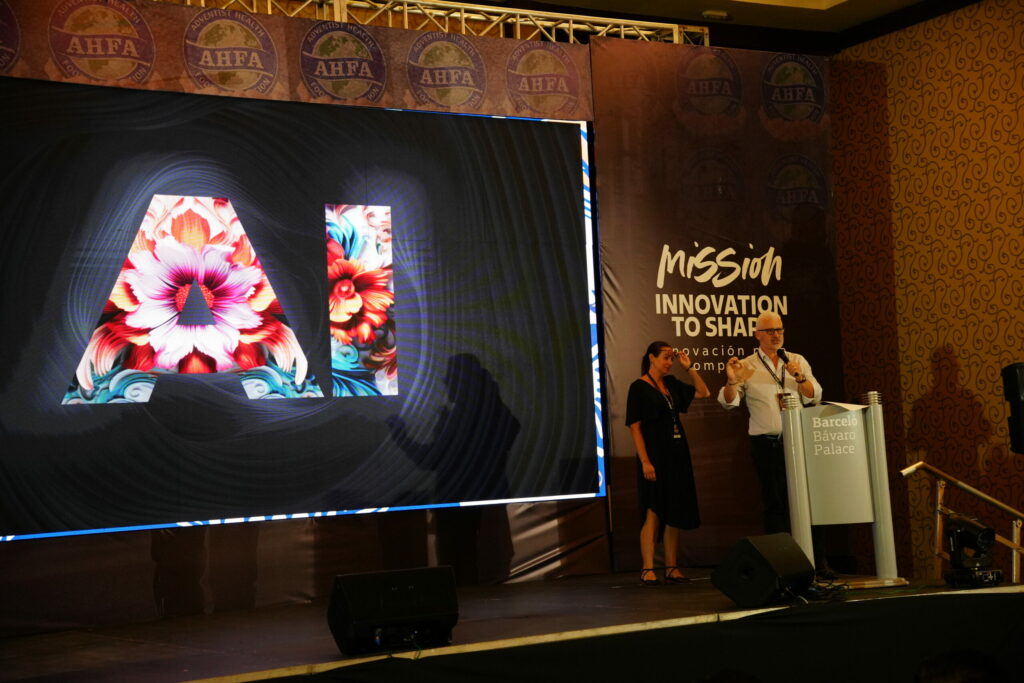
Todd Saunders (right) and Rachel Glasbergen, from Sanitarium Australia and New Zealand, share how the company is resorting to AI tools to share its message across. [Photo: Marcos Paseggi, Adventist Review]
A Word About AI Tools
According to Saunders and Glasbergen, the Sanitarium in-house marketing team is using ChatGPT and Microsoft Copilot for ideation, writing, and research. In the field of AI visual creation tools, the company has resorted to Nano Banana, from Google Gemini, for ideation and image generation. The team has also found Adobe Firefly useful in the area of images, video, and effects within Creative Cloud.
In the ads developed by the Sanitarium marketing team, they also used AI audio generation tools, including ElevenLabs, which generates voice for narration and audio content, and Suno, which allows creating full music tracks from text prompts, including vocals and instrumentation.
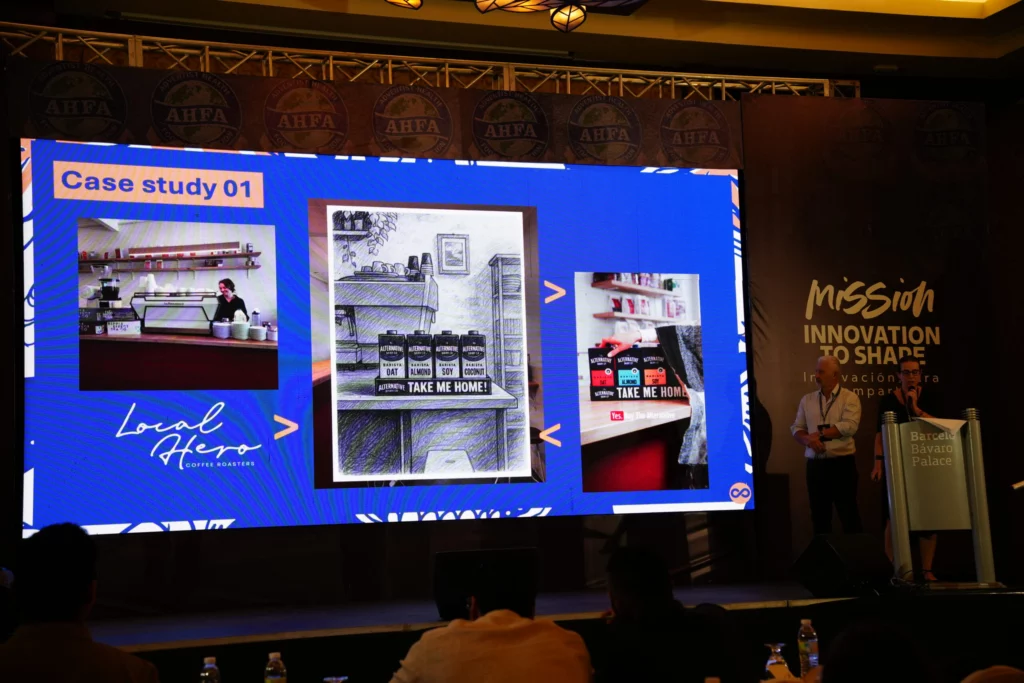
Case study 1 showed how to combine real footage and human ideas with AI enhancements for a social media ad. [Photo: Marcos Paseggi, Adventist Review]
In the first case study, Glasbergen shared how the company needed a video to promote the company’s Take Me Home initiative, which encouraged customers to purchase the same dairy-free products that baristas use at their cafés to use them at home. For that specific case, the marketing team created a basic drawing and then used ChatGPT to develop an image and then a storyboard based on the team’s prompts, Glasbergen explained. Real footage was also used from a local café.
Overall, the AI tools do not replace the creative part of the team’s efforts, Glasbergen explained, but they can help the team to move faster, saving time and production costs.
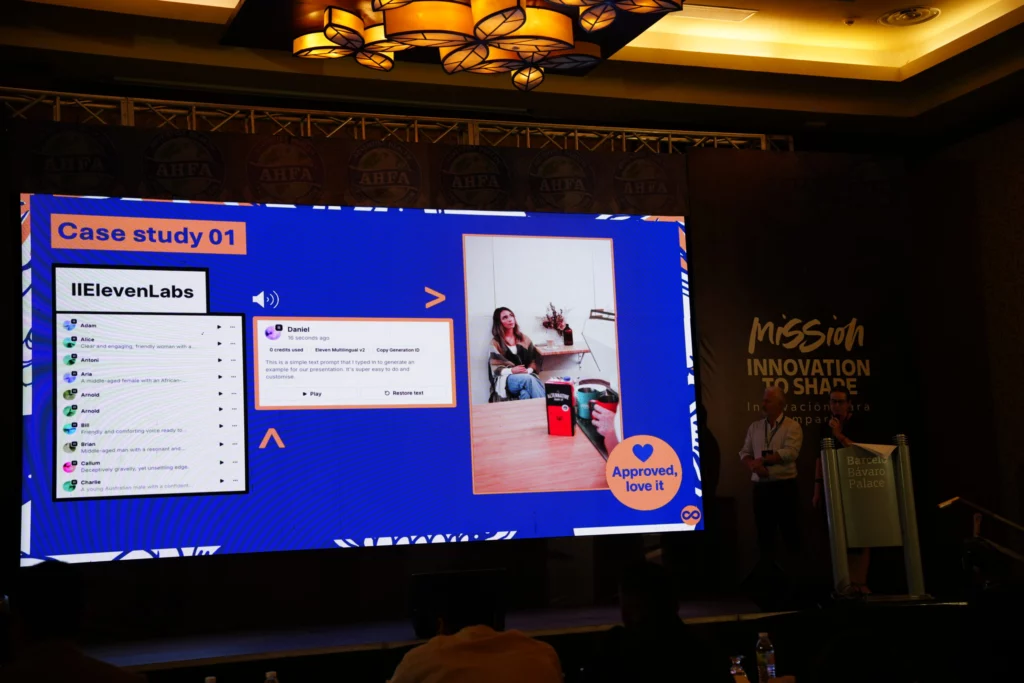
AI audio tools allowed the Sanitarium in-house team to include various voices according to the in-house team ideas and prompts. [Photo: Marcos Paseggi, Adventist Review]
A second case explored the development of an ad for a kids’ sports trial in New Zealand. The idea was commissioned just a few days before the event. With a tight deadline, the team used AI prompts to develop the basic idea. Real children would be introduced later.
The combination of in-house creativity and AI assistance is very powerful, Glasbergen explained. “This illustrates how AI is helping the in-house team to be more effective and more efficient,” she said. “And we can reduce the time of content creation and development from one week or longer to just one day.” She added that even though “we still see a role for human illustrations in the near future, if we consider those time and cost savings over a year, we see that [the use of AI tools] really starts to matter.”
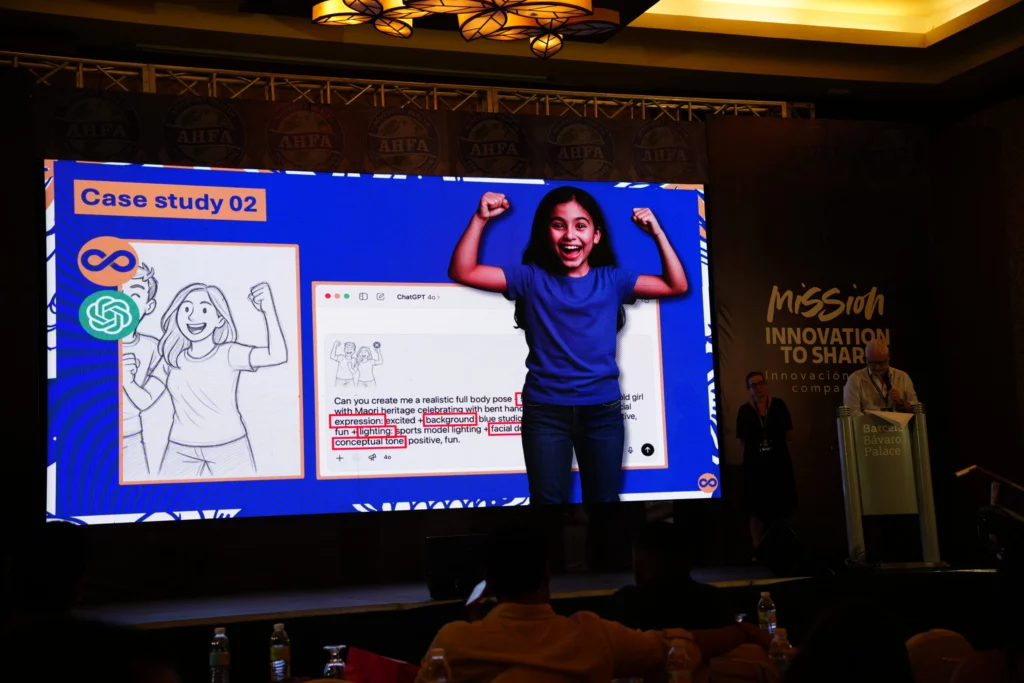
A sketch and precise prompts drove an ad campaign for a recent children’s sports trial in New Zealand. [Photo: Marcos Paseggi, Adventist Review]
The third case study Glasbergen presented included the development of a TV ad to be aired in South Korea, the Philippines, and other Asian countries. In this case, she reported, the in-house team supplied an AI-generated storyboard for the company’s milk brand. Glasbergen showed how they generated still images and then used AI tools to transform those still images into video. Then, again using AI tools, the team added movement, expression, and other details.
“In cases like this, time-saving can amount to weeks, and cost savings can be up to $50,000 per project,” Saunders acknowledged. “AI can’t do it alone, but working hand-in-hand [with AI tools], we become stronger together.”