Bridging the Gospel to Cuba’s Deaf Community
Yaily Valdés helps translate the Bible into sign language in Cuba while promoting greater outreach and inclusion.
April 8, 2026 | Havana, Cuba | Libna Stevens, Inter-American Division News
Yaily Valdés never expected her life to take a complete turn. Trained as a lawyer and later involved in communication and media ministry, she now serves at the Cuban Bible Society, where she helps lead in translating the Bible into Cuban Sign Language.
“I didn’t know any deaf people. I had no connection to this world,” Valdés said. “And today, I cannot imagine a single day without them.”
What began as an unexpected encounter has become her life’s calling.
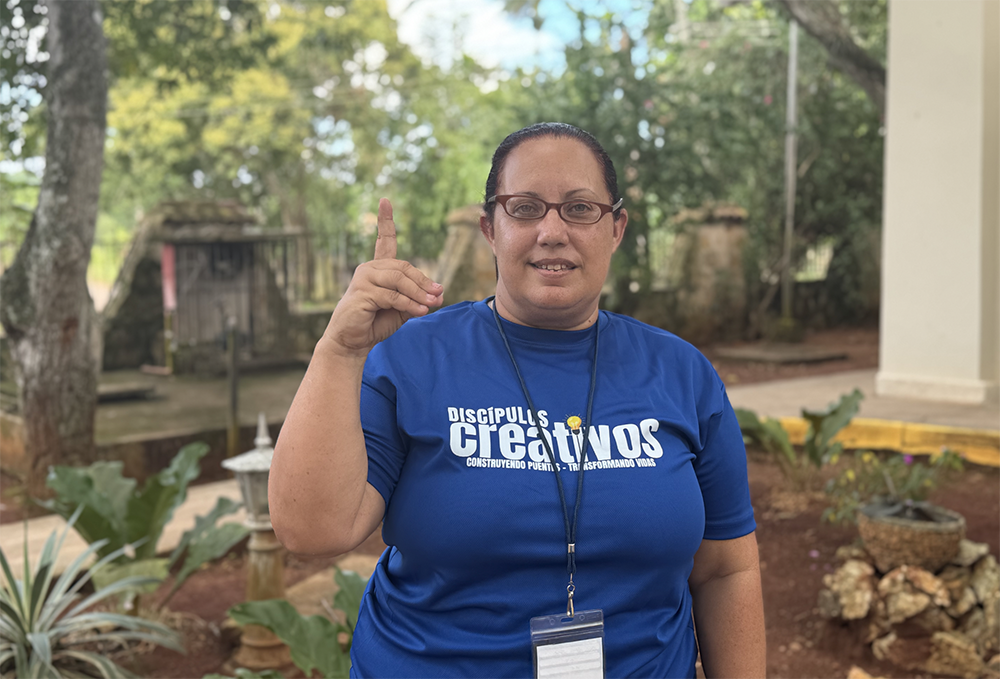
Yaily Valdés signs the word “God,” reflecting her work in bringing the message of salvation to Cuba’s deaf community through sign language Bible translation. [Photo: Libna Stevens/IAD]
Valdés’s journey into deaf ministry started not with a plan, but with a conversation.
While visiting the Bible Society’s library to study, she met members of the translation team and offered legal guidance on a project they were navigating.
“I just helped them as a professional, as someone who knew the Bible,” she said.
That moment led to something greater. Shortly after, she was invited to join the team.
“I felt strange at first,” she admitted. “I come from communication, from media—but God brought me here.”
What began as an unfamiliar experience soon became a calling, as she learned sign language and grew deeply involved in serving the deaf community.
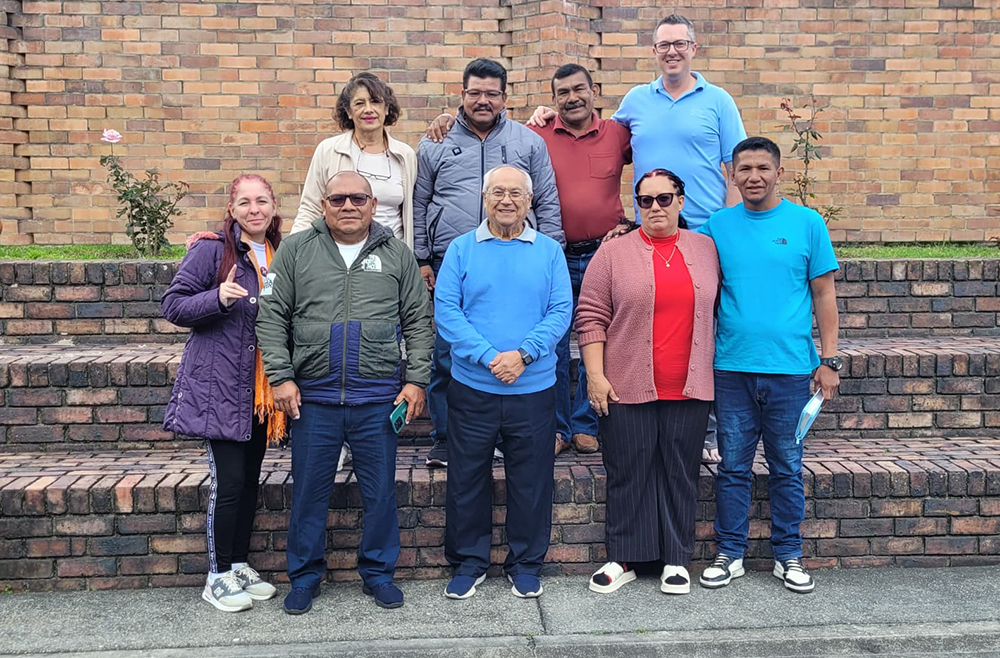
Yaily Valdés (front, second from right) joins fellow translators from Bolivia, Cuba, and Ecuador, along with indigenous language translators from Colombia and Venezuela, during a recent Bible translation training organized by United Bible Societies in Colombia. [Photo: Courtesy of Yaily Valdez]
Today, she serves as assistant and general coordinator of the sign language Bible translation project—a long-term initiative that has been underway in Cuba for more than 14 years.
Translating the Bible Into a Visual Language
The work is complex and deeply intentional, she explained. Unlike written translations, the Bible in sign language is produced entirely in video format.
“We study the text, and then we sign it,” Valdez explained. “It’s not just translating words—it’s translating meaning.”
Because many deaf individuals in Cuba have limited access to Spanish in its full depth, translation requires expanding concepts that hearing audiences often take for granted.
“For a hearing person, if I say ‘Jesus came,’ they understand everything—His birth, His life, His death,” she said. “But for a deaf person, I have to explain each part of that story.”
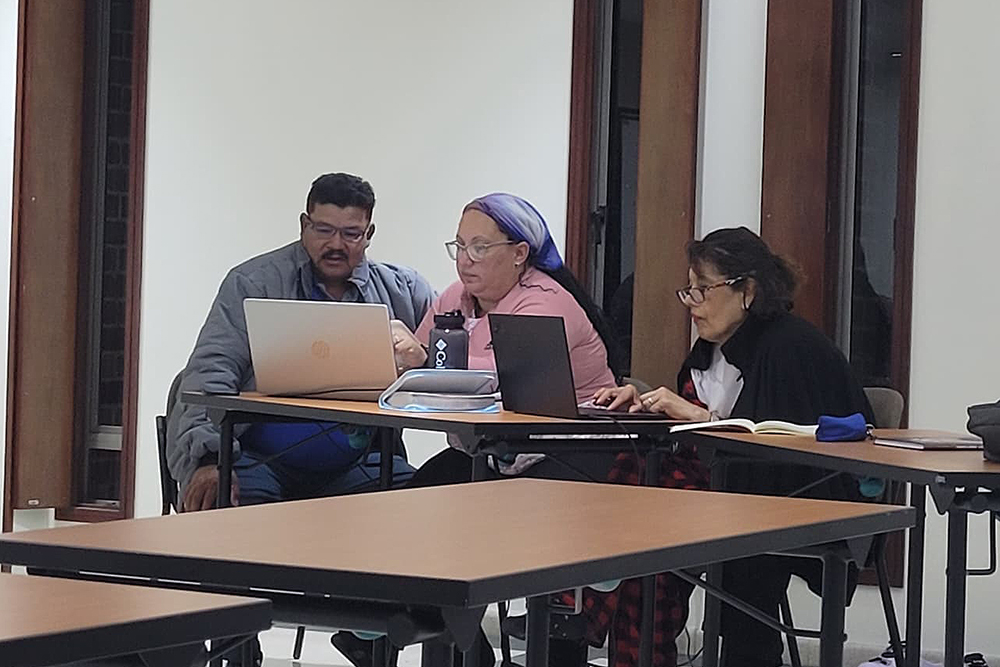
Yaily Valdés (center) joins fellow translators from Venezuela and Bolivia during a recent Bible translation training in Colombia. [Photo: Courtesy of Yaily Valdez]
The translation team, composed of two hearing members and four deaf participants, works collaboratively to ensure the message is both theologically accurate and culturally meaningful.
A Mission Beyond Translation
For Valdés, a member of the Playa Adventist Church in Havana, the project goes beyond language—it is about access to salvation.
“My passion is to bring the Bible and its message of salvation to the deaf community in Cuba,” she said.
The need is significant. Of the more than 57,000 deaf individuals in Cuba, only a small percentage identify as Christian.
“They need to know Jesus,” she said simply.
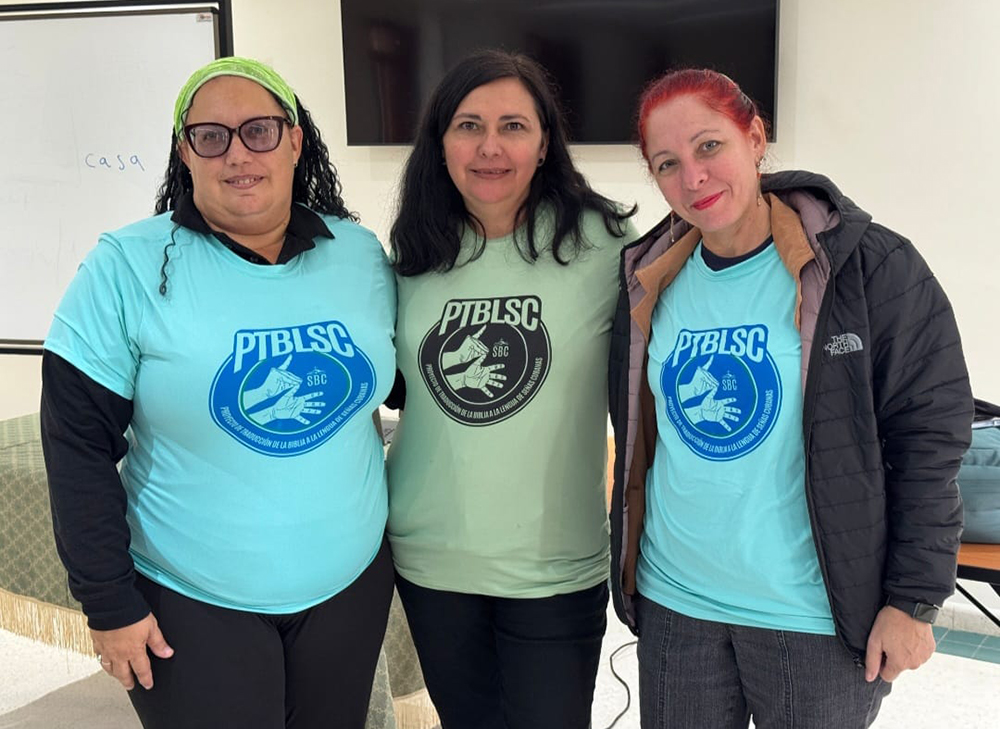
Yaily Valdés (left), project assistant at the Cuban Bible Society, is pictured with Dr. Isela Trujillo (center), a respected anthropologist and biblical scholar, and Disney Ortíz (right), a Cuban Sign Language interpreter, during a translation training event. The logo behind them symbolizes God above Cuban Sign Language. [Photo: Courtesy of Yaily Valdés]
“What is the point of inviting them if no one can interpret?” she asked.
To address this, Valdez has been actively training church members and upcoming pastors, helping them understand both the need and the opportunity.
“We are not just raising awareness, we are building sensitivity,” she explained.
“Sadly, there is still very limited ministry for the deaf within the church,” she added, noting ongoing efforts to encourage and develop the work at the local level.
Becoming a Bridge
Valdez describes her role not as a translator, but as a bridge.
“I realized something I had never understood before—that when the Bible says ‘every tribe, language, and nation,’ it includes them,” she said.
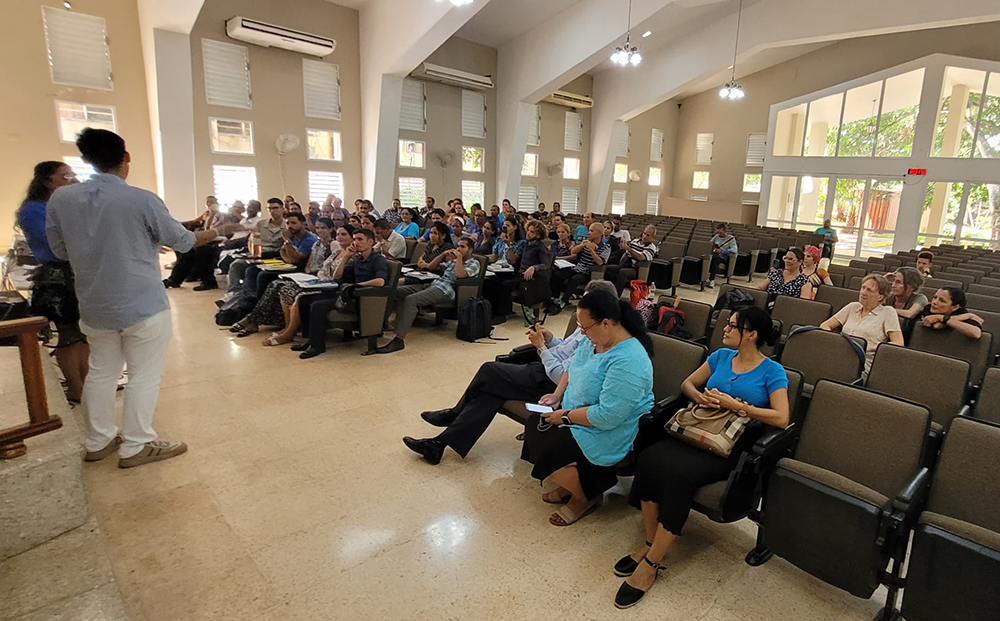
Interpreters from the Cuban Bible Society conduct a training session on sign language and deaf culture for church members at the Adventist Seminary Church in Havana, Cuba, helping train new workers to serve the deaf community. [Photo: Courtesy of Yaily Valdés]
Through her work, she collaborates closely with deaf team members, assisting in biblical exegesis, historical context, and theological accuracy while ensuring the message is faithfully communicated.
“They are my teachers,” she said.
Despite coming from different denominational backgrounds, the team has become united through a shared love for Jesus and His gospel, forming what she describes as a spiritual family, Valdés explained.
A Life Transformed
What started as a professional opportunity has transformed every aspect of her life.
“This has changed my life, and my family’s life,” she said.
She now spends much of her time with the deaf community, traveling, learning, and serving alongside them. Even her young son has begun learning sign language.
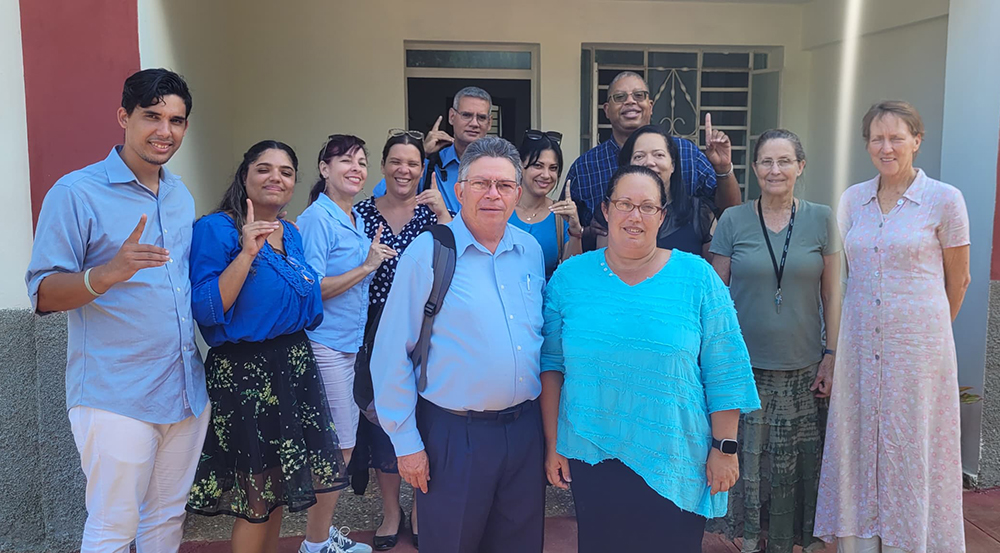
Yaily Valdez (front right) and the Cuban Bible Society team gather after a training session at Escuela de Luz in 2025, part of efforts to equip workers for ministry to the deaf community.[Photo: Courtesy of Yaily Valdés]
A Dream for the Church
Valdés’s vision extends beyond translation.
“I dream of seeing deaf individuals baptized in Adventist churches in Cuba,” she said.
She points to regions such as Guantánamo and Holguín, where large deaf populations remain largely unreached.
“I know the church can reach them,” she said.
Despite challenges, such as limited awareness and the need for greater involvement, she sees progress. “In the past months, we are seeing more receptive hearts,” she said.
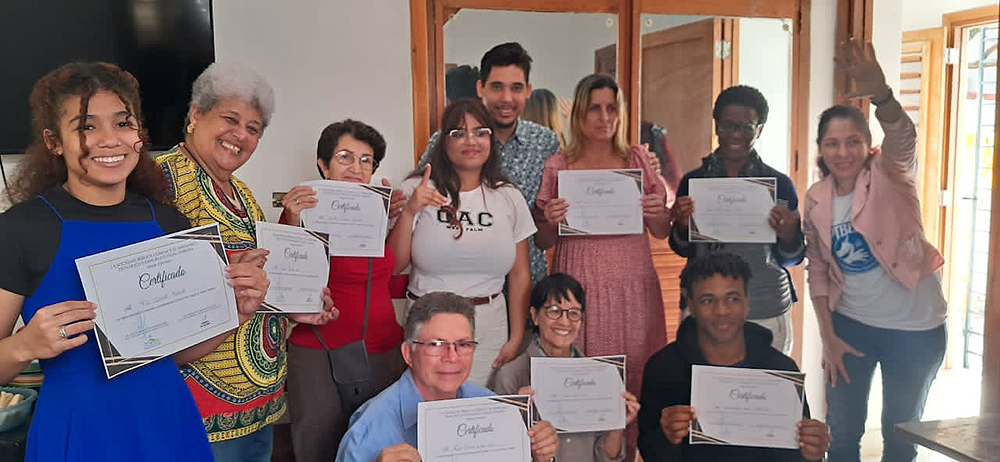
Participants display their certificates after completing a sign language and deaf culture training led by interpreters from the Cuban Bible Society at the Evangelical Seminary in Havana, Cuba, in January 2026. Pastor Jenaro Jiménez (bottom left), Adventist pastor holds his certificate with the group. [Photo: Courtesy of Yaily Valdés]
Looking back, Valdez recognizes that this journey was never accidental.
“I was born for this,” she said.
Her story is a reminder that mission often begins in unexpected places, and grows through willingness to respond.
“God places you where He will equip you,” she said. “This is not just emotion. It is commitment.”
And for Valdés, that commitment continues, one sign, one conversation, and one life at a time.