Right Motives, Wrong Methods
Zeal without discernment still divides.
April 7, 2026 | Silver Spring, Maryland, United States | Erton C. Köhler, president of the General Conference of Seventh-day Adventists for Adventist Review
One of the greatest dangers to the church today comes not from external pressure but from internal haste. Truth can be wounded not only by error but also by the way it is defended. In a connected world, rumors travel faster than facts, and reactions often arrive before understanding. The intention of sharing such information may sound noble, even spiritual, yet the result can yield broken trust, damaged relationships, and a weakened witness before the world.
Scripture consistently teaches that motive alone is not enough. Methodology matters. When Jesus was arrested in Gethsemane, Peter reacted immediately. “Then Simon Peter, having a sword, drew it and struck the high priest’s servant, and cut off his right ear” (John 18:10). His loyalty was sincere, but his response was wrong. Jesus stopped the escalation, healed the wound, and restored order. Love without wisdom still injures. Zeal without discernment still divides.
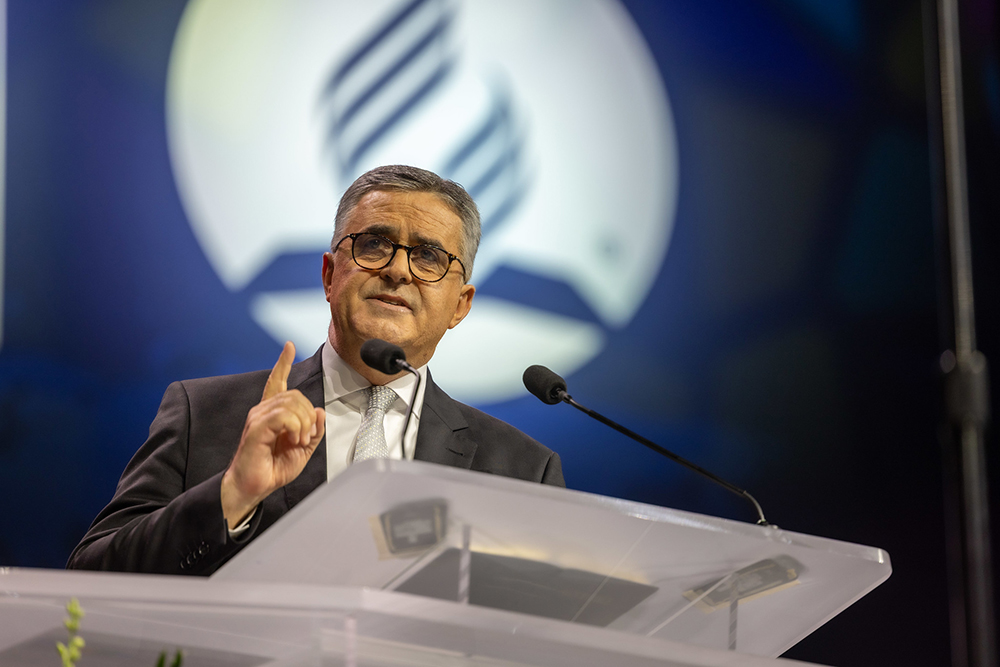
Erton Köhler addresses the delegation moments after being elected president of the Seventh-day Adventist Church during the 2025 General Conference Session in St. Louis, Missouri, United States, on July 4, 2025. [File Photo: Daniel Gallardo/IAD]
That same pattern is visible today. Digital platforms reward immediacy, not accuracy. Short clips replace context. Headlines replace investigation. Many sincere believers share unverified information, believing they are protecting the church. Yet Scripture warns against this approach: “He who answers a matter before he hears it, it is folly and shame to him” (Prov. 18:13). Discernment is not silence: It is disciplined speech guided by wisdom.
Ellen G. White addressed this tension with clarity: “While it is important on the one hand that laxness in dealing with sin be avoided, it is equally important on the other to shun harsh judgment and groundless suspicion.”[*] These words do not excuse wrongdoing. They protect trustworthy relationships. They preserve unity. They safeguard the mission from internal erosion.
Across the world the church has matured, grown in discernment, and increasingly assumed its role as a faithful herald of truth. Mission advances most effectively when integrity guides our actions. Spiritual power flows when our lives, ministries, and service are based on truth. This builds confidence in our communities. Crisis response rooted in coordination and compassion reflects the character of Christ. Scripture reminds us that “the wisdom that is from above is first pure, then peaceable, gentle, willing to yield, full of mercy and good fruits, without partiality and without hypocrisy” (James 3:17).
Therefore, the call before us is clear. Before reacting, pause. Before sharing, verify. Speak to people, not about people. If action is required, let it reflect the Spirit of Christ, not the energy of the moment. It is possible to defend the truth and still wound the body. God calls His people to something better.
Grounded in the Bible, focused on the mission, the church moves forward not by speed alone, but by wisdom, grace, and faithfulness. When right motives are joined to right methods, the witness of Christ remains credible, healing continues, and the mission advances with strength and unity.
[*] Ellen G. White, Patriarchs and Prophets (Mountain View, Calif.: Pacific Press Pub. Assn., 1890, 1908), p. 519.