The Way We Do Church Can Drive or Jeopardize Mission, Missionary Says
Jonathan Contero discusses three types of churches and their implications.
April 13, 2026 | Silver Spring, Maryland, United States | Marcos Paseggi, Adventist Review
The way we do church can drive or jeopardize our missionary endeavors, said Jonathan Contero, associate director of the Center for Secular and Post-Christian Mission of the General Conference, during the I Will Go International Mission Congress at Sagunto Adventist College in Sagunto, Valencia, Spain, March 21.
Contero and his family are serving as missionaries to a secular society in Geneva, Switzerland. During a workshop he discussed three models of local congregations and how they can hinder or move mission forward. While no model is completely detrimental (or, on the other hand, foolproof) as regards mission, Contero explained that some models are better suited to connect with people. This is especially true when we try to connect with contemporary secular audiences, often made up of many who may not even know or understand who God is, he said.
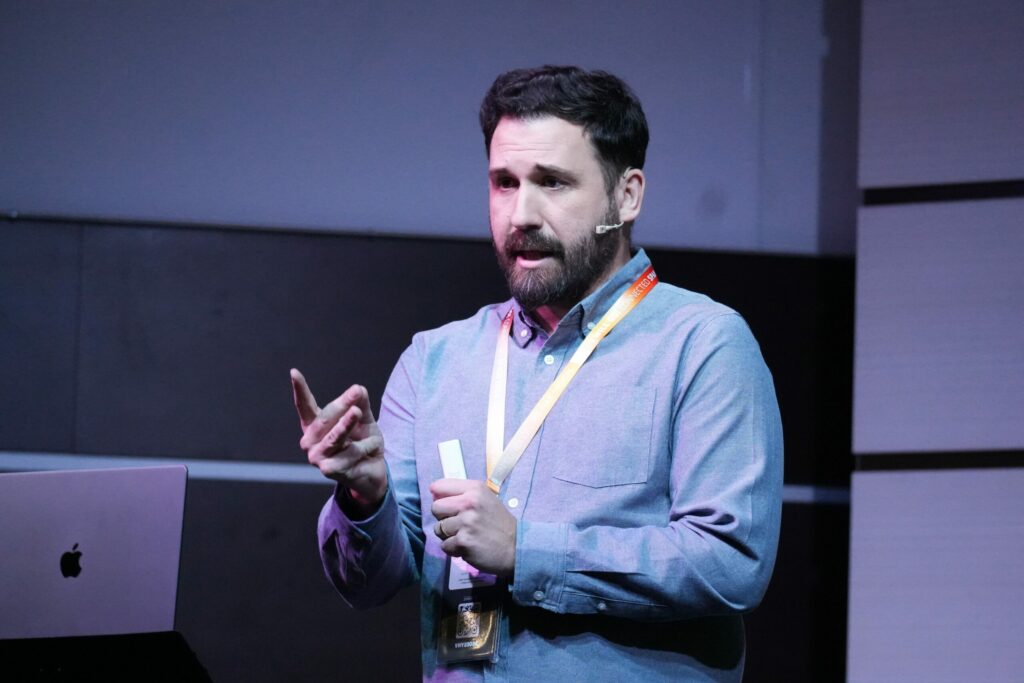
During his workshop, which included small group discussions and exchanges, Contero briefly shared the three models and their implications for Adventist mission.
A Circle of Belonging
The first model is what he called “a clearly demarcated church.”
It’s the church that creates categories into which people can be placed, Contero explained. It creates a “circle” that includes “everyone who . . . dresses like me, behaves like me, and speaks like me,” he said. “What makes us different from the world is a list of features to which we submit or agree to when we decide to become part of the circle. Those features define who is part of the group and who is outside the group.” A clear line defines who is inside and who is outside the group, Contero explained—those who are “people from church” versus “people from the world.”
At the same time, the regular performance of the church is based on behavior. First we assess your behavior, making sure you behave like us, and then you belong. “If you want to belong to this type of church, first you have to behave like me and then believe like me before you can claim being part of the group,” he explained.
Challenges With Non-Christians and Secular People
Now think of a Buddhist in Asia, or an atheist person in Europe. What are the chances that they attend your church one random Sabbath, watch its members, and say, “I want to be like them”? Contero asked. “What are the chances that they immediately say, ‘I want to behave like them and believe like them, because I want to belong to that group’?”
Referencing the Bible book of Acts, Contero suggested that the early Christian church was also a clearly demarcated church.
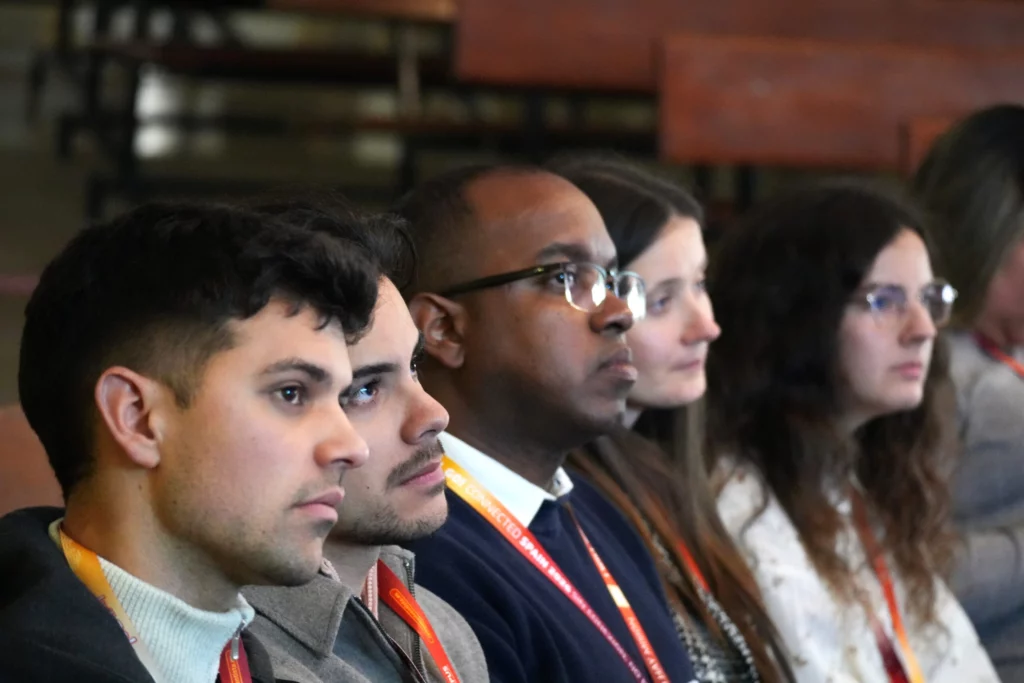
Mostly young people attended the I Will Go International Mission Congress in Spain to learn more about doing mission in a contemporary context. [Photo: Marcos Paseggi, Adventist Review]
How a Demarcated Church Behaves
A demarcated church discourages its members from mingling with people who are different, Contero explained. As an example, he referenced when Paul called Peter out for the latter’s double standards (see Gal. 2:11-14). “Peter enjoyed the company of Gentile Christians, but as soon as Jews were around, he would only mingle with Jews, giving Gentiles the cold shoulder. Why? Because Peter believed in a clearly demarcated church.”
Such an attitude is one of the biggest enemies to doing mission, Contero suggested, because “it builds a church that spends a lot of time stating what separates it from others,” thus forgetting to spend time building bridges.
At the same time, he said, mission, in a demarcated church, happens outside the church, as an event. “We go out, do something, and leave,” he illustrated.
When we interact with non-Christian cultures, this attitude becomes problematic, Contero said, because the first thing we tell a person is, for instance, “to stop smoking or drinking,” while the person is struggling even to comprehend who God is.
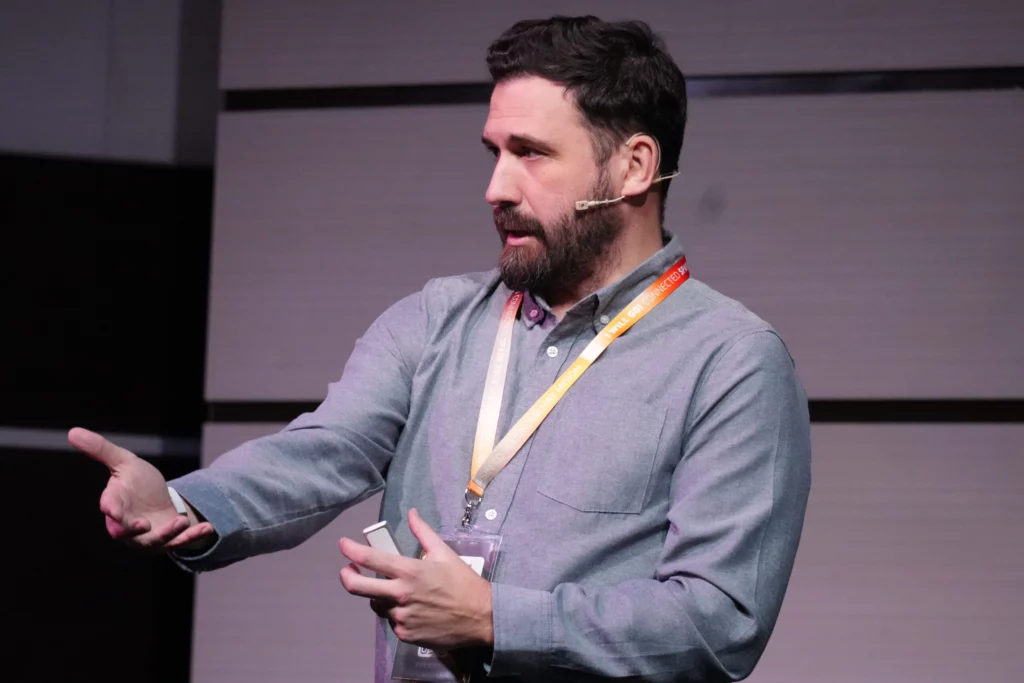
“What would happen if, as Seventh-day Adventists, we were not defined as much by a list of characteristics as by a relationship to a Person?” Jonathan Contero asked attendees during his March 21 workshop. [Photo: Marcos Paseggi, Adventist Review]
Unlike the first model, a diffuse church finds it hard to determine who is inside and who is outside its circle, because the dividing line is blurred. “This model of church is focused on tolerance as its supreme value,” Contero shared.
A diffuse church is often a reaction to a clearly demarcated church, in which individual freedoms are the highest value. “It is a model that a secular society can relate to, because every person does whatever they want or feel like at any particular moment,” Contero said. Since people in this church and the very identity of the church are not clearly defined, members will eventually feel the need to act outside of it, something that will diminish their participation in the group, he explained.
“Just as they come, they will leave,” Contero said, “because even though they might feel well in this type of congregation today, they could change their mind tomorrow. . . . And the lack of structure eventually leads to chaos.”
In short, “a diffuse church is mostly defined, not for what it is, but for what it is against,” Contero explained. “And in the long run, you can’t be defined just by what you oppose.”
Feeling Well Is Not Enough
As a result, a diffuse church “is not a missional church, because it is a reactive church, which builds based on only those things it doesn’t like. And its only goal is that you feel well.”
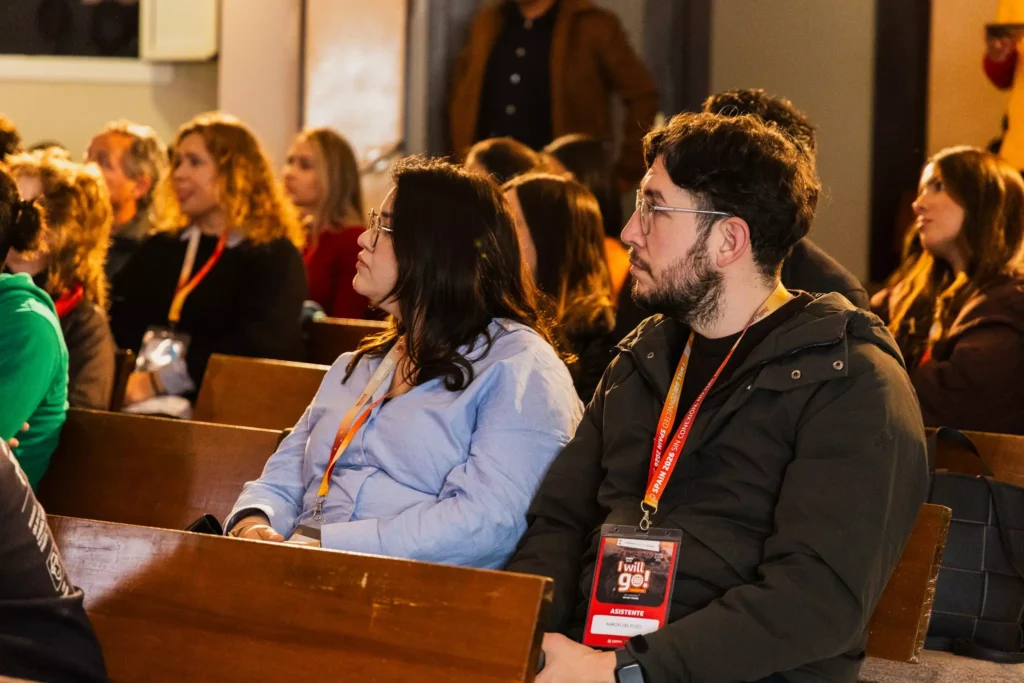
Workshop participants listen to one of the multiple presentations on March 21 at Sagunto Adventist College in Sagunto, Valencia, Spain. [Photo: I Will Go International Mission Congress]
In the end, and as regards mission, the implications of this model might not differ very much from a clearly demarcated church. A diffuse church can also be present in more traditional churches; for example, every time a congregation finds it hard to accept and embrace other cultures, Contero explained. “When we say, ‘my people,’ ‘my culture,’ above anything else, mission might be jeopardized,” he acknowledged.
A Centered Church
The third church model is what Contero defined as a centered church. In this church there are fundamental values that unite us around the central figure of Jesus. Every person is defined as it relates and connects to Jesus, who binds all members together. In this model “you don’t bring people to the church; you bring people to Jesus,” he explained.
Everything is assessed from the perspective of its relationship to and orientation toward Jesus. Those who come closer to Jesus find belonging, Contero said.
At the same time, conviction takes place as the person moves toward the center, where Jesus is. Every person may follow a different pace during the process, but they are defined by their overall direction toward Jesus. In short, “they are not defined by a line but by the center,” he said.
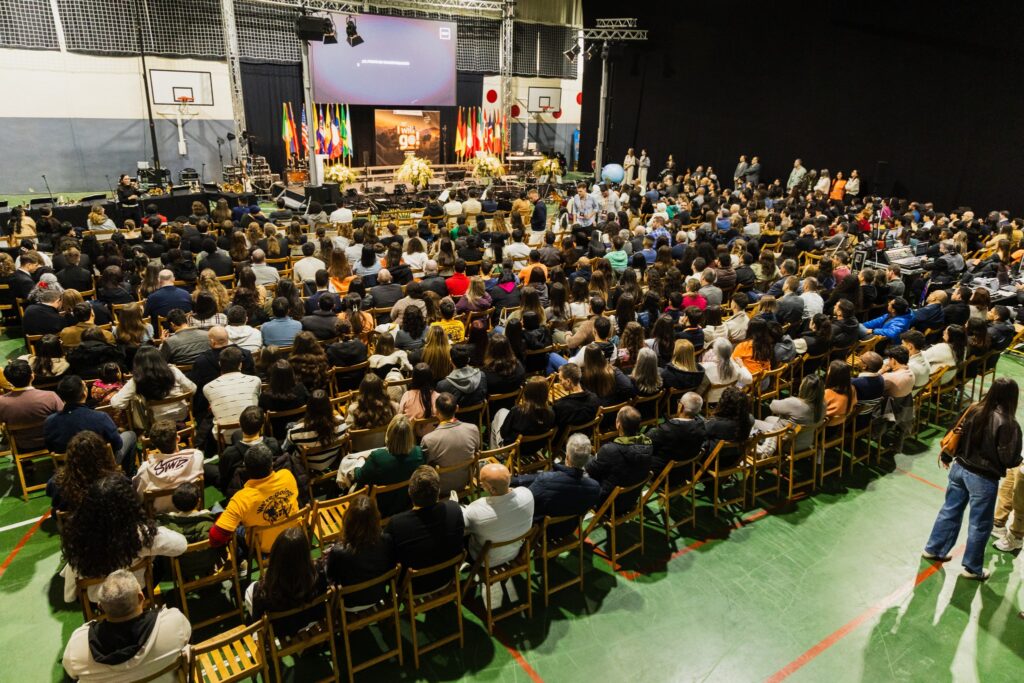
General view of a plenary session during the recent I Will Go International Mission Congress in Spain. [Photo: I Will Go International Mission Congress]
Implications for Church Life and Mission
“What would happen if, as Seventh-day Adventists, we were not defined as much by a list of characteristics as by a relationship to a Person?” Contero asked attendees. “What if what defined us was a relationship, a way of understanding the world and mission in connection to that relationship, and a way of—based on that connection—sharing that Jesus is coming soon?” He added, “What if the fundamental values that unite us would revolve around the figure of Jesus? What would happen if Jesus—and not a list of qualities—was at the center?”
Against that background, in an extremely secular, post-Christian world, the first thing we should do is bring people to Jesus, Contero emphasized.
“When people meet Jesus, they will find the way, or rather, God will lead them to find their way,” he said. “And the way of assessing the members’ commitment to the church will include assessing the level of relationship they enjoy with Jesus. As long as He is the center, there’s hope.”