
Grateful Living

Supercharging stewardship in the local church
June 21, 2026 | Silver Spring, Maryland, United States | Julian Archer for Adventist Review
Have you ever looked at your phone, scrolled through social media, or checked your bank balance and felt . . . underwhelmed? Surrounded by endless images of “abundance”—feeds full of highlight reels, advertisements promising more, friends flaunting success—it’s easy to mistake having more for being satisfied. Or maybe you’re struggling through the daily grind of commuting to a job that pays the bills but still doesn’t fulfill. Maybe somewhere inside something is whispering, “Is this it?”
What if real abundance isn’t about more stuff, but more meaning? More purpose. More gratitude. More of Jesus. The concept of grateful living is simple, but its impact can be real, deep, and life-changing.
These ideas are rooted in Scripture and in the life and teachings of Jesus, and recently they have also been explored through Grateful Living, an initiative developed by the South Pacific Division to help people better understand the principles of whole-of-life stewardship, and experience the blessings that it brings.[1]
Why Living Gratefully Matters
Jesus promised so much more than a dry religion that feels unattached to our daily realities. He came to save us from sin—and to draw us away from the emptiness of trying to find satisfaction in material things. In His own words: “I have come that they may have life, and that they may have it more abundantly” (John 10:10). Now, that’s something to reach for, to receive, and to be grateful for!
Living gratefully isn’t about check marks on a giving checklist. It’s about rediscovering what it means to live fully and totally as God intended—gratefully, generously, and with purpose. When we acknowledge that everything we have comes from God, then cheerfully giving to Him and others becomes a natural response. Not begrudging or transactional living, but joyful, whole-of-life, abundant giving.
And Jesus’ promise isn’t only spiritual; it’s practical. Scores of research suggest that gratitude helps reorient our priorities, improve our well-being, and realign our relationships. It brings clarity, direction, and purpose. That’s why stewardship must focus not only on money but on everything God entrusts to us.
What Are the Eight T’s?
Grateful Living expands stewardship’s traditional three T’s (time, talents, and treasure) into a richer, whole-of-life framework called the eight T’s. Each T represents a facet of life that God entrusts to us to manage faithfully, with gratitude and generosity.
Time: Dedicating time every day to God and His work
The psalmist prayed, “Teach us to number our days, that we may gain a heart of wisdom” (Ps. 90:12). A good way to remember the value of time is to ask ourselves, “Will what I do today to make a difference for eternity?”
Ellen White reminds us, “Our time belongs to God. Every moment is His, and we are under the most solemn obligation to improve it to His glory. Of no talent He has given will He require a more strict account than of our time.”[2]
Time is one of the most valuable and most beautiful gifts we can give to God and to others.
Talents: Using my God-given abilities to serve Him
Jesus’ parable of the talents (Matt. 25:14-30) makes clear that we are to use all our talents in faithful service. The apostle Peter also reminds us, “Each of you should use whatever gift you have received to serve others, as faithful stewards of God’s grace in its various forms” (1 Peter 4:10, NIV).
Treasure: Tithes, offerings, donations, and investments
The first part of John 3:16 includes a simple but often overlooked message—Love gives. When we love God, we love His mission, His schools, His church, all the work He is doing in the world, and giving becomes a natural response. Grateful living leads to cheerful giving.
When we truly understand that God owns everything, including our money and investments, ownership gives way to stewardship.
Paul summarizes the blessing of faithful stewardship with these instructions to the Corinthians: “Let each one give as he purposes in his heart, not grudgingly or of necessity; for God loves a cheerful giver” (2 Cor. 9:7).
Temple: Caring for my health for God’s service
The whole-person nature of true health was described almost 2,000 years ago in Luke 2:52: “And Jesus increased in wisdom [mental] and stature [physical], and in favor with God [spiritual] and men [social].”
Adventists understand that health and healing are whole-person realities, with each facet linked to the others. As Ellen White observed: “The relation of the physical organism to the spiritual life is one of the most important branches of education.”[3] When we are grateful to God for His gift of health, we are more likely to care for it.
Testimony: Faithfully sharing what God is doing in my life
Testimonies are powerful, both for the teller and the hearer. Sharing what God has done in our lives helps us heal, grow, and endure—and it offers those same gifts to those who listen. A Christ-centered testimony is among the most powerful forms of Christian witness.
Peter and John were often commanded to stop sharing their testimonies, but they answered, “We cannot stop telling about everything we have seen and heard” (Acts 4:20, NLT).[4] They could not be silenced, and it’s no exaggeration to say that their testimonies changed the world!
Go and “tell what great things God has done for you” (Luke 8:39).
Tribe: Caring for my “family” at home, church, and worldwide
Our tribe includes our immediate family, extended family, church family, community, and even the global family. As God’s stewards we are called to be grateful for our tribe and to care for them.
Paul told Timothy, “If anyone does not provide for his own, and especially for those of his household, he has denied the faith and is worse than an unbeliever” (1 Tim. 5:8).
We are called to love all people everywhere because that is how God loves. When it comes to our tribe, one of the greatest lessons we can learn is to love as God loves, and to receive that love in return.
Territory: Caring for my land and the environment
In the Creation account, humanity is instructed to “have dominion” over all the creatures on earth (Gen. 1:26). The very next chapter gives us a beautiful insight into what that means: “Then the Lord God took the man and put him in the garden of Eden to tend and keep it” (Gen. 2:15).There’s a gentle intentionality in the words “tend” and “keep,” which speak of protecting and caring for all God’s creation.
It is actually quite simple: If we love God, we will love His creation. Let us all seek to demonstrate our love for God as we make daily decisions regarding recycling, shopping, land clearing, travel, and even what we eat.
Truth: Faithfully protecting and sharing God’s Word
Truth is a much-debated topic today, but the Bible speaks clearly about truth. When we hear and practice the truth (Matt. 7:24, 25), fall in love with the truth (2 Thess. 2:10), and witness how God’s truth transforms lives (John 8:32), gratitude for God’s truth naturally follows.
Our Savior, Jesus Christ, says, God’s “word is truth” (John 17:17), and it is this real truth that can transform our lives and the lives of others. What a priceless gift to receive and to care for!
As good stewards, let’s love, protect, and share God’s truth in our words, our writing, and our actions—our whole lives.
Living the Abundant Life Jesus Promised
When we steward these eight T’s wisely, we discover true abundance—not simply more possessions, but deeper purpose, peace, and worship.
In a world shaped by the hustle of full schedules, quick scrolls, mountains of responsibilities, and constant noise, living gratefully as faithful stewards can be a lifesaver. It provides:
- Purpose over consumption, by challenging the default culture of “more, bigger, faster,” and inviting us to define success by faithfulness and loving service to people and planet.
- Integrity in a material world in which money, social media, and peer pressure subtly shape identity. Gratitude helps us push back and root our identity in Christ rather than lifestyle.
- Community and connection, because grateful living isn’t just a solo challenge; it’s a churchwide, multigenerational journey that builds community and connection.
- Sustainable joy. Gratitude isn’t trendy; it’s timeless. When you live gratefully, your joy survives even when the filter disappears, the likes fade, or your next big idea fails to deliver.
For anyone wrestling spiritually with questions of purpose, identity, and impact, living gratefully can be life-transforming. Jesus promised His disciples an abundant life—not one in which we just scrape by, but one in which we live gratefully and abundantly for Jesus.
[1] To download the kit and encourage your church to participate in the Grateful Living challenge, please visit https://stewardship.adventistchurch.com/grateful-living/.
[2] Ellen G. White, Christ’s Object Lessons (Washington, D.C.: Review and Herald Pub. Assn., 1900, 1941), p. 342.
[3] Ibid., p. 348.
[4] Scripture quotations marked NLT are taken from the Holy Bible, New Living Translation, copyright © 1996, 2004, 2015 by Tyndale House Foundation. Used by permission of Tyndale House Publishers, Inc., Carol Stream, Illinois 60188. All rights reserved.
Related news
 From the Field
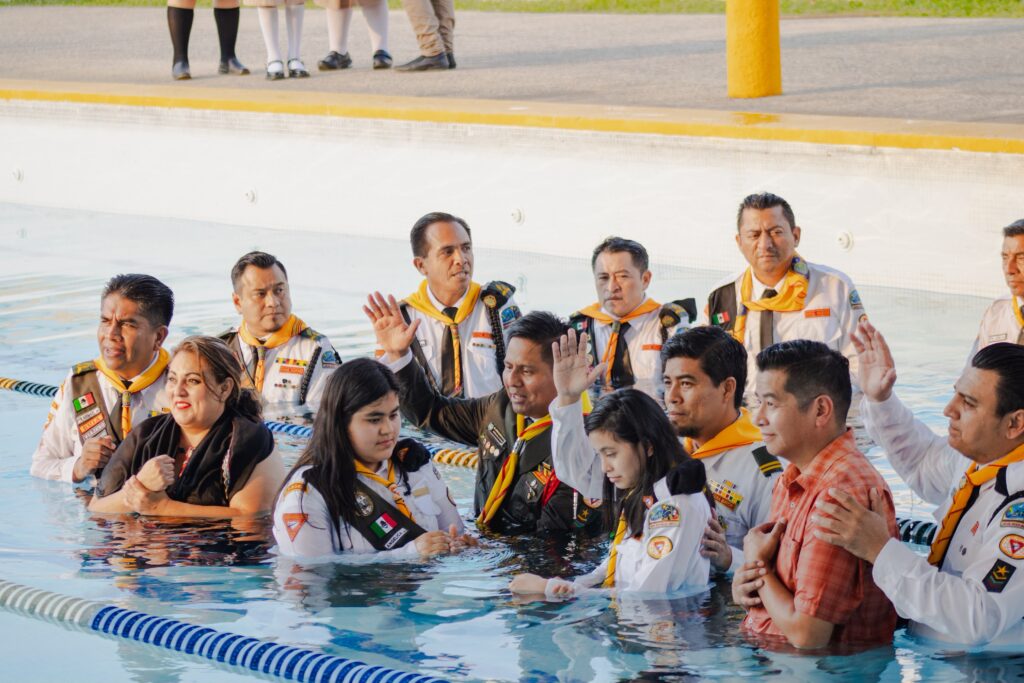
Pathfinder Evangelistic Tour Across Southeast Mexico Celebrates 164 Baptisms
Families join young people in decisions for faith as leaders recognize efforts to establish clubs in every church.
From the Field
Pathfinder Evangelistic Tour Across Southeast Mexico Celebrates 164 Baptisms
Families join young people in decisions for faith as leaders recognize efforts to establish clubs in every church.
 From the Headquarters
High School Students Across Inter-America Compete in Bible Reading Contest
Adventist Virtual Library contest brings together 14 finalists to test their knowledge of Genesis and strengthen Bible reading and faith.
From the Headquarters
High School Students Across Inter-America Compete in Bible Reading Contest
Adventist Virtual Library contest brings together 14 finalists to test their knowledge of Genesis and strengthen Bible reading and faith.
 From the Headquarters
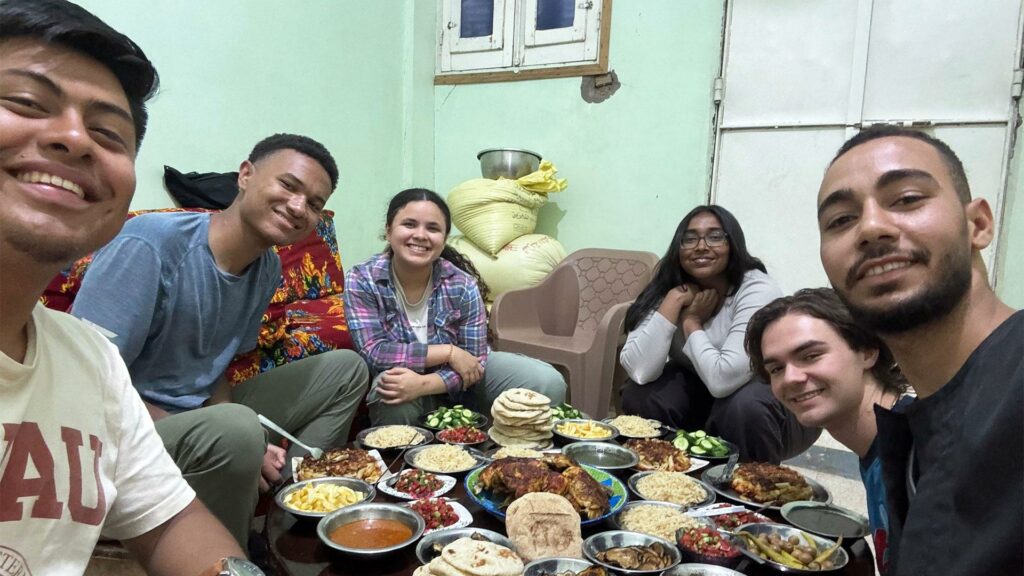
A Journey to Egypt Confirms a Calling
Teaching Bible and English in Egypt confirmed Rubén Díaz’s calling to serve in a cross-cultural context.
From the Headquarters
A Journey to Egypt Confirms a Calling
Teaching Bible and English in Egypt confirmed Rubén Díaz’s calling to serve in a cross-cultural context.