
Mission in the War Zone
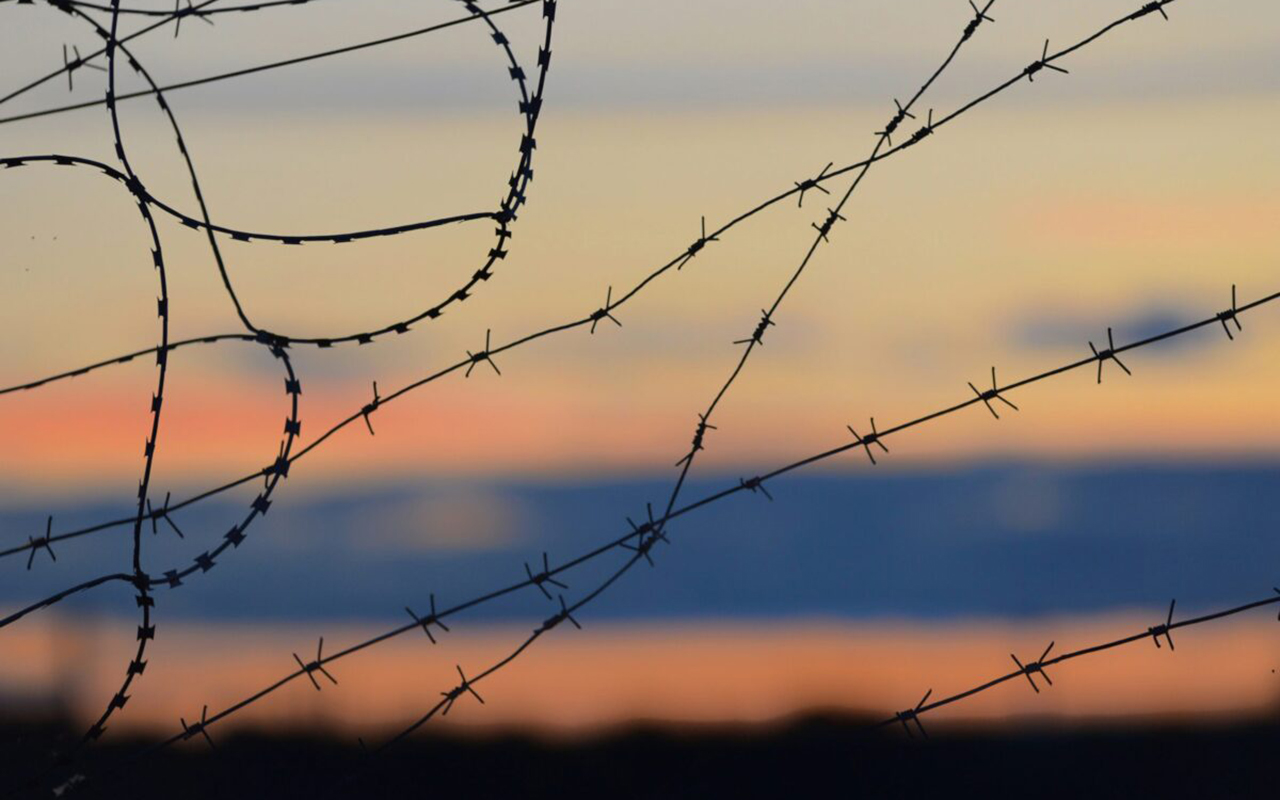
Trapped in a war zone with no immediate rescue, a family chose to trust God’s leading.
May 12, 2026 | MENAUM News
Gunfire cracked through the air in sharp, echoing bursts as the Torres family pressed deeper into the corridor, away from the living room and the threat of stray bullets.
“When will the rescue team get here?” Samir wondered, scrolling urgently through incoming texts, hoping for the message announcing that evacuation efforts were underway.
That message never came.
Instead, the message they received announced the opposite: the cross fire in their zone was too intense for the extraction team to reach them–they wouldn’t be coming.
“What now?” The unspoken question weighed on them heavily.
From the beginning of the war, Samir had encouraged his family to focus on the promises of God’s deliverance, but there was no avoiding the possibility that they might get stuck—that this might be their end.
With this acknowledgment came the more important realization that they had peace. They knew without a doubt that they were in that place at that time by the will of God. God had called them there, and they had said yes. With every step they had chosen to align themselves with God’s leading.
Confident in God’s Calling
Eight years earlier Eva and Samir had arrived at another location in MENA (Middle East North Africa) with a strong sense of calling to share the gospel with those who had little chance of hearing it without the presence of a real live human being—a friend.
“We were on fire,” Eva recalls. “We came with ideas, willingness to try new things, and eagerness to mingle with our neighbors. But even though we made some friends and had valuable interactions, there were obstacles we couldn’t get around.”
The country’s setup limited meaningful interaction with nationals, so the Torreses’ ministry became focused primarily on foreigners working in the country.
With each passing day, Eva and Samir became hungrier to share God’s love with people who didn’t already know, so when a leader approached them about moving to another location where they would have greater freedom to mingle with nationals, they jumped at the chance. After a pilot visit, evaluating the information, and seeking God through fasting and prayer, they agreed wholeheartedly.
“Yes! We will go!” they answered decidedly.
Now, in spite of the stress of being trapped in a war zone with no seeming way out, there was no regret. They were secure in their calling, and, as they reflected further on God’s leading in the past, they knew that they could trust Him even now.
With nothing but mattresses on the floor of the corridor of their apartment, their young daughter, Lola, was literally climbing the walls—straddling the space with her feet pressed against opposite sides of the hallway and inching her way up. She also read books, but the best activity proved to be keeping a record of how God was with them.
As Lola wrote down the ways God had blessed their family, they were encouraged and filled with hope. God’s care was clear. They had relocated twice, following their daughter’s school to stay nearby. When the school moved again, they had chosen to remain, never fully understanding why God had led them there. They had looked for ways to serve, but now realized that God had directed their steps to save their lives. The places where they had lived before and the current location of the school were all devastated by the war.
Another gift they recognized was simply being together. Samir had been scheduled to attend a meeting at the church, but the taxi had arrived late, and, in hindsight, this had kept them from being separated when war broke out. An added comfort for the family was the presence of Eva’s sister, Silvia, who happened to be with them at that time.
In addition, just days before the crisis, the Torreses had gone grocery shopping and stocked up on essentials—unaware of what was coming. When others were left without electricity, water, or food, they had what they needed.
Eva is certain that focusing on God’s goodness, and not the war itself, protected Lola from negative memories of those days. It also helped to stave off anxious thoughts as they searched for a way of escape.
Making Life-or-Death Decisions
Samir followed the news carefully and learned that the Spanish government was sending four Hercules military planes to evacuate its nationals. “Maybe we can go with them,” he said, hopeful. Immediately they reached out to their respective embassies, and Eva received word that hers would try to make the connection on their behalf.
While they waited for confirmation, another possibility for escape emerged. The ADRA director called to say the Torreses could join a humanitarian convoy—but they would need to make their own way to the meeting point.
Samir and Eva weighed the options. The drive through the city would take them through active fighting. But staying in the apartment, waiting on a plan that might never materialize, carried its own risks.
“If only we could get something definite from the Spanish embassy,” Samir said.
The family knelt in prayer, pouring out their fears and asking for wisdom. Getting up from their knees, each one, in turn, shared the same conviction: They had peace that the Spanish evacuation would come through—and that this was the path they should take.
When the ADRA director called back with the time and location for departure, Samir shared their decision.
“Are you sure?” he asked, urging Samir to reconsider. “Do you know what’s happening to foreigners? The militia is targeting them—breaking in, looking for cash. There are kidnappings. You’re responsible for your wife, her sister, your daughter . . .”
Samir didn’t waver. “We believe this is the best choice,” he said.
Willing to Die
But the next morning, uncertainty met them as they woke to the reality of how alone they were. Nine days into the war, only two families remained in their apartment building. Earlier communication with the Spanish embassy had been reassuring—they had promised updates—but now everything had gone silent.
The ADRA workers had already left, and still no word had come. Had they made the right decision? Would God lead them to safety? Or was this one of those unwanted answers to prayer—one where temporal rescue wouldn’t come?
Middle East North Africa Union Mission (MENAUM) officers stayed in close contact, following their situation. “How do you feel?” Rick McEdward, then president, texted.
“We have a plan,” Samir replied, “and we have given our lives to Jesus, trusting that He will be with us—even if we die.”
They had already settled the deeper question. Whether rescue came or not, they would trust God and move forward with what they knew. The result was a clarity that gave them the ability to discern what was happening around them—and to act.
A Way Through
At 7:00 a.m. Samir reached out to the Spanish embassy contact again, asking, “Do you remember us? Are we still part of your plan?”
To his great relief, she responded back immediately. “Don’t worry,” the message read. “You’re on the list. In fact, today is the day—you need to be at the ambassador’s house no later than noon.”
Grabbing their backpacks, the Torreses turned to go, leaving everything behind in their apartment. Again they recognized God’s provision—the ambassador’s residence was only two blocks from their building. They arrived safely at the meeting point and joined more than 30 others in the basement, waiting in place for hours as the sounds of gunfire echoed through the building above them.
Then about 3:00 p.m. the call came: “It’s time.”
The group was quickly ushered out and directed toward a cluster of unarmored vehicles. No details were given, but they followed instructions without hesitation.
Just as the convoy began to move, news came that another embassy convoy had been caught in cross fire, and someone had been shot. Everyone was ordered back to the basement. For three long hours they waited, trying to ignore the sound of incoming bullets.
Near sunset they were given the green light to load up again. The Torreses joined an elderly man and another family in a van and situated Lola on the floor, where she would be protected from cross fire.
Both excitement and fear pulled at them as the convoy set out on what would be a 2.5-hour journey. Samir stayed in constant contact with MENAUM leaders, reporting what he could from the window—plumes of smoke rising in the deepening twilight. The road itself was eerily quiet as they traveled along, escorted by the very militia wreaking havoc across the city.
Eventually the convoy reached a bridge, and the escort dropped back. Vehicle lights were turned off as they crossed slowly, leaving the militia behind. Once on the other side, an army escort appeared and guided them through countless checkpoints until they reached a military airbase, where, to their great relief, they saw the Hercules planes waiting to evacuate them.
Joining hundreds of others in a large hangar, the Torreses made their way into the cargo hold and found a spot on the floor where they could sit. Soon they were taxiing down the runway. Then the wheels lifted from the ground, and the plane rose into the night sky—and they knew they were safe.
God carried the Torreses through every moment of the crisis—from the uncertainty in the corridor to the night sky above the war zone. In surrender they found peace—not in knowing the outcome, but in knowing that God was with them and that He is in control.
The original version was posted by the Middle East and North Africa Union Mission.
Related news
 From the Field
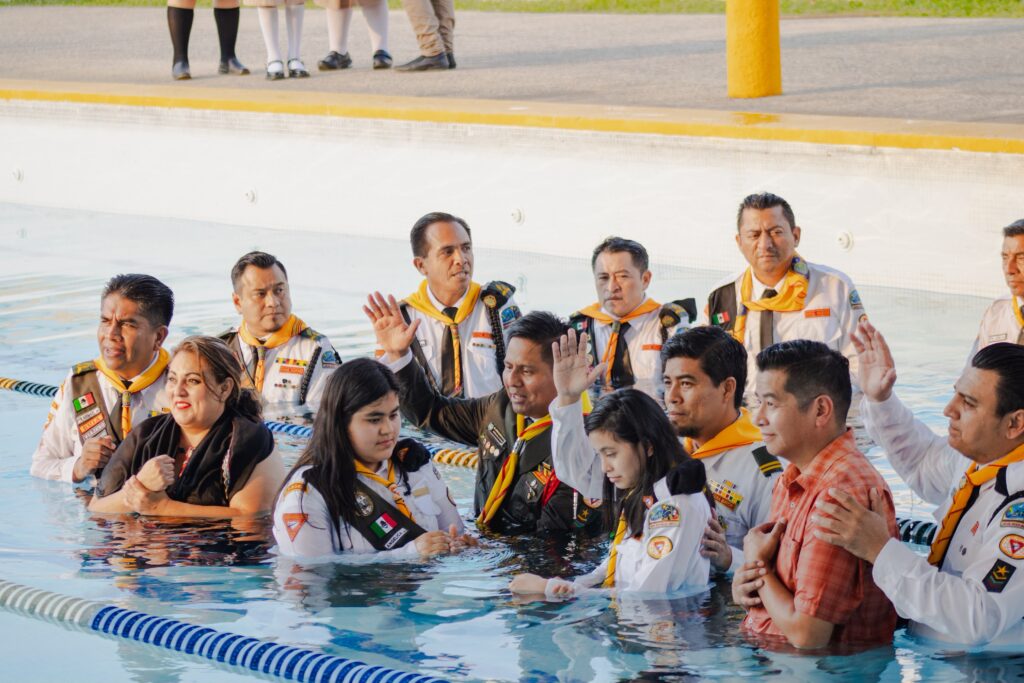
Pathfinder Evangelistic Tour Across Southeast Mexico Celebrates 164 Baptisms
Families join young people in decisions for faith as leaders recognize efforts to establish clubs in every church.
From the Field
Pathfinder Evangelistic Tour Across Southeast Mexico Celebrates 164 Baptisms
Families join young people in decisions for faith as leaders recognize efforts to establish clubs in every church.
 From the Headquarters
High School Students Across Inter-America Compete in Bible Reading Contest
Adventist Virtual Library contest brings together 14 finalists to test their knowledge of Genesis and strengthen Bible reading and faith.
From the Headquarters
High School Students Across Inter-America Compete in Bible Reading Contest
Adventist Virtual Library contest brings together 14 finalists to test their knowledge of Genesis and strengthen Bible reading and faith.
 From the Headquarters
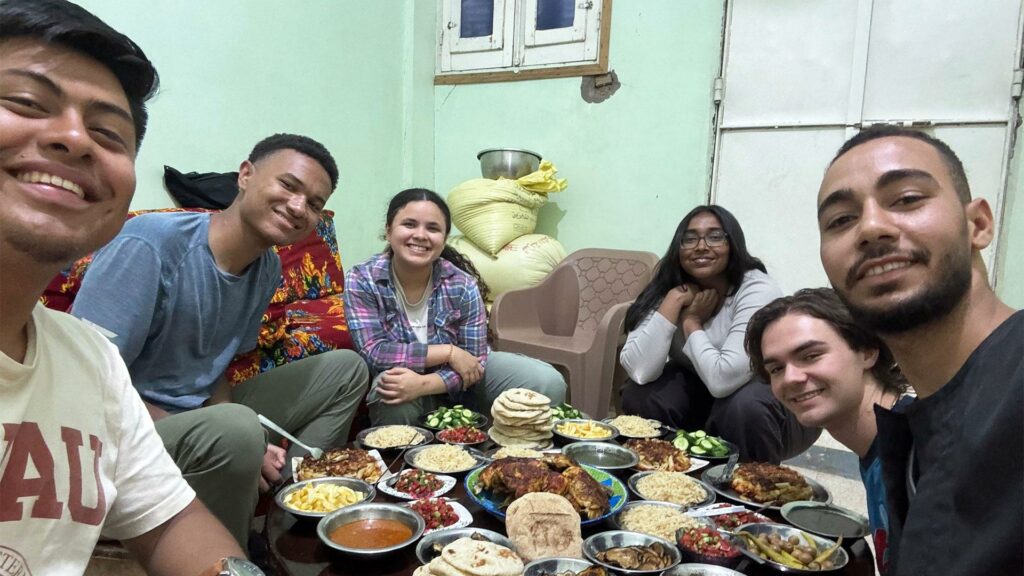
A Journey to Egypt Confirms a Calling
Teaching Bible and English in Egypt confirmed Rubén Díaz’s calling to serve in a cross-cultural context.
From the Headquarters
A Journey to Egypt Confirms a Calling
Teaching Bible and English in Egypt confirmed Rubén Díaz’s calling to serve in a cross-cultural context.