Inter-American Division Becomes First to Hold Secretariat Academy Training
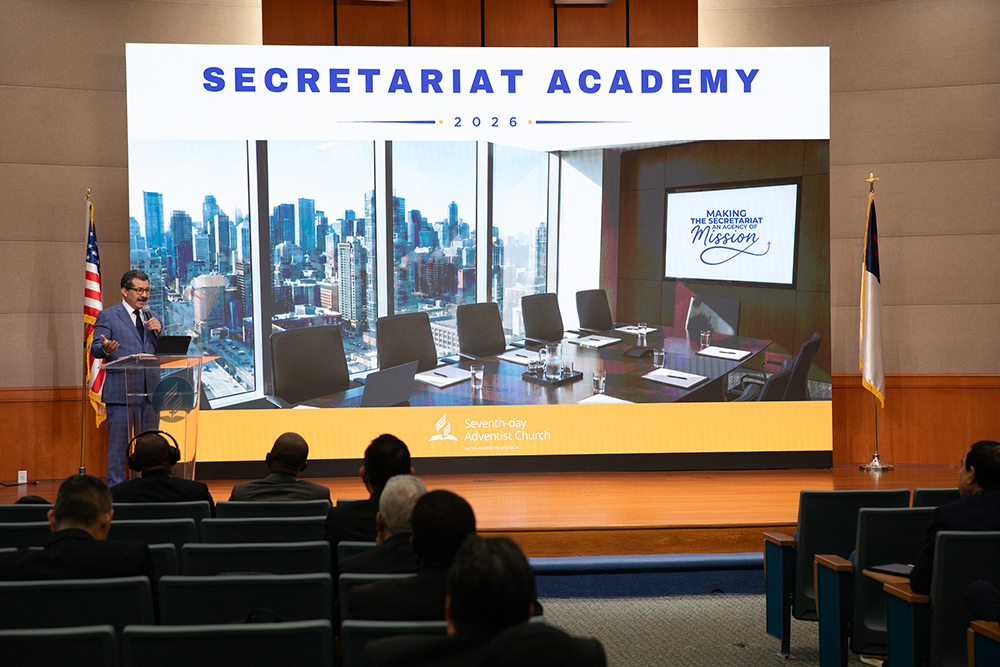
Pastor Abner De Los Santos addresses union executive secretaries during a devotional session on Aug. 3, 2026, during the Secretariat Academy, which brought leaders from across the Inter-American Division to its headquarters in Miami, Florida, Aug. 2–5. [Photo: Libna Stevens/IAD]
August 20, 2026 | Miami, Florida, United States | Libna Stevens, Inter-American Division News
Strengthening the work of Secretariat as a vital part of church mission was at the center of a four-day Academy that brought executive secretaries from across the Inter-American Division (IAD) to its headquarters in Miami, Florida, Aug. 2–5, 2026.
Through presentations, workshops, and small-group discussions, union executive secretaries addressed governance, policy, membership management, records, strategic planning, parliamentary procedures, and other responsibilities, while sharing practical approaches they can apply across their territories.
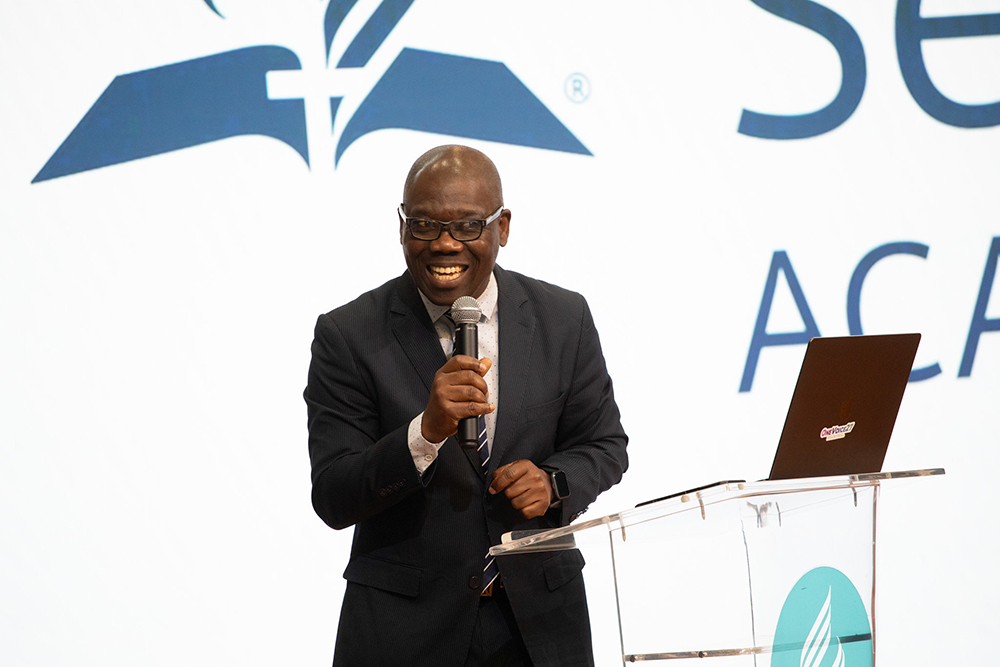
Pastor Selom Sessou, associate secretary of the General Conference, outlines the Secretariat Academy’s training framework and its emphasis on strengthening administrative competencies. [Photo: Libna Stevens/IAD]
“This is a historic event,” Santos said, explaining that the global program had been launched only days earlier. “Inter-America is beginning the first training of the Academy.”
Building Competence for Mission
Pastor Selom Sessou, associate secretary of the GC and coordinator of the GC Secretariat Academy, said the initiative responds to the need for specialized preparation among executive secretaries, many of whom enter the position after years in pastoral or evangelistic ministry.
“We realized that there is a gap,” Sessou said. The Academy is designed to build the “knowledge and competency to perform the task with confidence and accuracy,” while strengthening efficiency, organization, time management, and problem-solving.
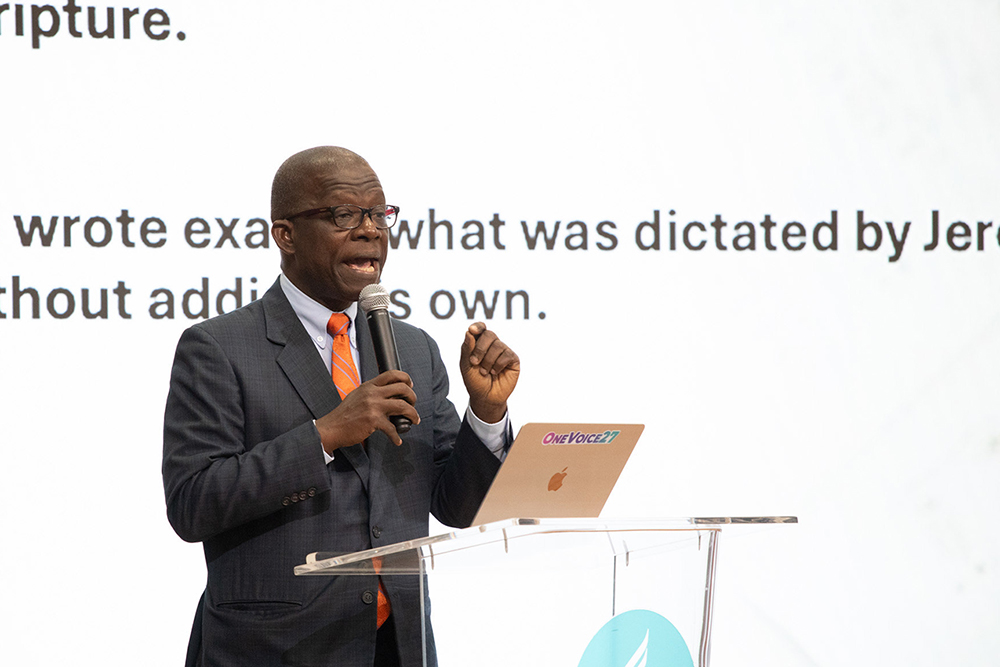
Calling executive secretaries “agents of mission,” Pastor Pierre Caporal, executive secretary of the Inter-American Division, delivers a devotional message on Aug. 5, during the Secretariat Academy. [Photo: Libna Stevens/IAD]
The Academy’s broader foundational curriculum includes seven modules and 34 lessons covering the spiritual foundations of Secretariat, governance and committee management, policy and constitutional integrity, membership management and disciple-making, records and archives, and the mission of Secretariat.
Sessou said the Academy is intended to provide an ongoing learning environment where leaders can continue developing the competencies needed as administrative and ministry demands evolve.
‘An Agent of Mission’
The spiritual responsibility of Secretariat leadership was also emphasized throughout the gathering.
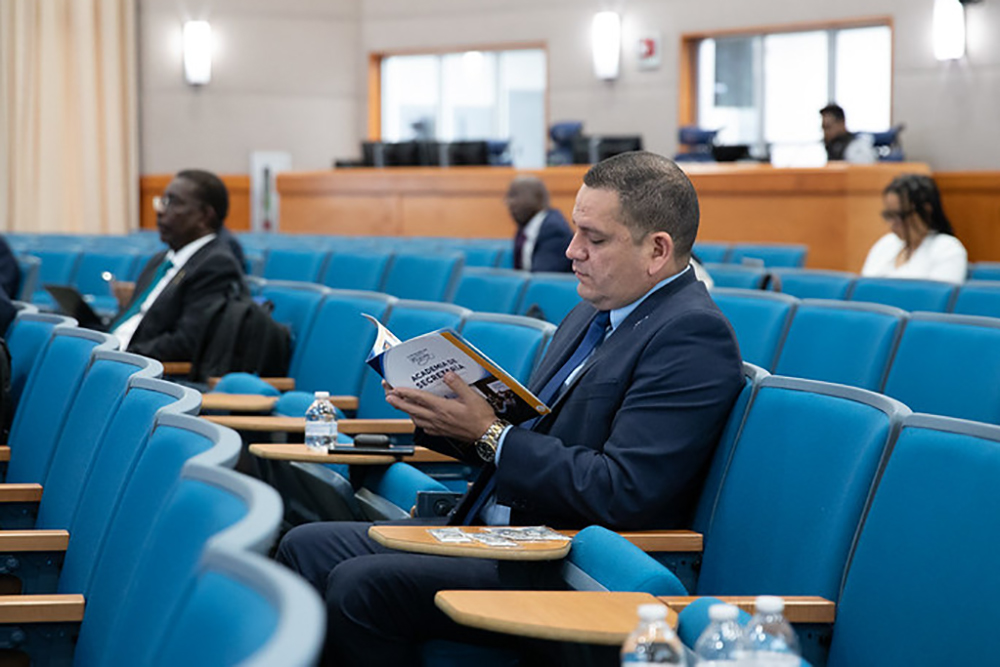
Roberto Davila, executive secretary of the Nicaragua Union, reviews the four-day Secretariat Academy program schedule on the morning of Aug. 4, 2026. [Photo: Libna Stevens/IAD]
Pastor Pierre Caporal, executive secretary of the IAD, reinforced that perspective in his Aug. 5 devotional, “More Than a Scribe.”
Drawing from the biblical relationship between Jeremiah and Baruch, Caporal described how Baruch’s professional skills became instrumental in preserving and communicating the message God had entrusted to Jeremiah. He challenged executive secretaries to see a similar connection between their responsibilities and their calling.
“One can see in you a simple scribe, or a simple executive secretary, but God sees in you an agent of mission,” Caporal said.
“Let us consecrate all our skills, our professionalism, our influence to God’s mission,” he added.
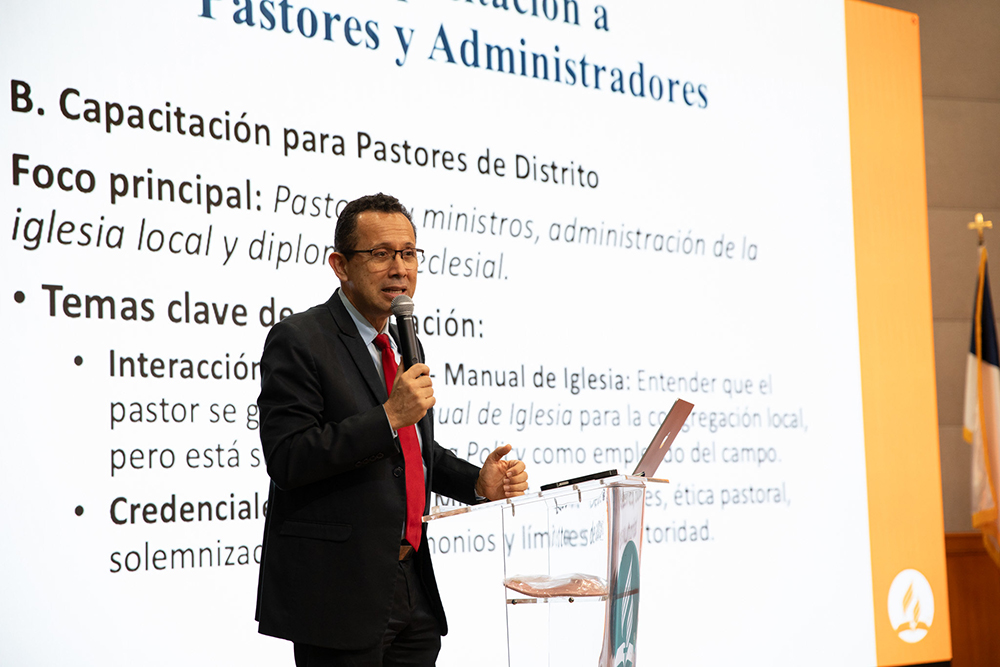
Pastor Álvaro Niño, undersecretary of the Inter-American Division, leads a session focused on strengthening Secretariat practices across unions and local fields. [Photo: Keila Trejo/IAD]
Taking the Strategy Across Inter-America
The Academy provides a way to translate that mission focus into stronger Secretariat practices throughout the territory, said Pastor Álvaro Niño, undersecretary of the IAD.
“The General Conference Secretariat presented its strategic plan, and what we are doing is following through,” Niño said. The IAD is taking the strategy to its unions so they, in turn, can carry it to local fields, with an emphasis on leaders who are grounded in Scripture, focused on mission, and equipped to fulfill their responsibilities effectively.
Niño said organizers intentionally moved beyond a traditional lecture format. Participants worked in small groups that paired experienced secretaries with those newer to the position, allowing them to discuss actual situations, ask questions, and share solutions.
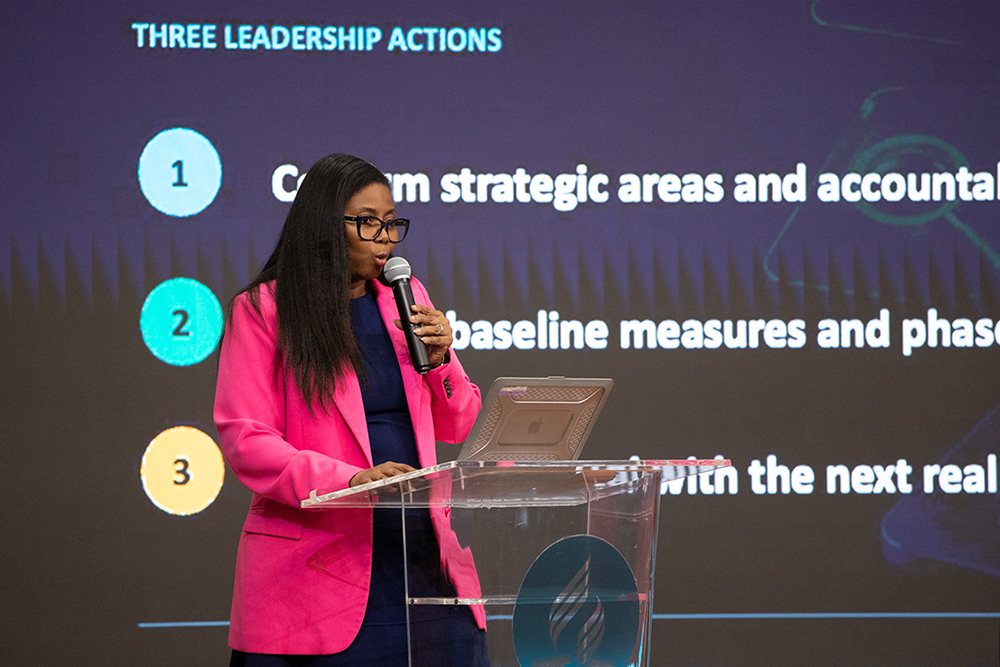
Janelle Scantlebury-Smith, associate secretary of the Inter-American Division, delivers one of the presentations during the Secretariat Academy at IAD headquarters. [Photo: Libna Stevens/IAD]
The approach is particularly relevant as leadership transitions bring new executive secretaries into office. In one union alone, Niño said, nine of 11 local-field executive secretaries recently changed, underscoring the need for structured orientation and professional development.
“One of the reasons for the Secretariat Academy is to have a continuous training program,” Niño said.
To sustain that effort, the IAD plans regular follow-up sessions, ideally monthly, and hopes to hold the Academy in person annually when possible. Union executive secretaries are also expected to extend the training to local fields and, ultimately, local church clerks, where much of the denomination’s membership information originates.
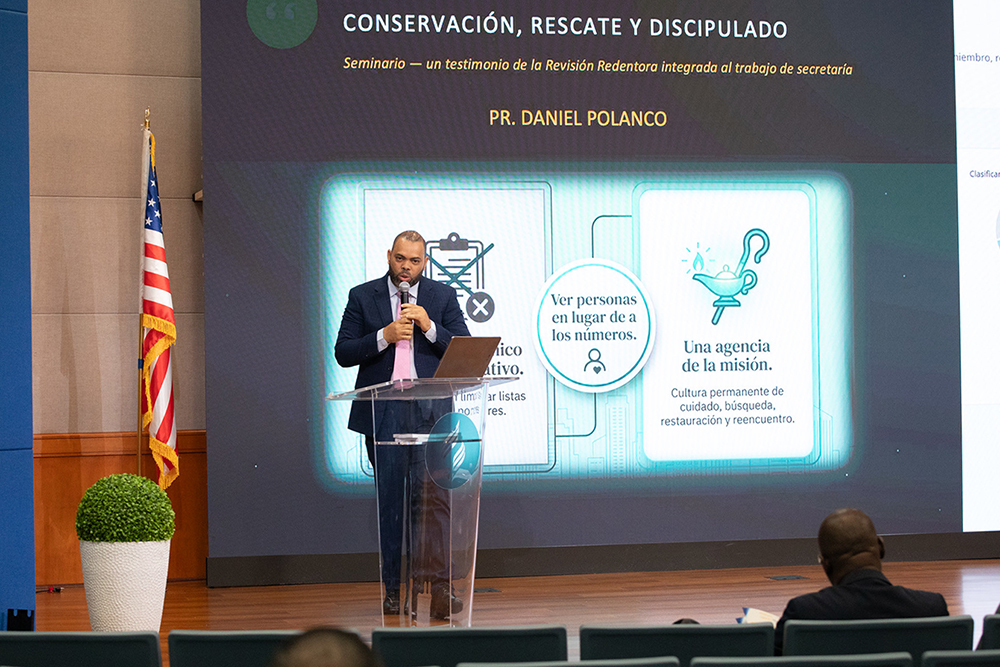
Highlighting the connection between accurate membership records and member care, Pastor Daniel Polanco, executive secretary of the Dominican Union, shares his union’s redemptive membership review process during the Secretariat Academy. [Photo: Libna Stevens/IAD]
For Niño, accurate information ultimately must lead to better care for members. Behind church statistics “there is a face, there is a story, there is a person,” he said. Membership data can help leaders strengthen pastoral care, improve retention, reconnect with those who have left, and disciple active members for service.
Pastor Daniel Polanco, executive secretary of the Dominican Union, offered one example through the union’s redemptive membership review process.
“We have seen in the Dominican Union [a move] from a technical office, an administrative office focused on cleaning lists, crossing out names, to seeing people instead of numbers,” Polanco said. He described Secretariat as “an agency of mission” that can foster care, restoration, and reconnection.
Through the Grupo Especial de Revisión (Special Revision Group), or GER, congregations identify members who may be inactive, difficult to locate, or in need of pastoral attention and organize efforts to reconnect with them.
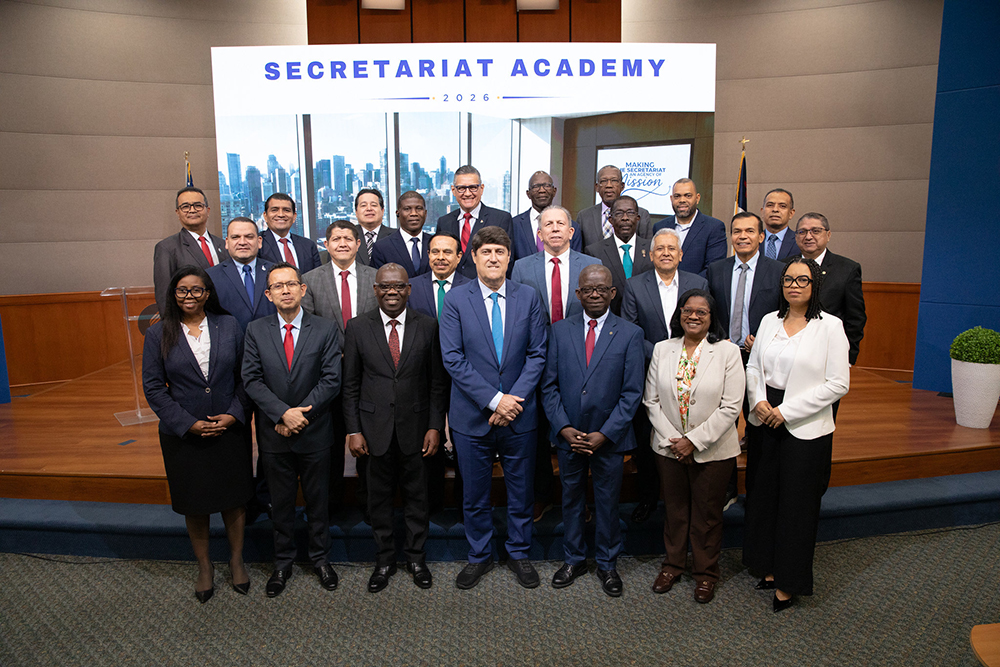
Union executive secretaries and church leaders from across the Inter-American Division gather for a group photo during the Secretariat Academy held Aug. 2–5, 2026, at IAD headquarters in Miami, Florida. [Photo: Keila Trejo/IAD]
As the executive secretaries return to their unions, the work begun at the Academy is expected to continue through local fields and congregations, supported by regular training and follow-up. For Niño, stronger Secretariat practices should ultimately translate into better information, more intentional member care, and greater support for the church’s mission.
“Intentionality is what makes the difference,” Niño said.