
‘His Worthiness, Not Ours’: Adventist Leaders Challenged to Rethink Mission
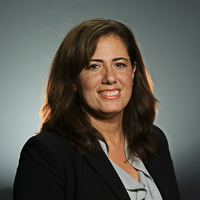

General Conference Associate Treasurer Richard Stephenson calls for humility and dependence on Christ as essential to reaching others and advancing the church’s mission.
November 12, 2026 | Bogotá, Colombia | Libna Stevens, Inter-American Division News
Seventh-day Adventist leaders must recognize their dependence on Christ rather than their own abilities if they are to effectively carry out the church’s mission, Richard Stephenson, associate treasurer of the General Conference, told Inter-American Division (IAD) Executive Committee members during a devotional message on November 3, 2026, in Bogotá, Colombia.
Speaking on the final day of the division’s Annual Council meetings, Stephenson challenged church administrators and ministry leaders to embrace humility and allow God to work through their weaknesses.
“I believe that Scripture is the story of the unworthy being used by the worthy to reach the unworthy,” Stephenson said, introducing a theme he traced through the experiences of biblical figures from the Old and New Testaments.
Drawing from Daniel 9, Stephenson reflected on the prophet’s prayer of confession and his acknowledgment of Israel’s shortcomings. He pointed to Daniel’s humility as an example of how God responds to those who recognize their need for divine strength.
Stephenson also highlighted the experiences of Jacob, Moses, Gideon, Isaiah, and Jeremiah, noting that each recognized personal limitations before being used by God.
Referring to Moses’ reluctance to confront Pharaoh because of his difficulty speaking, Stephenson emphasized that God’s response was a promise of His presence rather than a removal of Moses’ limitations.
“Your weakness is made perfect when? In His strength,” he said, emphasizing that acknowledging human limitations opens the way for God to work.
Stephenson urged leaders to resist relying on personal accomplishments or administrative abilities as the foundation of their ministry.
“This work advances not because of us, but in spite of us,” he said. “This work advances because of Jesus. Jesus is our strength.”

“When I tell God, ‘Lord, I can’t do this, but I will go. I can’t do this, but here am I, send me,’ that’s the key that God is waiting to hear,” he said.
Seeing Those God Calls the Church to Reach
Stephenson then turned to the New Testament account of Simon the Pharisee and the woman who approached Jesus in Simon’s home, as recorded in Luke 7.
He contrasted Simon’s sense of self-righteousness with the woman’s humility, warning that spiritual pride can prevent church leaders from recognizing the needs of others.
“If we get convinced of our own worthiness, we are unable to see the very ones that God is placing in front of us for us to reach,” Stephenson said. “Because they become invisible to us.”
He explained that Simon’s attitude had created a barrier between himself and the woman, while Jesus responded to her with compassion and forgiveness.

Stephenson challenged committee members to examine whether their attitudes and leadership practices were creating barriers or opportunities for others to encounter Christ.
“So are we building walls or doors?” he asked. “Believing that we are worthy builds walls.”
Living the Mission With One Voice
Connecting his message to the division’s emphasis on Living the Mission With One Voice, Stephenson said genuine unity in mission begins when leaders surrender personal ambitions and allow Christ to guide their words and actions.
“I believe we can never speak with one voice if we do not acknowledge our unworthiness,” he said. “Because if I think that I’m worthy, I’m going to speak with my voice.”
He urged leaders to adopt the attitude expressed in Psalm 84:10, which speaks of being a doorkeeper in the house of God.

“God has asked us to hold the doors wide open for the least of these,” Stephenson added, emphasizing the church’s calling to reach people of every language, nation, and background.
He concluded by returning to the biblical image of Joshua the high priest in Zechariah 3, whose soiled garments were replaced with clean ones, illustrating the righteousness Christ offers to humanity.
“It is His worthiness, not our own,” Stephenson said.
As leaders continue implementing the division’s mission priorities, Stephenson encouraged them to remember that their effectiveness ultimately depends on Christ.
“As we are living the mission with one voice,” he said, “I would submit that we do it in His worthiness. Never our own.”
Related news
 From the Headquarters
Be an Example
The following message is addressed to the Seventh-day Adventist Church in Inter-America by Abner De los Santos, president of the Inter-American Division. — IAD…
 From the Headquarters
Young People ‘Shine’ Through Bible Connection Evangelistic Outreach in Dominican Republic
Young singers, finalists, and youth leaders unite in evangelism as hundreds are baptized.
 From the Headquarters
Beyond the Championship, Bible Connection Transforms Young Lives Across Inter-America
From a calling to ministry to hope amid violence and a childhood dream fulfilled, finalists share how Bible study transformed their lives. November 24,…