
Conference Celebrates 80 Years of Religious Liberty Advocacy in Europe
Toledo, Spain, hosts landmark 2026 Conscience and Liberty Conference.
April 14, 2026 | International Association for the Defense of Religious Liberty and Adventist Review
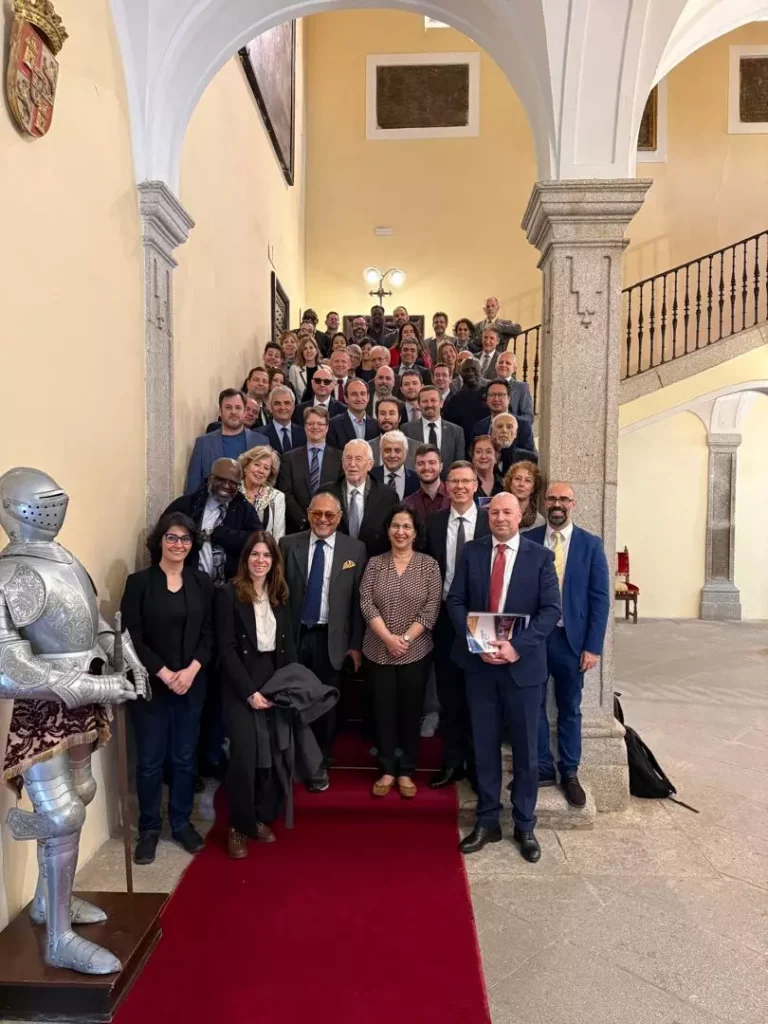
Against the historic backdrop of one of Europe’s most celebrated cities of interreligious coexistence, the International Association for the Defense of Religious Liberty (AIDLR) held its Conscience and Liberty 2026 Conference in Toledo, Spain, March 24-26. The conference, titled “A New Era in Human Rights? Impacts on Freedom of Religion and Belief,” brought together about 70 invited participants from across the globe—scholars, jurists, human rights practitioners, diplomats, faith-based leaders, and representatives of international institutions—for three days of in-depth reflection, debate, and action on the state of freedom of religion or belief (FoRB) in an increasingly turbulent world.
A Historic Hall, a Global Message
The conference opened on the morning of March 24 in the Sala Capitular of the Ayuntamiento de Toledo—Toledo’s historic city hall—in a ceremony that set the tone for the days ahead. The opening ceremony was moderated by Paulo Macedo, secretary-general of AIDLR, and Rubén Guzmán of AIDLR Spain.
The proceedings began with an institutional message of the highest international standing: a written address from His Excellency António Guterres, secretary-general of the United Nations, sent expressly to the conference and read aloud by Nazila Ghanea, United Nations special rapporteur on freedom of religion or belief. In his message Secretary-General Guterres described freedom of thought, conscience, religion, and belief as a cornerstone of human dignity and, more broadly, a litmus test for the state of human rights.
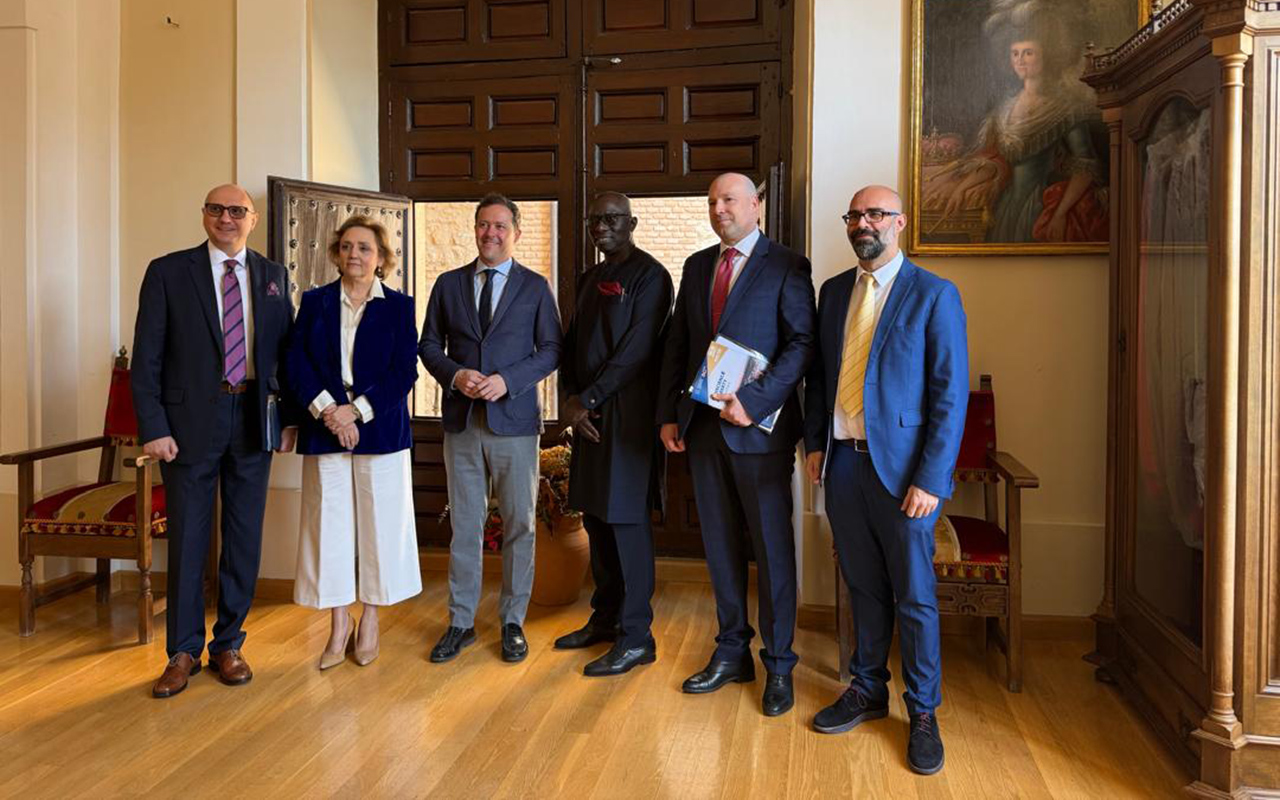
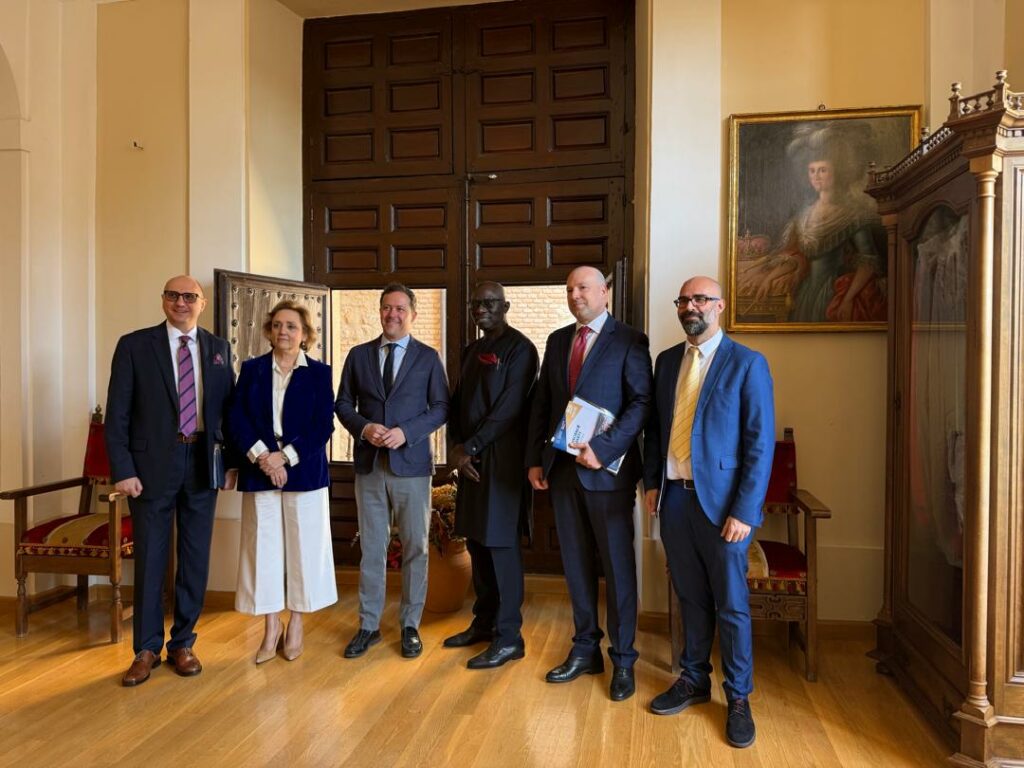
Institutional addresses followed from a distinguished roster of leaders: Barna Magyarosi, president of AIDLR; Adama Dieng, president of the AIDLR Honorary Committee; Óscar López, president of AIDLR Spain; Soledad de Frutos del Valle, representative of the Diputación Provincial de Toledo; and Carlos Velasquez Romo, mayor of Toledo, who welcomed the assembly to his city with words underscoring Toledo’s unique vocation as a symbol of intercultural dialogue.
A central moment of the ceremony was the reading of AIDLR’s Eightieth Anniversary Statement. The statement reaffirmed AIDLR’s founding principles and its commitment to defending freedom of conscience as a foundation of world peace.
The opening ceremony also featured the world premiere of a commemorative video documentary marking AIDLR’s 80 years of history. The film traced the association’s journey from its founding by Jean Nussbaum, in 1946—in the immediate aftermath of the Second World War and amid the drafting of the Universal Declaration of Human Rights—through decades of engagement at the United Nations, the European Union, the Council of Europe, and beyond.
Nussbaum’s founding motto, “We do not stand for interests. We stand for principles,” resounded throughout the ceremony, and indeed across the entire conference, as a living charge to all present.
Recognizing Lifetimes of Service
In recognition of exceptional contributions to the cause of religious liberty, AIDLR presented its Eightieth Anniversary Awards of Honor to three distinguished individuals whose careers have been closely intertwined with the work of the association and the broader field of human rights: Alberto de la Hera, Ganoune Diop, and John Graz.
Alberto de la Hera is a leading Spanish scholar of ecclesiastical law and church-state relations, whose academic and institutional contributions to the field have spanned decades. Ganoune Diop is the former secretary general of the International Religious Liberty Association and former director of the Public Affairs and Religious Liberty Department of the General Conference of Seventh-day Adventists, and a key figure in international advocacy for FoRB and interreligious dialogue. And John Graz is former secretary general of the International Religious Liberty Association (IRLA) and founder of the International Center for Public Affairs and Religious Liberty in France, whose editorial and diplomatic work has helped shape the global conversation on religious freedom.
Engaging the Critical Questions
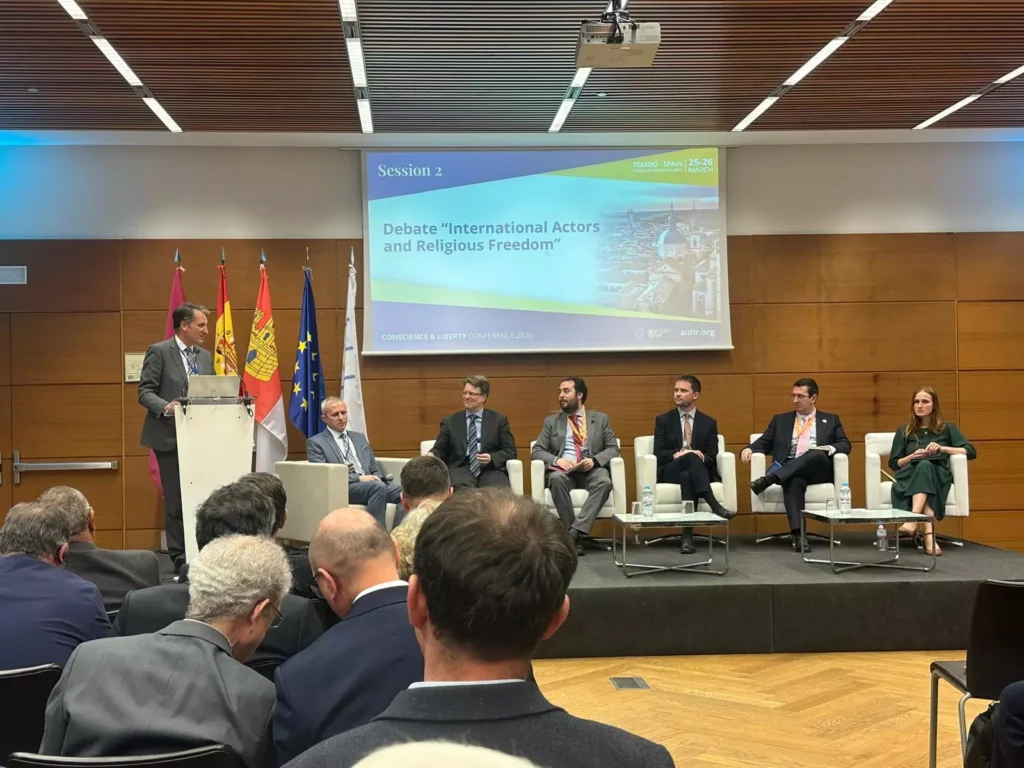
Following the opening ceremony, the plenary program at the Palacio de Congresos “El Greco” explored the critical questions at the heart of religious freedom. The sessions opened with a keynote by Ghanea, who outlined the global pressures on the FoRB mandate. This was complemented by dialogues between international actors and civil society leaders.
The program also tackled the geopolitical complexities of a changing world, specifically addressing the fragmentation of global responsibilities and the tensions between multilateralism and religious nationalism. A significant portion of the discourse focused on the digital age, examining how AI and new communication technologies introduce novel forms of surveillance and discrimination. The conference concluded with a debate on the “Voices of Conscience,” which brought the core intellectual themes of the gathering to a close.
The Declaration of Toledo 2026
One of the most substantive outcomes of the conference was the adoption of the Declaration of Toledo 2026, an AIDLR statement on rising challenges to freedom of conscience, belief, and religion. The declaration sets out 12 points of action, calling upon international organizations, state actors, and civil society to take action.
Among other things, it calls for a recognition of “the principle of human dignity as the foundation of all human rights, including freedom of conscience, belief and religion.” It also calls to “guard freedom of conscience, belief, religion and expression as inviolable and indivisible rights that are indispensable to preserving effectively human rights,” and to enhance the commitment to international law, calling on states and institutions to uphold foundational documents.
At the same time, the document calls to “promote a multilateralist approach, endorsing the function and authority of international institutions to defend peace, security, and human rights, and stand against unilateral actions weakening the protection of freedom.” The declaration also calls to “prevent, condemn, and react against all discrimination, persecution, intolerance, and violence on grounds of religion or belief.”
One call for action also asks to “reaffirm and strengthen separation of state and religion, enacting it by law, affirming it by word, and assuring it by deed, as an intrinsic safeguard for individual freedom and for democratic institutions.”
About the AIDLR
The International Association for the Defense of Religious Liberty is a nongovernmental organization dedicated to promoting and defending freedom of conscience, worship, and religion worldwide. Nussbaum, its founder, was a Seventh-day Adventist physician who became a strong advocate for freedom of conscience.
The organization works closely with international organizations, governments, and civil society to advocate for policies and actions that safeguard religious liberty across the world. “Our organization operates under the belief that religious freedom is a fundamental human right, integral to peace, tolerance, and global cooperation.”
AIDLR’s current president is Barna Magyarosi, current president of the Inter-European Division of the Adventist Church (EUD). He previously served as EUD secretary and as chair of the regional Biblical Research Committee (BRC).
The original version of this story was posted by the International Association for the Defense of Religious Liberty.
Related news
 From the Field
Pathfinder Evangelistic Tour Across Southeast Mexico Celebrates 164 Baptisms
Families join young people in decisions for faith as leaders recognize efforts to establish clubs in every church.
From the Field
Pathfinder Evangelistic Tour Across Southeast Mexico Celebrates 164 Baptisms
Families join young people in decisions for faith as leaders recognize efforts to establish clubs in every church.
 From the Headquarters
High School Students Across Inter-America Compete in Bible Reading Contest
Adventist Virtual Library contest brings together 14 finalists to test their knowledge of Genesis and strengthen Bible reading and faith.
From the Headquarters
High School Students Across Inter-America Compete in Bible Reading Contest
Adventist Virtual Library contest brings together 14 finalists to test their knowledge of Genesis and strengthen Bible reading and faith.
 From the Headquarters
A Journey to Egypt Confirms a Calling
Teaching Bible and English in Egypt confirmed Rubén Díaz’s calling to serve in a cross-cultural context.
From the Headquarters
A Journey to Egypt Confirms a Calling
Teaching Bible and English in Egypt confirmed Rubén Díaz’s calling to serve in a cross-cultural context.