
A Wave of Immigration Buoyed Multicultural Churches. Now Attendance Is Dropping.
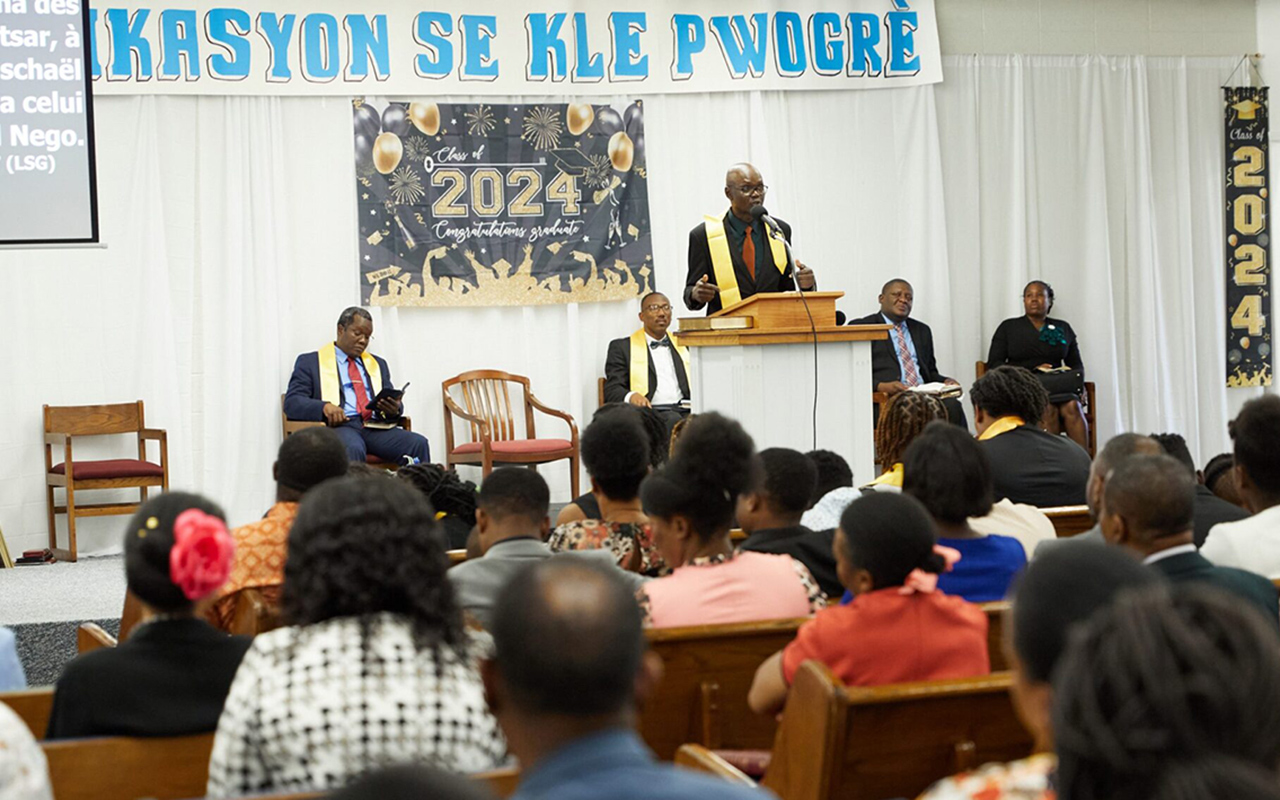
Immigration policies affecting many Adventist church members across the United States
January 14, 2026 | Debbie Michel, Lake Union Herald
On any given Sabbath morning in the Lake Union in the United States, worship might be heard in Spanish, Ukrainian, Haitian Creole, Burmese, or English, voices lifted in praise from families who now call the Midwest home. But in recent months another sound has filled the pews: quiet, persistent uncertainty.
At the center of that unsettledness is a patchwork of changing immigration policies affecting hundreds of thousands of people across the United States, many of them Adventist Church members. Some wait for the government to decide the fate of humanitarian programs that once allowed them to work. Others wonder how long they can stay employed, or whether a missed appointment might cause a knock on the door. A few have already begun packing bags.

“Every day our people wake up with the same question,” said Vitalii Hanulich, an Illinois Conference pastor of the Ukrainian church in Chicago. “Should I wait? Should I leave? No one knows what will happen next.” Nearly all of his members hold a blend of parole and temporary protected status (TPS), uncertain arrangements that have expired for some and, for such others as Hanulich, a reprieve until late 2026.
They are not alone. TPS, an immigration program granted to individuals who cannot safely return to their home countries, currently shields more than 1 million people. Five nations represent the largest groups: Venezuela, Haiti, El Salvador, Ukraine, and Honduras. For many people in the pews, this protection is temporary and fragile.
The Lake Union’s more than 90,000 members include thousands who fall into these categories or who live alongside relatives who do. Their experiences vary widely. Most communities report intense disruption, especially if their members are undocumented or their temporary protected status has expired. Yet regardless of status, churches must now navigate ministry in a climate in which legal uncertainty quietly shapes daily life.
What follows is a portrait of the moment, drawn from extended interviews with the five Lake Union Hispanic multicultural directors, three pastors, and a church member.
Ministry Disrupted Across the Union
In western Michigan, Richar Perez watched a thriving Bible study group collapse almost overnight. Ten farmworkers had been preparing for baptism. Perez, a pastor, said a group of farmworkers would arrive Sabbath morning and, instead of attending Sabbath School, would gather in the chapel for Bible studies. “They were inviting other people to church, too,” he said.
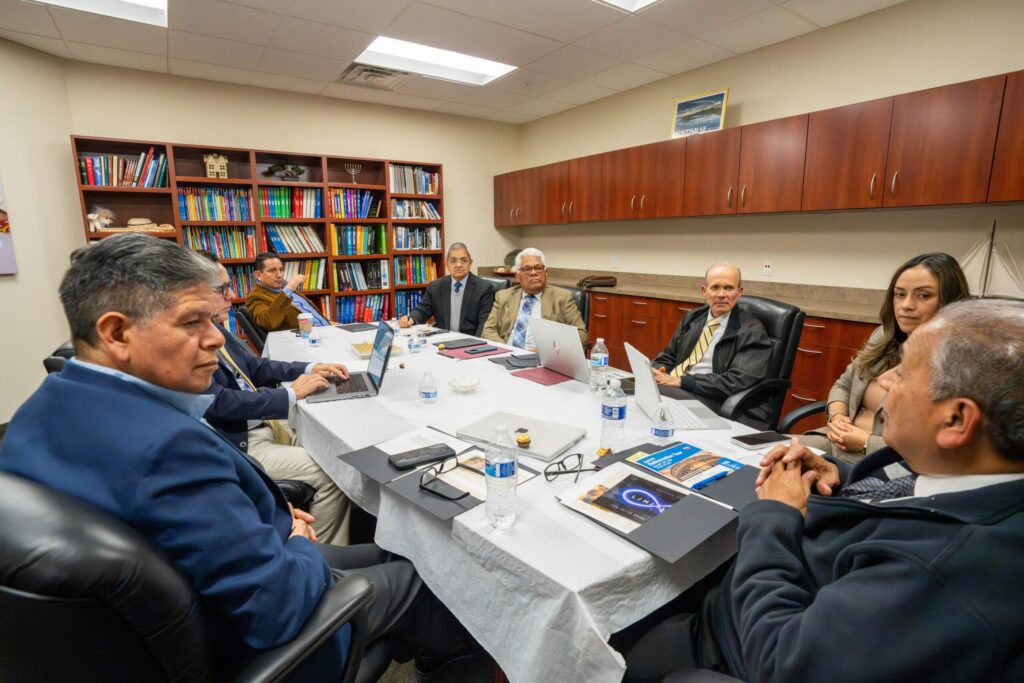
“In a single week the entire group disappeared,” Perez said. “Some moved to other states. Some went into hiding. Some stopped answering their phones. We lost half our people.”
Daniele Spinosa in Ann Arbor and Detroit has seen similar patterns. Families who once filled pews now worship from home. Others, fearing traffic stops or workplace checks, have returned to their home countries. Several were preparing for baptism before they vanished. “It is discouraging to the church,” Spinosa, a pastor, said.
A Church Plant Loses Its Leader
In Wisconsin the disruption is acute. Hispanic coordinator Evelio Miranda recounted the story of a leader of a growing church plant in a rural northwestern part of the state. The congregation began as home Bible studies and had grown into a vibrant small group that met every week.
The church planter had lived in the United States for 11 years, working as a carpenter building sheds. He supported his family and local congregation faithfully. When police contacted him about an old traffic citation, he went to the station willingly, believing it would be routine.
“When he arrived, instead of asking him about the citation, they detained him,” Miranda said.
The member now awaits deportation. His wife and children are heartbroken. He is undocumented, but two of their children are United States citizens. The family is preparing for the likelihood of returning to Mexico together so they wouldn’t be separated.
The church plant lost not only its leader but its spiritual center. Members are grieving. Attendance has shrunk. The future of the group is uncertain.

In Chicago, a city targeted for immigration raids, the disruption is steady. Eva Cruz, a lifelong member of the South Hispanic church and a member of the Lake Union Executive Committee, sees fear reshaping daily routines. Her church sits at the crossroads of several immigrant neighborhoods, drawing members from Pilsen, Cicero, Little Village, and the Hispanic corridor of Chicago.
One family she knows no longer leaves their house. “There’s an elderly couple who have decided to actually bunker down in their apartment. They’re not going out. Their children are bringing them food because they’re too frightened to go out on their own.”
Haitian Congregations Rattled
In Indiana, uncertainty has shaken entire congregations. Haitian Adventists have been deeply unsettled by the government’s announcement that the TPS for Haitians will end on February 3.
Lake Region Multicultural Ministries director Eddie Allen, who supports Haitian churches in Indiana, said one company had planned an organizational service. It was meant to be a celebration. Instead, leaders postponed it.
When the event was finally held months later, he described what he witnessed. “The fear in their eyes and faces. They even had lookouts, little children looking through the door, someone sitting out in a car looking. That was sad,” he said wistfully.
Indiana Multicultural Ministries director Noel Ojeda hears similar stories. “Members are evaluating whether to move to Canada or other countries,” he said. “They do not want to be caught in a situation where they cannot stay and cannot return safely.”
The United States currently has a “Do Not Travel” advisory for Haiti because of kidnapping, civil unrest, violence, and limited health care. These same dangers are what drove many families to flee in the first place.

The disruption is not limited to Spanish- or Franco-speaking congregations. Ukrainian churches, Burmese groups, and Caribbean congregations also feel the strain.
Vitalii Hanulich said the Ukrainian attendance in the congregation he pastors has dropped by 10 percent. Giving has dipped as some members lose jobs because employers hesitate to keep staff whose work permits might expire. Four families have already returned to Europe. Many others are considering their options.
“We have children who were beginning to thrive here,” Hanulich said. “Families who were rebuilding their lives. Now everything feels uncertain again.”
A Difficult Season
Across the Lake Union, Multicultural Ministries coordinators describe this season as one of the most difficult they have ever faced. They spend their days counseling families, fielding urgent calls, connecting members with attorneys, praying with congregations, and trying to steady pastors who feel overwhelmed.
Allen has served in ministry for four decades. “This is the most challenging time I have ever seen,” he said. “The stress, the anxiety, the uncertainty—it is real,” Allen said. “People feel vulnerable.”
Nilton Garcia, Michigan Conference Hispanic Ministries coordinator, shares similar sentiments. These aren’t distant media stories of people rounded up for deportation, he explained. “These are people from our own churches.”
A Call to Action
Cruz says the harsh rhetoric has fueled inhumane treatment of immigrants and driven many Hispanics into hiding. “With the rhetoric now, it makes it seem that you are a criminal and therefore you deserve to be treated as less than worthy.”
She believes the church must reclaim its moral clarity. “There’s no crime for being here undocumented,” she said. “We have to stand for what is right and call out when people are treated inhumanely.” For Cruz, the issue is not political but spiritual. “We are called to be the hands and the feet of Jesus,” she said emphatically.
Related news
 From the World Church
General Conference Announces New Apps Built for OneVoice27
Adventist Knowledge is Adventist Intelligence and Adventist+ will help church members and those curious about the Adventist faith discover the Bible.
From the World Church
General Conference Announces New Apps Built for OneVoice27
Adventist Knowledge is Adventist Intelligence and Adventist+ will help church members and those curious about the Adventist faith discover the Bible.
 From the World Church
Treasurer Confirms Record Mission Investment Ahead of OneVoice27
Paul H. Douglas’ report highlights mobilization of resources “as never before.”
From the World Church
Treasurer Confirms Record Mission Investment Ahead of OneVoice27
Paul H. Douglas’ report highlights mobilization of resources “as never before.”
 From the World Church
Church Manual Will Undergo “Comprehensive” Revision Before 2030
Delegates seek clarity on scope of revision and motion passes 167 to 32.
From the World Church
Church Manual Will Undergo “Comprehensive” Revision Before 2030
Delegates seek clarity on scope of revision and motion passes 167 to 32.