
One Storm Is Enough: ADRA Inter-America Prepares Despite Quiet Hurricane Forecast
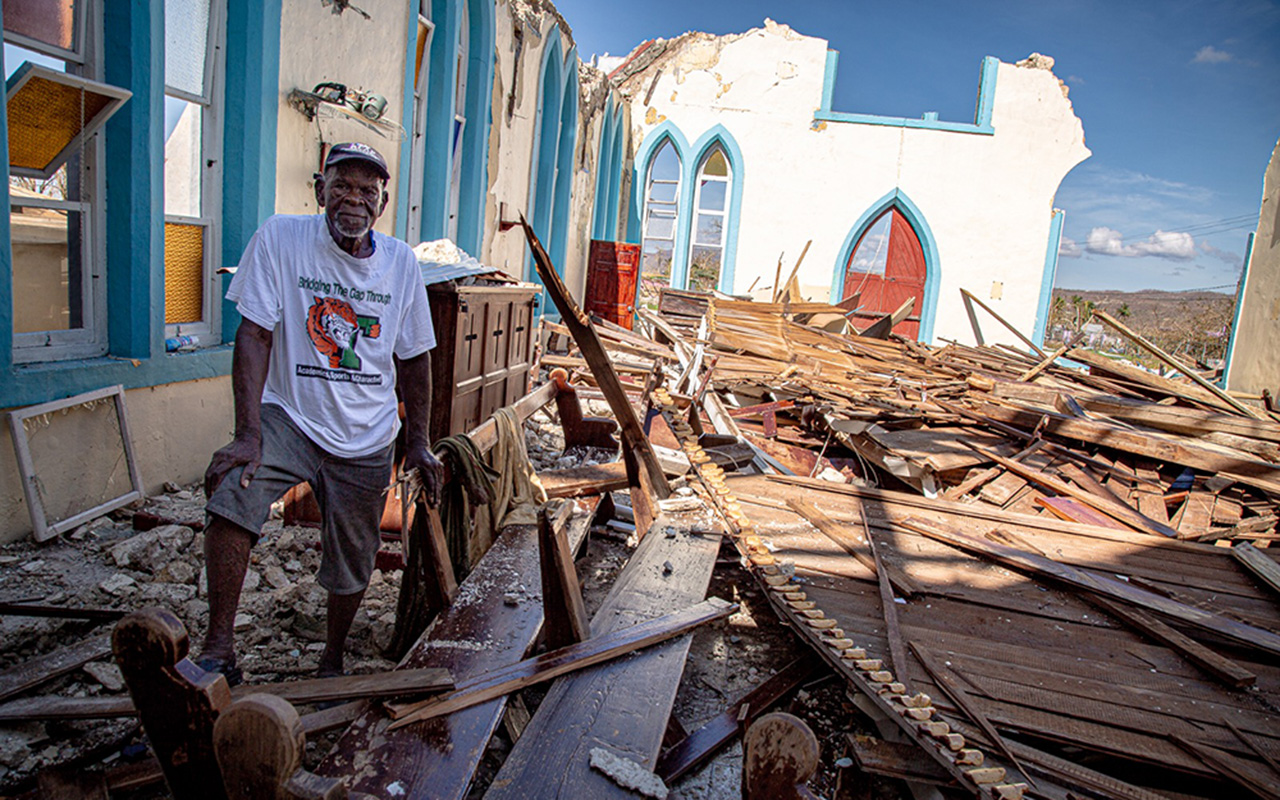
Regional humanitarian teams remain on alert despite forecasts for a below-normal Atlantic hurricane season.
June 3, 2026 | Miami, Florida, United States | ADRA Inter-America Regional Office
As the 2026 Atlantic hurricane season officially begins, ADRA’s Inter-America Regional Office reaffirms its commitment to protecting vulnerable communities across Mexico, Central America, the Caribbean, Colombia, and Venezuela—regardless of seasonal forecasts.
The United States National Oceanic and Atmospheric Administration (NOAA) has forecast a below-normal 2026 Atlantic hurricane season, with 8 to 14 named storms, including 3 to 6 hurricanes and 1 to 3 major hurricanes classified as Category 3 or higher. NOAA said the expected decrease in storm activity is largely linked to developing El Niño conditions, despite slightly warmer-than-normal Atlantic Ocean temperatures.
While the forecast may appear reassuring statistically, the Adventist Development and Relief Agency (ADRA) Inter-American Regional Office is urging partners, donors, government counterparts, and the public not to become complacent. The agency issued the statement to mark the official start of the hurricane season on June 1 and reaffirm its full operational readiness across the region.
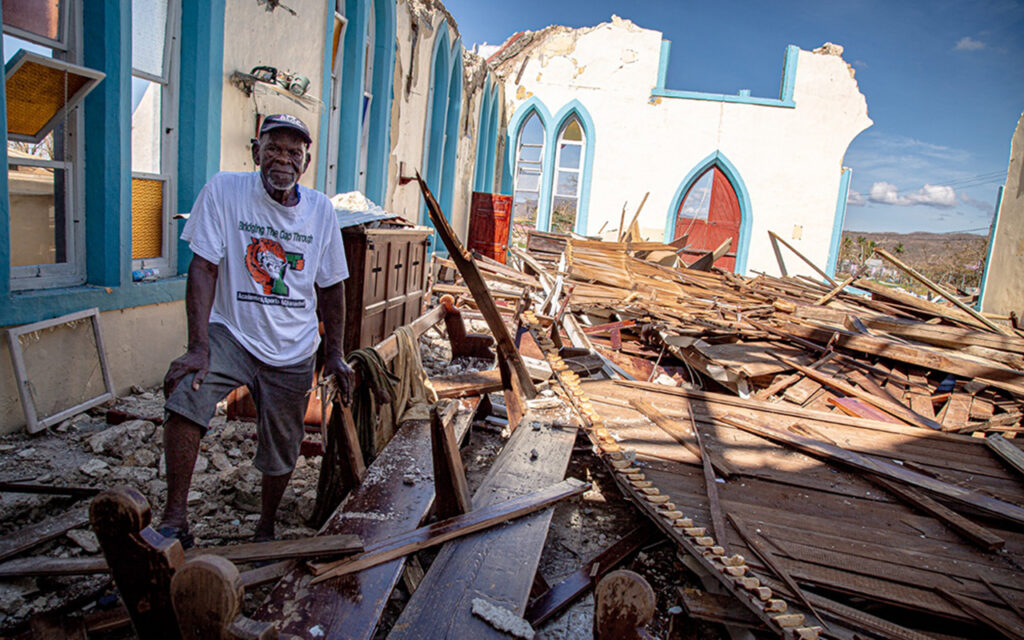
History has repeatedly shown — from Hurricane Maria in 2017 to Hurricane Iota in 2020 — that a single powerful storm striking a vulnerable country can trigger a humanitarian crisis requiring months or even years of recovery.
For millions of people across ADRA Inter-America’s territory who live in inadequate housing, lack reliable access to clean water and food security, or reside in high-risk coastal and riverine areas, a statistically “below-normal” season offers little reassurance. ADRA says the same level of vigilance is required every year.
“A below-normal forecast is not a reason to lower our guard — it is a reminder that nature does not follow statistics,” said Rubén Ponce, ADRA Inter-America director. “Somewhere in our region, communities are at risk right now. Our job is to be ready before the storm, not after it,” he said. “ADRA Inter-America will maintain the same level of operational readiness and commitment this season as in any other year.”
Year-Round Preparedness in Action
Since the end of the previous season, the regional office and its network of country offices throughout the Caribbean, Central America, and South America have remained engaged in continuous emergency preparedness activities.
These efforts have included simulation exercises (SimEx) to stress-test response plans under realistic disaster scenarios, multi-stakeholder workshops with national civil protection authorities and humanitarian coordination bodies, and updates to contingency plans and emergency response frameworks.
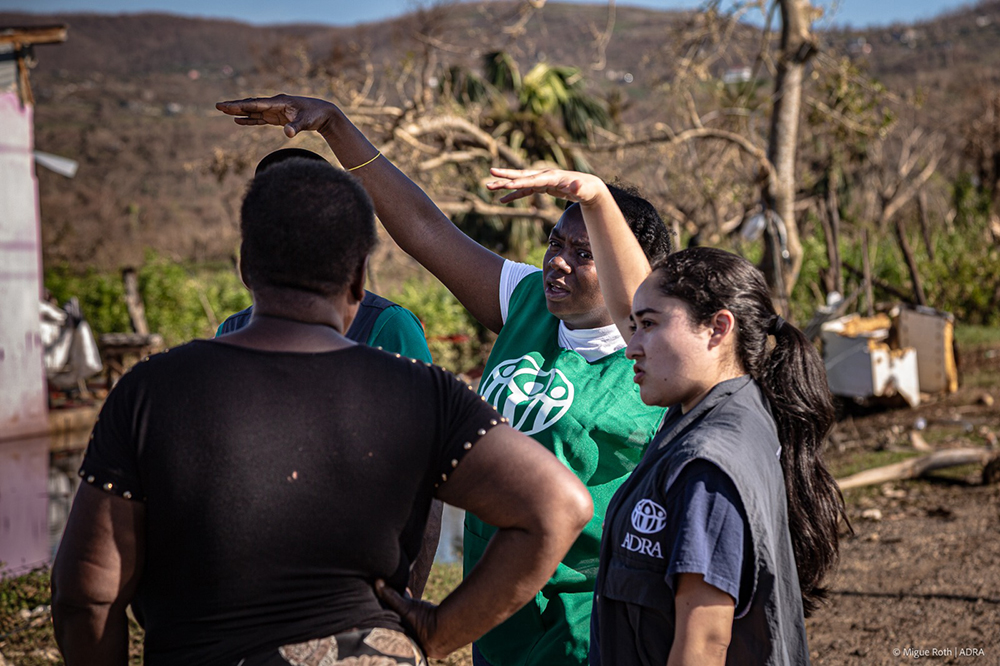
“Our country offices have worked throughout the year — not just in June — to ensure that when a storm hits, we are not scrambling,” said Elian Giaccarini, regional emergency response coordinator for ADRA Inter-America. “We have tested our plans, trained our teams, engaged communities, and strengthened our systems. We stand ready to support the people of this region.”
Immediate Response Capacity and International Surge
ADRA Inter-America has established systems to enable rapid mobilization in the immediate aftermath of a disaster. Country offices are equipped to conduct rapid needs assessments and launch early response activities within 72 hours of a major event.
Should the scale of a disaster exceed national response capacity, ADRA’s regional and global network is prepared to mobilize additional personnel, funding, and emergency supplies from international sources.
Through ADRA’s global network of more than 118 member organizations and institutional partners, the agency can rapidly scale humanitarian assistance when local resources are overwhelmed, helping ensure affected communities are not left without support.
ADRA Inter-America also maintains active coordination with the United Nations Office for the Coordination of Humanitarian Affairs (UNOCHA), the World Food Programme (WFP), and other humanitarian organizations throughout the region to support coordinated emergency response efforts during major disasters.
A Call to Action for Donors and Partners
ADRA Inter-America is inviting donors, government agencies, institutional funders, and civil society organizations to support preparedness and early response initiatives throughout the 2026 hurricane season.
Pre-positioned emergency funding enables faster and more efficient humanitarian response during the critical first days after a disaster, when every hour counts.
To learn more about ADRA Inter-America’s emergency response operations, partnership opportunities, or ways to contribute, visit adra.org or contact the regional office directly.
About ADRA Inter-America
ADRA Inter-America serves as the regional coordination office of the Adventist Development and Relief Agency for Mexico, Central America, the Caribbean, Colombia, and Venezuela.
The office supports country-level ADRA offices in implementing relief and development initiatives, coordinating emergency response operations, and strengthening local humanitarian capacity through technical assistance and resource mobilization.
ADRA operates in more than 130 countries worldwide with a network of nearly 6,000 staff serving communities through a mission of justice, compassion, and love.
Related news
 From the World Church
A Handful of Walnuts a Day May Make Your Diet Less Inflammatory
Published research findings add to previous studies about the role of nuts in human diet.
From the World Church
A Handful of Walnuts a Day May Make Your Diet Less Inflammatory
Published research findings add to previous studies about the role of nuts in human diet.
 From the World Church
Middle East gathering highlights mission growth and need for more workers
Church leaders, former missionaries, and retirees reconnect while hearing updates on church planting and Middle East University.
From the World Church
Middle East gathering highlights mission growth and need for more workers
Church leaders, former missionaries, and retirees reconnect while hearing updates on church planting and Middle East University.
 From the World Church
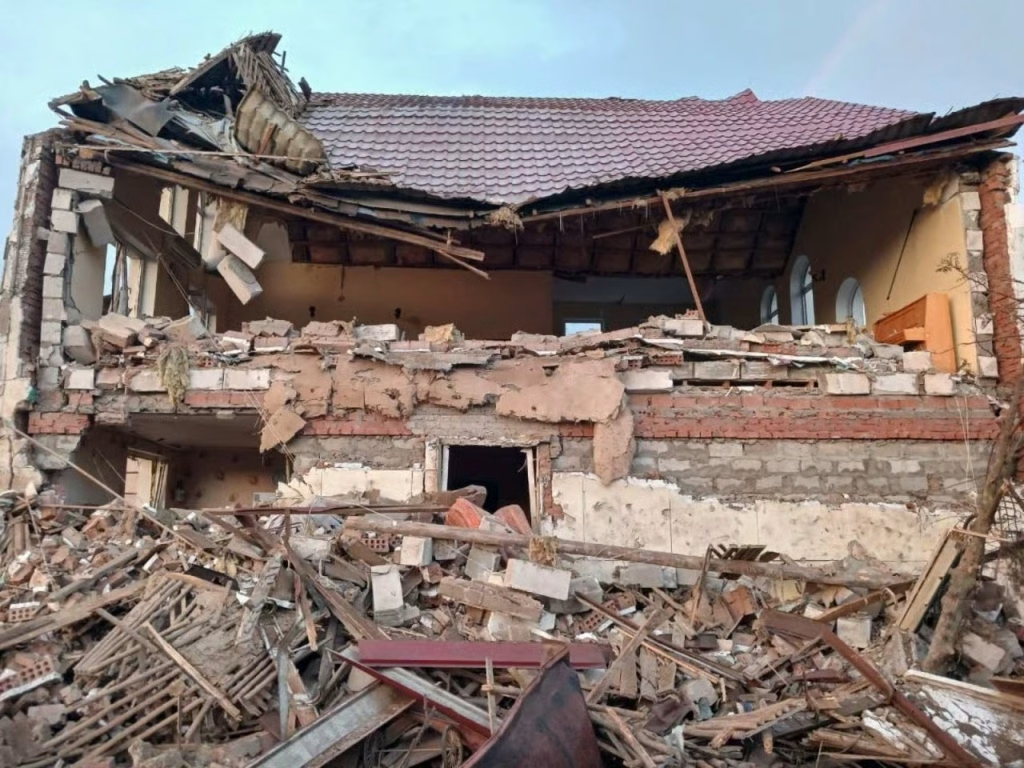
Adventist churches in Ukraine damaged during weekend shelling and airstrike
Three churches were damaged as a result of a shelling and airstrike during the weekend, multiple injuries and one death reported.
From the World Church
Adventist churches in Ukraine damaged during weekend shelling and airstrike
Three churches were damaged as a result of a shelling and airstrike during the weekend, multiple injuries and one death reported.