Bible Conference Draws Hundreds to Explore the Work of the Holy Spirit
Montemorelos University hosts scholars and church leaders for an in-depth study of the Holy Spirit’s divinity and role in salvation.
July 27, 2026 | Montemorelos, Nuevo León, Mexico | Laura Marrero and Inter-American Division News Staff
“The Holy Spirit is the one who keeps us spiritually alive throughout our Christian experience,” said Dr. Angel Manuel Rodriguez, former director of the General Conference Institute for Biblical Research (BRI), as he summarized the purpose of the 10th Bible Conference at Montemorelos University (UM) in Montemorelos, Nuevo León, México.
The meeting sought to answer a question that runs through the life of every believer: who is the Holy Spirit and how does He work today in the life of the church and of every Christian?
From July 1-4, UM welcomed more than 800 pastors, elders, church leaders, theology professors and church members from all over Mexico. A group of pastors from Arizona, United States, also participated.
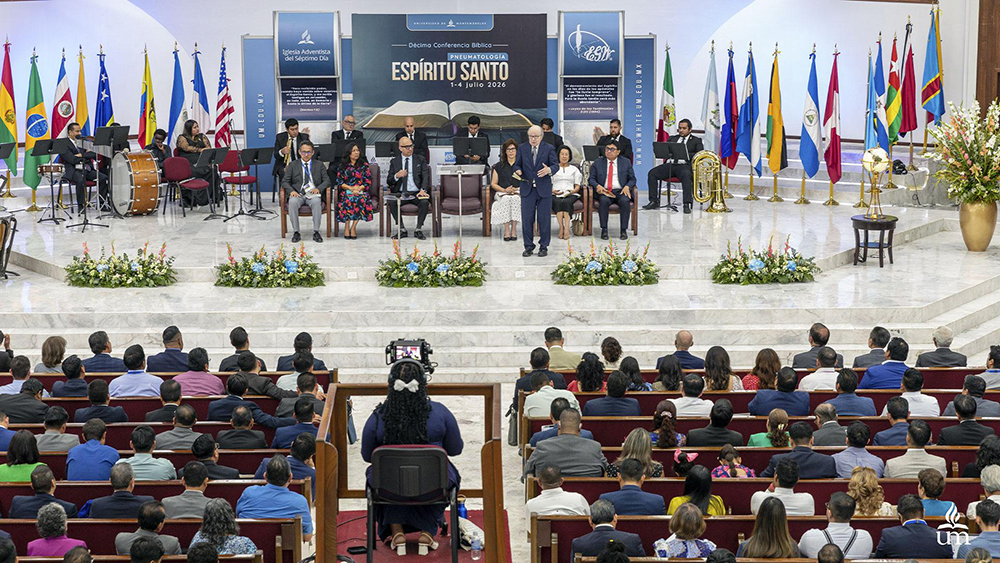
Dr. Ángel Manuel Rodríguez, former director of the General Conference Biblical Research Institute, presents the Sabbath worship messages during the Tenth Biblical Conference at Montemorelos University, July 1-4, 2026. [Photo: Lisandra Vicente/Montemorelos University]
A Timely Topic
Why dedicate an entire event to the Holy Spirit, some may ask.
For Dr. Juan J. Andrade, dean of the UM School of Theology, director of the Ellen G. White Research Center on campus, the answer results from current realities in the church.
“Currently there are various ideas and currents that affirm that the Holy Spirit is only an influence, or that appeal to a supposed return to the faith of our pioneers, arguing that some of them did not believe in the person of the Holy Spirit,” he said.
Andrade explained that the purpose of the conference was to offer biblical tools to strengthen the ministry of those who serve in churches.
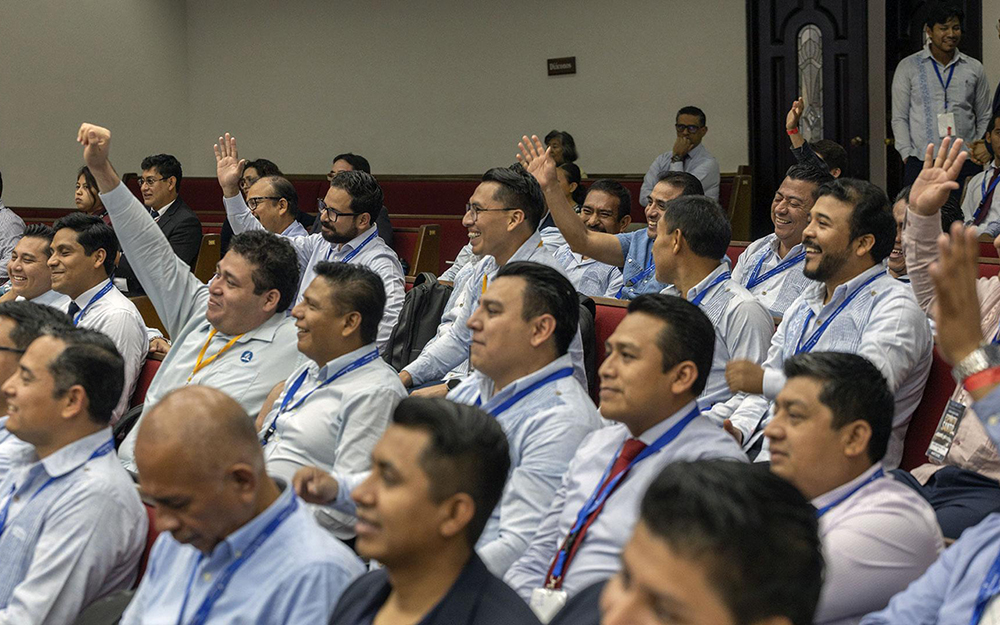
About 800 pastors, elders, church leaders, theology professors, and church members from across Mexico, along with a group of pastors from Arizona, attended the event. [Photo: Jhoan Rueda/Montemorelos University]
The event brought together experts from the BRI of the General Conference, Andrews University, the White Estate, the Inter-American Adventist Theological Seminary (IATS) and the Theological Seminary at River Plate Adventist University in Argentina, among other schools.
Among them were BRI director Dr. Elías Brasil de Souza, former White Estate director Dr. Alberto Timm, AU Theological Seminary dean Dr. Jiri Moskala, former BRI director Dr. Ángel Manuel Rodríguez, and other Adventist researchers and professors with international experience.
Plenary presentations developed the theme from different approaches, including the Old and New Testaments, systematic theology, the history of Adventist thought, mission, sanctuary, and the writings of Ellen G. White. The goal? To offer a comprehensive view of the person and work of the Holy Spirit, organizers said.
In the Life of the Believer
Although the presentations addressed the theme from different theological disciplines, the speakers agreed that the study of the Holy Spirit only fulfills its purpose when it leads to a deeper relationship with Christ and a life transformed by his action.
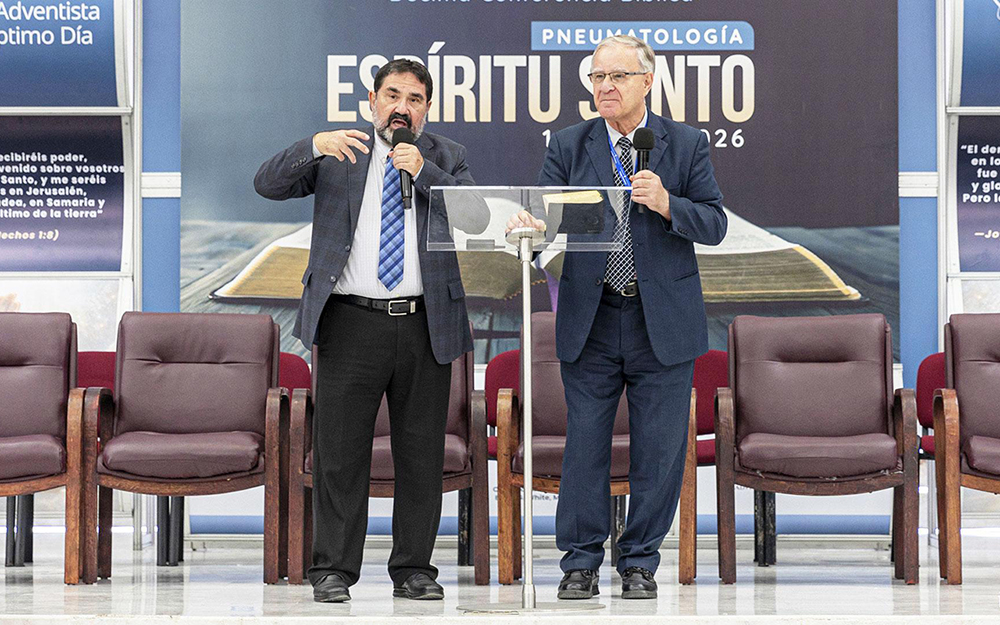
Dr. Ranko Stefanović, professor of New Testament at the Seventh-day Adventist Theological Seminary, was one of the featured speakers at the Tenth Biblical Conference at Montemorelos University. [Photo: Jhoan Rueda/Montemorelos University]
In the same vein, Brasil de Souza recalled that doctrinal unity can only be built on the authority of Scripture. “As Seventh-day Adventists, our final authority is the Bible. The Bible is God’s revelation and any teaching about the Holy Spirit must be in harmony with it,” he said.
Rodríguez, on the other hand, explained that while many people continue to view the Holy Spirit solely as a force or influence, biblical testimony presents Him as a person with whom the believer can develop a relationship. “The Bible constantly testifies that He is a person… with whom we can have a loving relationship and whose presence in our lives sanctifies us daily,” he said.
Back to the Core of the Gospel
Rodríguez was also the speaker on Friday and Sabbath, as he sought to elaborate on the theme of the conference from a pastoral and Christocentric approach. “Jesus’ baptism marked not only the beginning of his ministry, but also a joint action of the Godhead within the plan of salvation and the beginning of the ultimate conflict between good and evil.
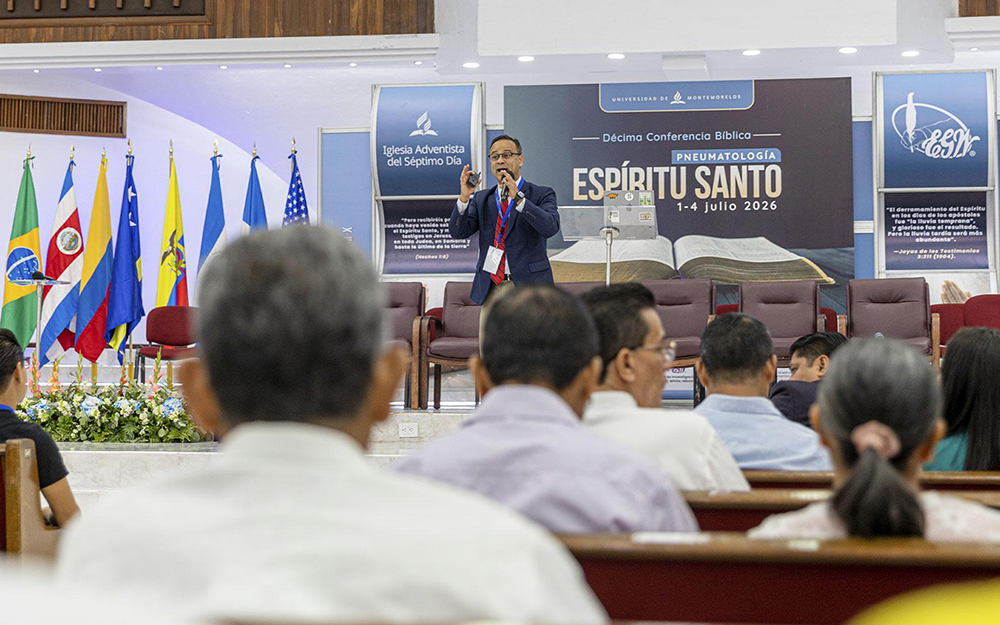
Dr. Félix Cortez, professor of New Testament Literature at the Seventh-day Adventist Theological Seminary at Andrews University, was among the featured speakers at the Tenth Biblical Conference at Montemorelos University. [Photo: Lisandra Vicente/Montemorelos University]
A Special Recognition
During the conference, Montemorelos University awarded the degree of Doctor Honoris Causa in Religious Education to Dr. Ángel Manuel Rodríguez. The award recognized his contributions to biblical research and the development of Adventist theology during several decades of service to the Seventh-day Adventist Church.
Dr. Judith Ayala, UM academic vice-president commended Dr. Rodríguez for his exceptional gift of making the depth of theological thought accessible to the daily life of the church. In this way, he has served as a bridge between academia and members in the pews, she said.
Upon receiving the distinction, Dr. Rodriguez expressed his deep gratitude in an emotional speech in which he linked his personal story to the theme of the conference. Recalling its simple origins, he affirmed that the work of the Holy Spirit consists precisely in seeing the potential in the “rustic raw material”, protecting it and transforming it into a life of service.
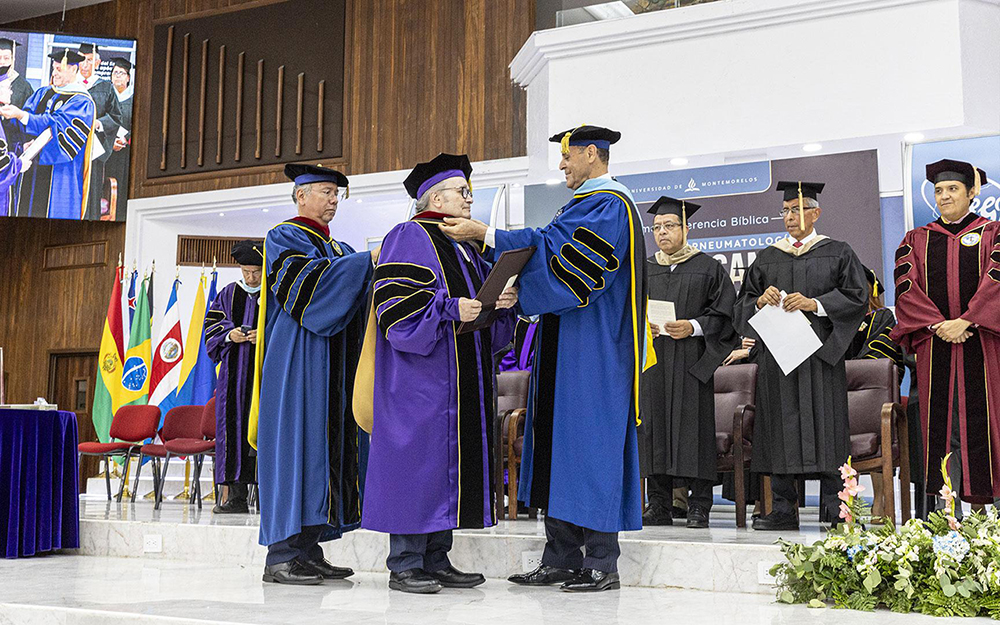
Montemorelos University awarded an honorary Doctor of Religious Education degree to Dr. Ángel Manuel Rodríguez during the Tenth Biblical Conference. [Photo: Lisandra Vicente/Montemorelos University]
As part of the program, the conference included a dialogue forum in which several experts addressed some of the doctrinal and pastoral challenges currently facing the Adventist Church.
Among the topics discussed were the doctrinal development of the church, how to understand the legacy of the pioneers in light of the Scriptures, how to support members with concerns about the Holy Spirit, and the importance of preserving the unity of the church through biblical study and pastoral dialogue.
Several scholars stressed the need to respond with patience, sensitivity and biblical fidelity to those who seek to better understand these teachings.
The forum concluded with a reflection on the balance between doctrine and Christian experience. The specialists agreed that the work of the Holy Spirit is evidenced in a Christ-centered church, committed to mission and guided by Scripture.
An Invitation to Further Studies
The conference concluded with a call to move past academia to reflect its findings in the life of the church.
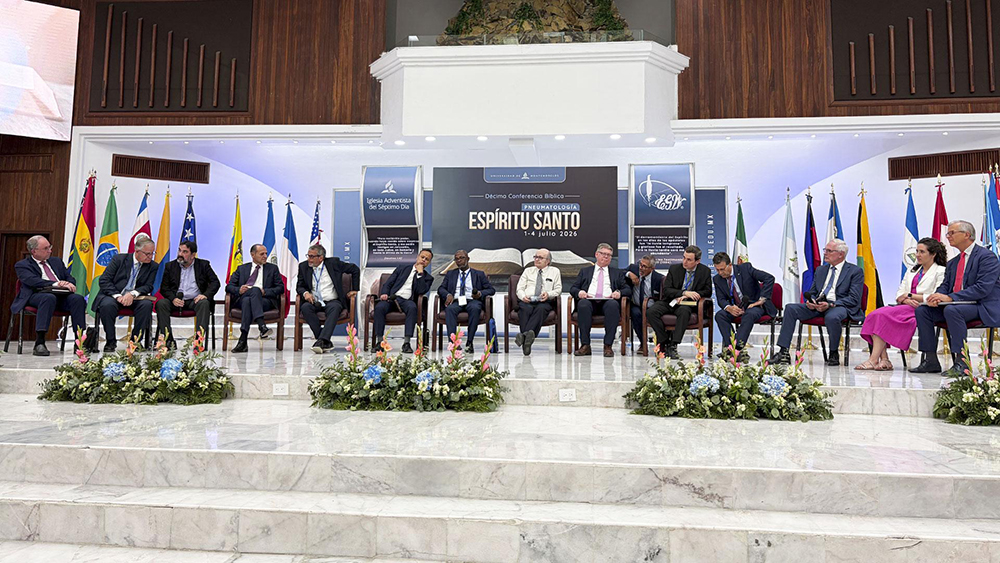
All of the featured speakers participated in a panel discussion on Sabbath afternoon during the Tenth Biblical Conference at Montemorelos University. [Photo: Lisandra Vicente/Montemorelos University]
“We hope that attendees will leave with a firmer conviction that the Seventh-day Adventist Church clearly holds that the Holy Spirit is God and one of the three persons of the Godhead, along with the Father and the Son. We also want them to understand the essential role of the Holy Ghost in the plan of salvation and in the life of the believer,” he said.
As a result of the work carried out during the four days of study, participants presented a Consensus Statement, which summarizes the main biblical convictions reaffirmed during the event. Among other things, it states that “the Holy Spirit is a coeternal person with the Father and the Son, a co-participant in the work of creation, sustenance, and redemption of man, as presented in the Old and New Testaments.”
It also states that “the mission of the Holy Spirit is fundamentally Christocentric,” and that “the work of the Holy Spirit is essential to the salvation of people, as it convicts of sin, calls to repentance, brings about the new birth, promotes spiritual growth, and works sanctification.”
Held every two years since 2009, the Bible Conference devotes each edition to the study of a specific topic in Adventist theology.
The original version of this story was posted on the Montemorelos University’s news site.