
How OneVoice27 Could Live Up to the Hype
Millions of Seventh-day Adventists are saying it will be the greatest thing ever. What if it isn’t?
April 14, 2026 | Silver Spring, Maryland, United States | Marcos Paseggi
From the church headquarters to the farthest church region, the Seventh-day Adventist landscape seems to be filled lately with the steady and ongoing promotion of OneVoice27. The initiative seeks to commemorate 2,000 years since Jesus’ baptism and the beginning of His ministry. According to church leaders, the project envisions using all church media, leaders, and members to make an impact around the world in September 2027 by sharing God’s message “as has never been done before.”[1]
But what if OneVoice27, commendable as it may be, fails to live up to its hype? What if it’s just—as some detractors characterize it—another top-down evangelistic-first project that is neither new nor as groundbreaking as it’s purported to be? What if some of those opposing voices actually have a point?
Please allow me to play the devil’s advocate for a while and share several ways in which OneVoice27 might not live up to the hype that has been built around it, and what stakeholders—you and I—can do about it.
At first sight OneVoice27 is on every Seventh-day Adventist’s lips lately. Regional church leaders are talking about it and discussing it in their boards and meetings. Others are taking the message to smaller church units, major church publications, and Adventist media. Simply making the initiative the cover of your publication or church business meeting does not guarantee a complete buy-in from your readers or constituency, however.
In the past, major world church initiatives have had a hard time reaching “members in the pews,” those lay members attending a local congregation with no major connection to church leadership. How will the initiative relate to church members who are currently facing displacement, substantial material needs, and major family or health challenges? Whom will they engage while struggling to make ends meet or facing major regional challenges to their religious freedom? These are valid questions that should not be easily dismissed if we want to make OneVoice27 a truly global initiative.
At the end of the day, only surveys at the local church level may reveal how far the initiative has permeated into the church at grassroot levels.
At the same time, some church regions seem to still appear as “dragging their feet” on OneVoice27, waiting to see what happens elsewhere before deciding on what to do about it. Engaged in never-ending cultural or theological battles, other church groups, which are often critical of the organized church, seem to have, so far, ignored the promotion of the initiative.
A mere wait-and-see approach, however, might not be the wisest course of action, given the extensive preparations needed for any kind of meaningful action. And inaction or lack of engagement is usually, in itself, a failure. If you don’t get involved somehow, you have already failed.
Leaving It All to God
Stakeholders behind the OneVoice27 initiative have the implicit trust that God is behind the church’s plans to “do something that has never been done before.” Trusting in God’s leading, however, shouldn’t lead to complacency or a lack of due diligence.
More than a year before the scheduled execution of the plan, every church region would do well to ask not only the obvious questions but also the hard ones. Do we have an agreed-upon strategy? Is everyone in our region on board? If not, why? What do we need in terms of human and financial resources? How could we best use—not waste—our resources, no matter how meager or copious they might be?
Certainly, neither God nor His angels will do on our behalf what we should do for ourselves. And doing our best usually includes long hours spent in prayer, consultation, and even trial and error.
Another Mega Evangelistic Series in Disguise?
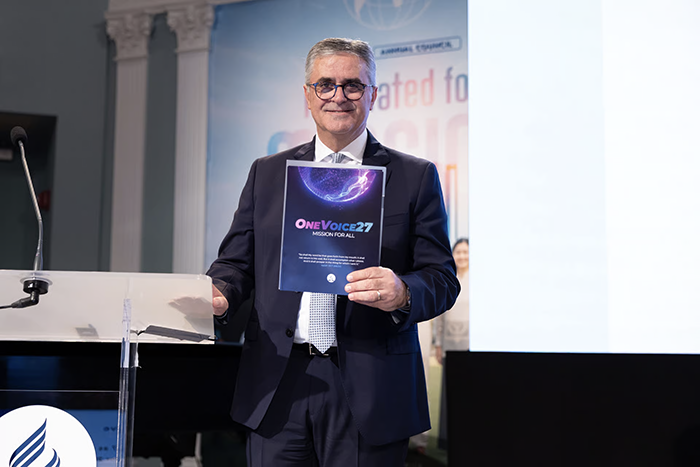
Unlike previous initiatives, there seems to a deliberate attempt from top church leaders to allow OneVoice27 to be contextualized to regional realities as much as possible. “OneVoice27 is just an idea, a concept promoted from the General Conference, but you are the owners, the ones that [at regional and local levels] can decide how to implement the project,” General Conference president Erton Köhler recently told hundreds of leaders in the Southern Asia-Pacific Division.[2]
This decentralized approach might be most useful in church regions that are more inclined to try novel approaches to outreach and mission. Those that lack that proclivity might be tempted to fall into well-trodden patterns—offering mega evangelistic campaigns with lofty membership accession targets as a default means of measuring success. Further, if no attempts are made to remedy past missteps, the treasured results could mirror past disappointments—a high number of baptisms followed by an incredibly high number of new members who backtrack and leave within their first 12 months.
Defeating the Yuck Factor
The news cycle recently reported on how a great idea went bust fast. During the past few years the Aspire Food Group promoted and built “the world’s largest cricket farm,” a 150,000-square-foot (almost 14,000-square-meter), “fully automated facility designed to house billions of insects and produce dozens of millions of pounds of protein each year.” According to the report, “crickets are touted as a low-carbon protein source, requiring less farmland than traditional livestock and offering the potential to address world food insecurity.”[5]
All the building plans moved forward successfully, but the largest cricket farm collapsed even before it could dream of making a profit. The reason? According to experts, its collapse was the result of a mismatch between the investors’ dreams and a market for their product. “The biggest barrier is the yuck factor, or the disgust,” Sadaf Mollaei, whose research focuses on sustainable food systems and consumer behavior, recently told CBC News. According to him, “most North Americans have a deep-seated discomfort when it comes to eating insects, and many consumers are reluctant to try it.”[6] Thus, with not enough customers, the multimillion-dollar facilities were recently sold to an investor, and its future is uncertain.
Could the same happen to OneVoice27? Could we offer the best product, so to speak, in a way that is not palatable and does not actually draw people to God through magnetic Christians who are “harmonious in all their parts” and not “a jumble of opposites”?[7] After all, “the life of a true, lovable Christian”—not doctrinal propositions—“is the most powerful argument that can be produced in favor of the gospel,” wrote Ellen G. White.[8] How are we going to move past “the yuck factor”—becoming flavorsome Seventh-day Adventists who are known mostly for what they support and not for what they are against?
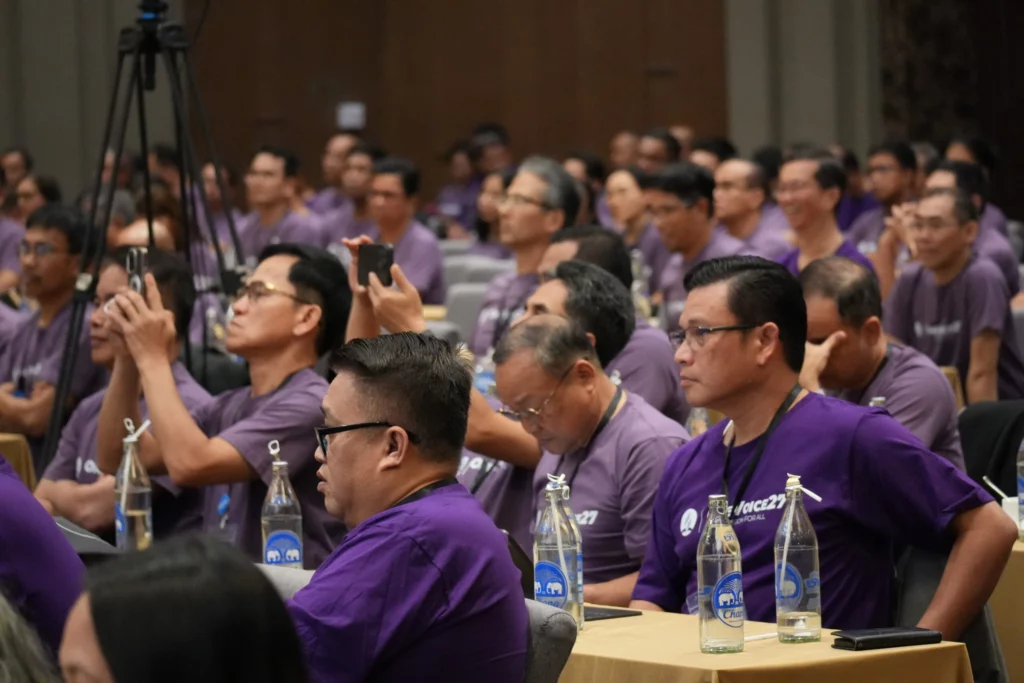
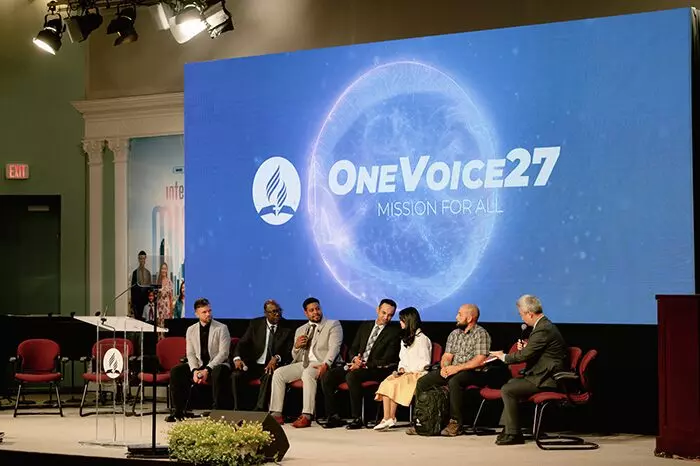
Given the scale of the OneVoice27 initiative, there might be the temptation to hope that Adventist-driven mass actions and mega events around the world will “save the day.” Leaders behind the initiative anticipate billboards at world-renowned places and other initiatives that, they hope, will bring to the forefront the name of Jesus and, as a result, the Adventist Church and its Bible-based teachings.
But as contemporary influencers and other experts in the current media landscape attest, the greatest power to communicate comes, generally, not from the billboard itself but from what we—in this case church members and leaders—do with it. It is those thousands, even millions, of targeted shares and personalized comments that usually have a deeper reach and long-lasting effects when the initial buzz fades. We can ignore this second part only at our own peril.
What Others Are Doing
Social, religious, and political groups have noticed for some time a trend toward personalized contact and are working to connect with others accordingly. During the past few months I have noticed the increase of video shorts of one person sharing what they believe in, no matter how odd or unknown a particular belief might appear to outsiders. The focus is not so much on the belief, but on the possibility of living a meaningful life under that belief, habit, or practice.
A sample reel usually follows a regular pattern. “I am [insert first name], I am a [insert religion or social or political group name], and I share how my life is . . .”
Next, there is a typically one-minute presentation on a particular habit or activity according to the belief or practice stated in the opening seconds. Granted, some beliefs or practices might sound puzzling or even upsetting to the uninitiated person. And yet, because of the empathy and rapport often shown by the protagonist, you might often end up saying, “This is so interesting! I wonder what it would be like to live like that!”

[1] See https://adventistreview.org/news/news-releases-news/we-are-called-to-do-something-that-has-never-been-done-before/.
[2] Ibid.
[3] https://adventistreview.org/news/a-baptismal-robe-in-the-closet/
[4] https://adventistreview.org/experiences/testimonies/more-than-just-a-campaign/
[5] https://www.cbc.ca/news/canada/london/cricket-farm-london-ontario-1.6506606
[6] Ibid.
[7] Ellen G. White, in Signs of the Times, Aug. 16, 1905.
[8] Ibid.
[9] Ellen G. White, Testimonies for the Church (Mountain View, Calif.: Pacific Press Pub. Assn., 1948), vol. 6, p. 140.
Related news
 From the Field
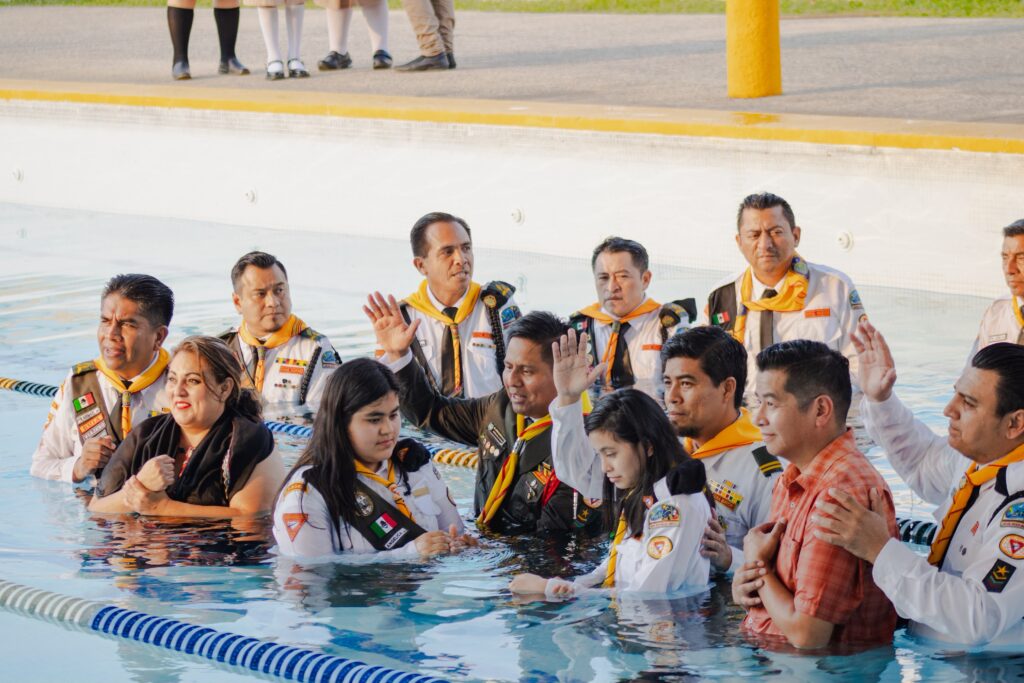
Pathfinder Evangelistic Tour Across Southeast Mexico Celebrates 164 Baptisms
Families join young people in decisions for faith as leaders recognize efforts to establish clubs in every church.
From the Field
Pathfinder Evangelistic Tour Across Southeast Mexico Celebrates 164 Baptisms
Families join young people in decisions for faith as leaders recognize efforts to establish clubs in every church.
 From the Headquarters
High School Students Across Inter-America Compete in Bible Reading Contest
Adventist Virtual Library contest brings together 14 finalists to test their knowledge of Genesis and strengthen Bible reading and faith.
From the Headquarters
High School Students Across Inter-America Compete in Bible Reading Contest
Adventist Virtual Library contest brings together 14 finalists to test their knowledge of Genesis and strengthen Bible reading and faith.
 From the Headquarters
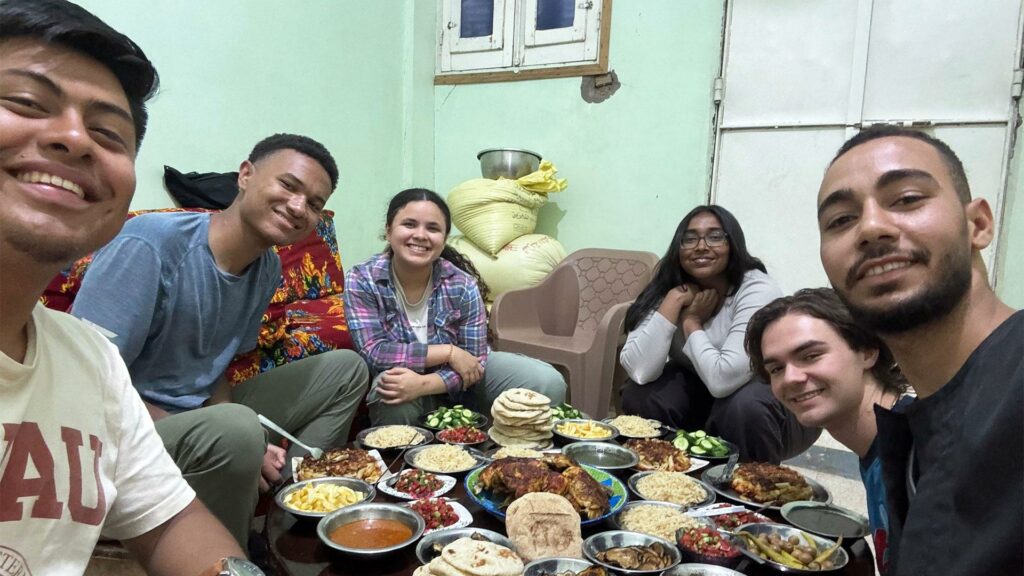
A Journey to Egypt Confirms a Calling
Teaching Bible and English in Egypt confirmed Rubén Díaz’s calling to serve in a cross-cultural context.
From the Headquarters
A Journey to Egypt Confirms a Calling
Teaching Bible and English in Egypt confirmed Rubén Díaz’s calling to serve in a cross-cultural context.