GC Mission Director Makes a Case for Increasing Adventist Church Planting
Gary Krause shares historical reasons to focus “not just on maintenance, but on mission.”
June 1, 2026 | Port of Spain, Trinidad & Togago | Marcos Paseggi, Adventist Review and Inter-American Division News
“Sometimes, it’s good for us as Seventh-day Adventists to be reminded that the thousands of Adventist churches we have around the world today didn’t happen by accident,” said Gary Krause, director of Adventist Mission at the General Conference in his opening remarks May 28. “They happened because people took the initiative to start groups of believers.”
Krause’s presentation opened the second day of the Intercultural Mission Church Planting Summit in Port of Spain, Trinidad and Tobago. The May 27-30 event brought together hundreds of mission directors and church leaders from across the Inter-American Division to learn and reflect on how to better reach out and plant new groups of believers in multicultural contexts.
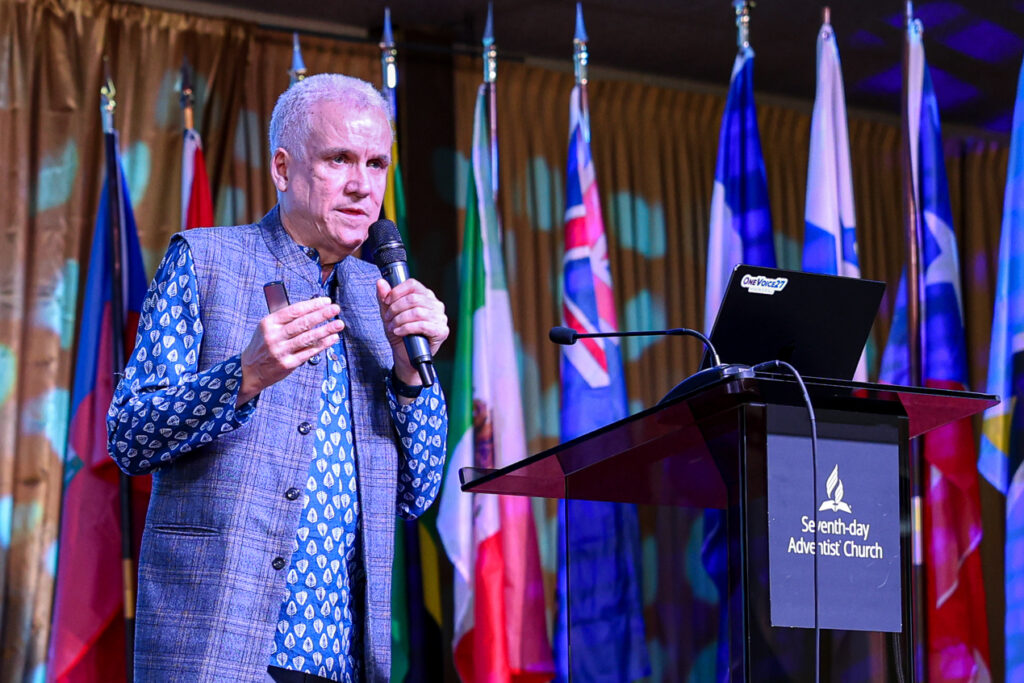
Gary Krause, director of Adventist Mission, presents on the “Historical Overview of Church Planting in Adventism” at the Intercultural Mission Church Planting Summit in Port of Spain, Trinidad and Tobago, May 28. [Photo: Domien Neverson/IAD]
At the beginning of his presentation, Krause reminded Adventist attendees that early Adventist were mostly refugees from the Millerite movement. Most had been abandoned by their denominations. “They had no churches, so they had to start their own,” he said.
Against that background, the early church-planting method “was not rocket science but a simple formula,” Krause shared. “It included moving into a new town, holding public meetings, and eventually form a new group of believers.”
As an itinerant preacher, Adventist Church co-founder Joseph Bates was an early church planter. Bates, however, was mostly focused on baptisms but not so much on discipleship, Krause explained. But he changed his method along the way, to eventually focus on establishing the new believers in the faith.
James White was an early leader who advocated to leave a tent in town “until the new believers were indoctrinated,” said Krause quoting author Everett Dick. Out of his advice, Bates and other began “a more intentional long-term… sustainable approach” of church planting.
Krause also shared the role of Lulu Whighman, a woman who went around planting churches in several U.S. states. “Between 1896 and 1905, she planted at least 12 new churches throughout the state of New York,” he shared. According to Adventist pastor S. M. Cobb, Krause said, “she has accomplished more the last two years than any minister in this state.”
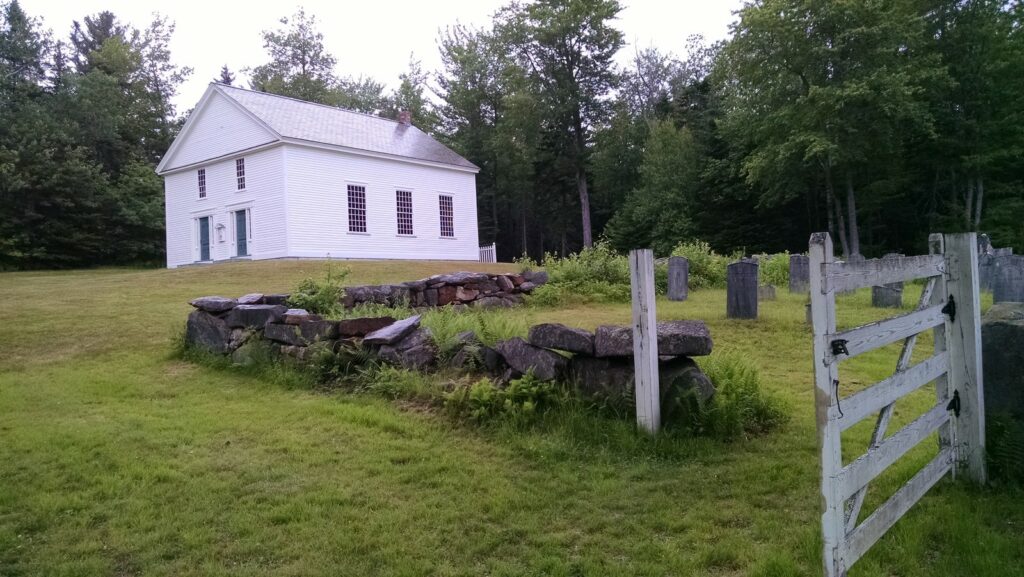
First Seventh-day Adventist church plant in Washington, New Hampshire, United States (1842). [Photo: Michael W. Campbell, Encyclopedia of Seventh-day Adventists]
Adventist Pastors as Church Planters
Adventist history leaves clear that early Adventist pastors were church planters, Krause explained. “It was understood that the role of Adventist pastors was… to move into new areas and to start new groups of believers,” he said.
In that regard, Krause emphasized, “when you see the way the Seventh-day Adventist Church was set up, [you can see] it had been structured for church planting.” It included seeing pastors as full-time evangelists. Even the tithing system had that into account, as tithes don’t go to the local pastor because there was a larger vision at play—“that the money would be pooled to help us plant new groups of believers in new areas.” The ownership of the church building doesn’t belong to the local congregation either because of this notion.
In 1875, James White wrote in Adventist Review and Sabbath Herald that the ministers’ first role was “to preach the word in new fields and raise up new churches,” and secondly, “to build up weak churches.” White added, “Men who do not succeed in either of these two branches of labor are of no real benefit to the cause.”
Having several pastors over a church was just not in the Adventist DNA, Krause shared. “We were a forward moving, multiplying, plant-new-groups-of-believers movement,” he emphasized.
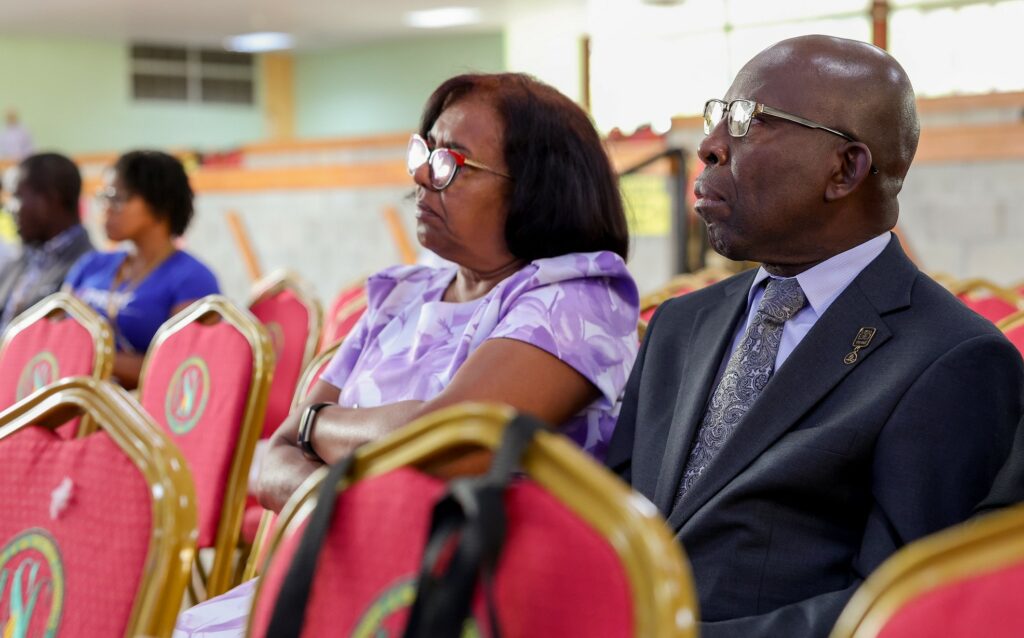
Attendees listen to Gary Krause’s presentation on the history of Seventh-day Adventist church planting at the University of Southern Caribbean in Port of Spain, Trinidad and Tobago, May 28. [Photo: Domien Neverson/IAD]
Krause also explained that the early work of the Adventist Church took place almost fully in rural areas, “in the countryside,” where it was “easier, cheaper, and produced better results.” Adventist missionaries often had a hard time understanding the complexities of urban work. “We neglected the cities, and that soon became a major problem for the missiology of the Adventist Church,” he said.
At the same time, another major challenge was that, since almost all the mission outreach was made to other Christians, the Adventist Church found it hard to speak to non-Christians, Krause acknowledged.
In recent years, however, the church has been talking about Mission Refocus, he said, “as we look past other Christian denominations to look at the challenges that we have in the 10/40 window—from Northern Africa to Asia—, and the secular and post-Christian window—western Europe, Australia, New Zealand and increasingly North America—, and the urban window. According to Krause, these last two windows include people “who are starting to live their lives without reference without reference to religion or God.”
It is a challenge, Krause acknowledge, to reach out “the neglected vast populations who do not share our Christian history.”
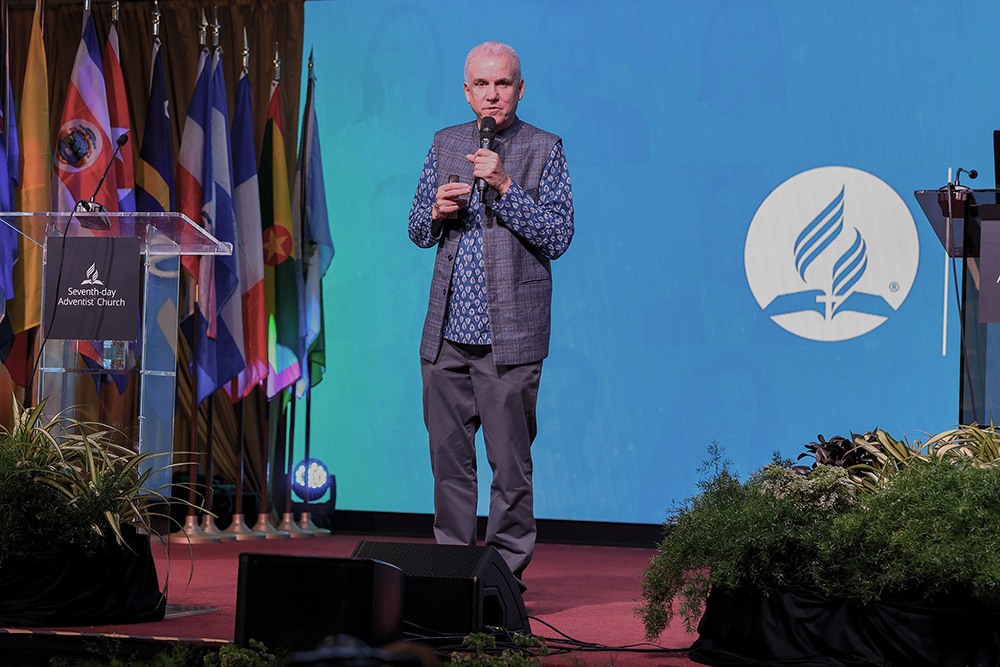
“When a church moves out to plant another church, members themselves are reinvigorated and revived. In giving of ourselves in mission, we are ourselves strengthened,” said Gary Krause on his May 28 presentation. [Photo: Domien Neverson/IAD]
Krause provided an example to illustrate the current challenge. He showed a young man in a t-shirt that read, “Jesus kept the Sabbath – Luke 4:16.”
“It is a wonderful witness,” Krause said. He noted, however, that it emphasizes the right day—“make you get Saturday, not Sunday.” He also mentioned that “it appeals to the authority of Jesus… and of the Bible.”
In the current environment in many places, this approach presents many challenges because it rests on several assumptions. “It assumes that people know what the Sabbath is, who Jesus is, what ‘Luke 4:16’ means, and that people care about the issue,” Krause explained.
It might work when you work with other Christians but “it is totally meaningless to a non-Christian or post-Christian audience,” he said. People could ask, “Who is Luke? Who is Jesus? Why should I care?”, he illustrated. “So church planting today is a different ministry than it was in the 1800s. We cannot make the assumptions we once did.”

Jonathan Contero leads a Communion service in May 2023, at the Iglesia Cero church plant in Madrid, Spain. The congregation is focused in reaching out to a secular, urban population in Spain’s capital city. [Photo: Marcos Paseggi, Adventist Review]
Effective church planting in the present requires we think in what is effective today. “First, we must learn the language—“study the people, knowing what they fear or make them happy—and “taking time to look, listen, and learn,” Krause said. “We need to clothe our message in such a way that can be understandable, meaningful, and attractive to people from different worldviews.”
Concurrently, Krause called to adapt the message. He quoted Adventist Church co-founder Ellen G. White, who in Gospel Workers called “God’s workmen” to be “many-sided,” not “one-idea men, stereotyped in their manner of working, unable to see that their advocacy of truth must vary with the class of people among whom they work and the circumstances they have to meet” (pp. 118, 119).
At the same, Krause suggested, “we need to pray more than ever before, because it’s not by human might that we plant churches.” And finally, “follow Christ’s method of ministry.” He added, “Our greatest example of church planting is Jesus Himself, who… came down to minister to us.” Likewise, we should be embedded in the communities we would like to reach, Krause emphasized.

[Photo: Courtesy of Kevin Mendoza]
In summary, Krause said, Adventists must plant churches because, among other things, “when a church moves out to plant another church, members themselves are reinvigorated and revived. In giving of ourselves in mission, we are ourselves strengthened.”
Overall, the reasons for planting new churches include a biblical mandate, because making disciples “always takes place in the context of Christian fellowship…. And we are called to make new communities of believers.”
Krause also emphasized planting churches because “it works.” He explained that, “church plants are more focused on the community than existing churches…because there is nothing else to focus on…. You are focused 100 percent focused in connecting with the community as Jesus did.”
New church plants are also more attractive to unbelievers, Krause said. And they are more dynamic in finding creative means of outreach.
Finally, Krause called attendees to remember that church planting it’s part of our heritage. “We began as a church-planting movement, we continued to grow as a church-planting movement, and we will only continue to grow into the future if we keep our focus not just on maintenance, but on mission,” he said. “Not just keeping what we have but moving into deep waters with Jesus to start new groups of believers for Him.”