
The Sun Still Shines
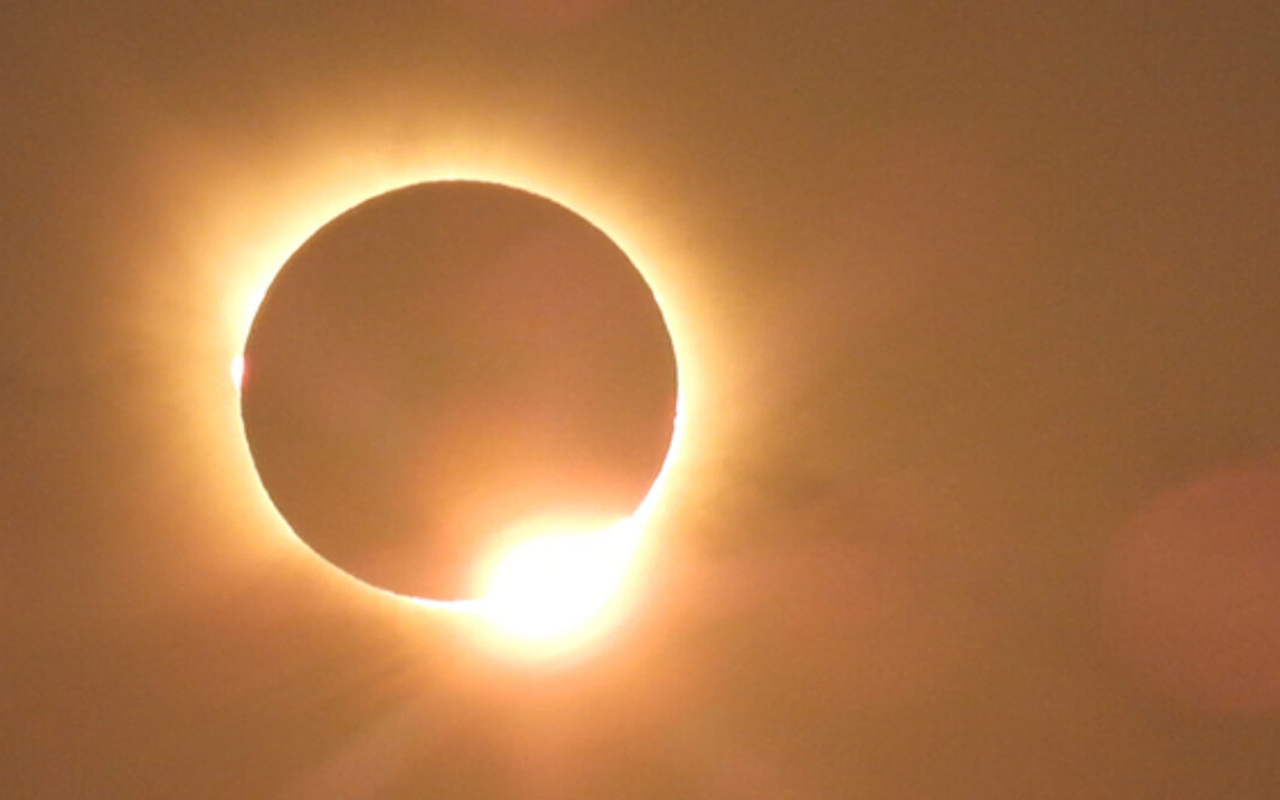
Faith, science, and wonder meet under the Spanish sky.
August 31, 2026 | Sagunto, Valencia, Spain | Vanesa Pizzuto, Trans-European Division News
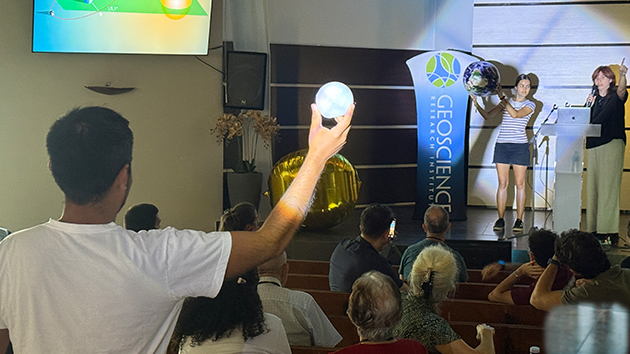
From August 10 to 13, more than 30 scientists and science enthusiasts gathered in Sagunto, Spain, for the Faith and Science Conference, organized by the Geoscience Research Institute (GRI). But this was no ordinary conference. The event was organized to coincide with the total solar eclipse of August 12, one of nature’s most spectacular displays and an astronomical event that drew attention across Europe. For participants, it offered a rare opportunity to consider the science unfolding above them just as the moon was preparing to cross the face of the sun.
Under the theme “The Sun Still Shines,” representatives from more than 10 countries explored the relationship between science and creation, guided by two international guest speakers Josue Cardoso Dos Santos and Daniel Blanco.
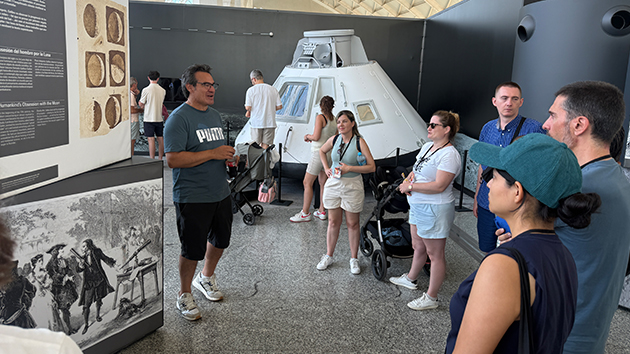
Dos Santos, a Brazilian scientist now based in the United States, is an assistant professor at the University of Colorado in Colorado Springs, where he specializes in celestial mechanics. Blanco, an Argentinian professor and researcher at Universidad Nacional del Litoral, specializes in epistemology and the history of science.
Coming from different academic backgrounds, the two speakers approached the relationship between faith and science from complementary perspectives. Their presentations explored questions ranging from Ptolemy’s mathematical remedies for a “rebellious” cosmos and the fine-tuning of the universe, to the speed of light and the challenge of teaching physics and astronomy from a biblical perspective.
The Total Solar Eclipse
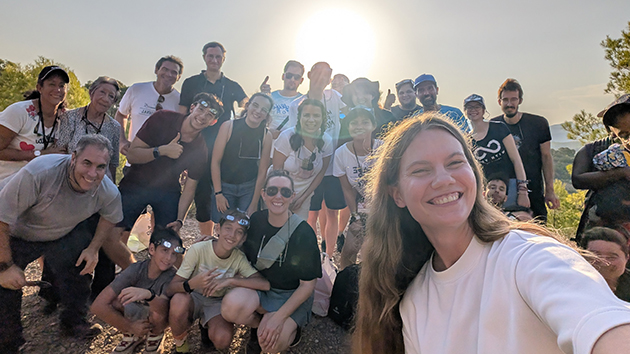
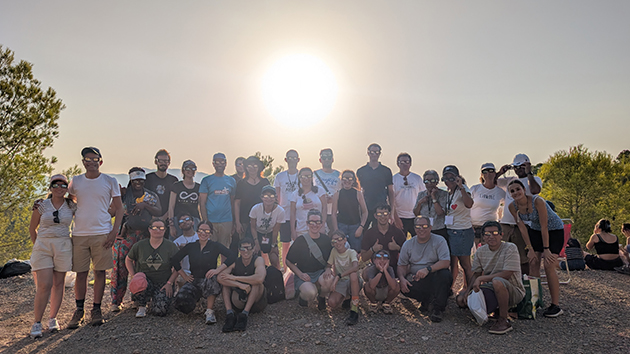
Not even the heat wave or the unforgiving Spanish sun prevented attendees and guests from slowly ascending the hill behind Sagunto Adventist Campus in time to witness the eclipse. Armed with hats, mosquito repellent, and ISO-certified eclipse glasses, they gathered on the hillside and waited for a natural spectacle that one guest would later describe as “completely not overrated.”
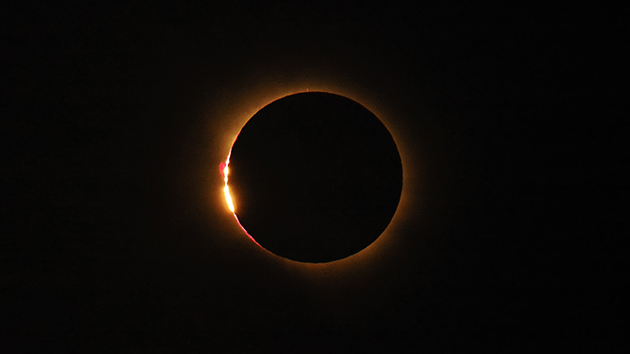
Beginning around 7:30 p.m. and reaching maximum coverage at approximately 8:30 p.m., the eclipse gradually unfolded above them, prompting spontaneous cheers of joy from the group. For most participants it was their first time seeing a total solar eclipse, making those few minutes memorable.
“To me, watching the eclipse together was one of the most beautiful parts,” said Noemí Durán, GRI Europe director and event organizer. “The feeling you get when you remove the glasses and see the sun fully covered, and the corona, and you know that everyone else in the group is feeling the same, is indescribable.”
“Everybody started cheering, and you could hear people shouting: ‘Glory to God’ or ‘Thank You, God.’ It was a gift for the entire group,” Durán said, reflecting on how the shared experience of awe ultimately led to worship.
Why Events Like This Matter
The conference brought together a variety of European professionals and students, including physicists, pharmacists, engineers, and even social media influencers interested in sharing faith and science content online. Their backgrounds were different, but many shared a desire: to explore questions of faith and science alongside others who take both seriously.
Claudio Gargano, the GRI ambassador for Italy, first began attending these events because, as a marine biologist, he wanted to explore “how my belief in Christ fits in the world that I live in. So I was looking for a group of people that shared the same perspectives.”
Now, as an ambassador, he sees an opportunity to take those conversations beyond the conference. “We still lack a lot of knowledge in terms of science and how creation [works]. . . . We are trying to bridge the gap through local activities and international events. This is why I am excited to share what GRI is doing,” he said.
For German physicist and pastor Martin Borm, bridging that gap begins with understanding. “It is important to understand how things work; in nature and in scripture. . . . Ignorance is dangerous. Man has destroyed much because he didn’t understand and thus could not appreciate,” he said.
“We are not thrown about by random whims of chaos, but live in a universe that follows the laws of its Creator,” he continued. “Therefore, ignorance in spiritual matters is equally destructive. If man is not using his capacity to understand, he ignores the means God has given him for his own salvation. There is no such thing as a lazy and indifferent Christian.”
For Hector Postigo, a Spanish attendee finishing a degree in physics, the learning process has been personal. He sees education and scientific communication as key reasons for attending events like this, and as a way of avoiding the false choice between faith and scientific inquiry.
“When I was a kid, I used to have a very simplistic view of the big bang theory (mainly rocks colliding and forming planets). So I’d go to school and say: ‘No, no. All these ideas are false.” With time, however, his understanding changed.
“What I did not understand,” Postigo continued, “is that the big bang was a theory that could help you see that the universe has a beginning.* And, through that, see the need for God. The theory did not shut the door to God, but in some way, though not categorically, it opens a conversation about beginnings in the scientific spheres.”
For Postigo, learning how to have that conversation is as important as having an answer. “If we understand it properly, we [Christians] can talk [to nonbelievers] as a group of people who are interested in discovering the truth, rather than imposing it, and who think seriously.”
I See You
The whole event had a strong spiritual component, with devotionals every morning and specially selected worship music. The theme song, “I See You,” a soft ballad by American singer-songwriter JJ Heller, captured the spirit of the conference, highlighting the wonder of creation.
Each morning participants sang the song together, its words inviting them to look beyond the ordinary and recognize nature as one of the ways in which God reveals His power and character.
“There are two books that God uses to reveal Himself, the Bible and nature,” shared Antonio Cremades during the closing remarks. “As Christians, we have left one book aside . . . as a result, evolutionists have picked it up. We are trying to defend our positions and answer back to them, but we are no longer pioneering.”
“As Christians, we have much to say about nature. We know it has an intelligent Creator who designed it,” continued Cremades, a retired biology professor and theologian whose support for GRI has spanned decades. “Because nature reveals His character, we must reclaim the book of nature and its message,” he concluded.
*Note: During the Faith and Science Conference, Dos Santos gave a presentation titled “What Is Not the Big Bang Model?” in which he explained, among other points, the distinction between the big bang model and biological evolutionary theory. The big bang model addresses the origin of the universe (it is not a theory of biological evolution). He also explored how scientific models that seek to explain the beginning of the universe can provide starting points for conversations between faith and science. For further information and a more detailed context, see Aleksei Popov, “The Big Bang, Standard Cosmological Model, and the Bible.”
The original version of this commentary was posted on the Trans-European Division news site.
Related news
 From the World Church
Adventist Church Marks 100 Years of Working Policy
Annual Council celebration traces a century of policy and its role in supporting the church’s global mission.
From the World Church
Adventist Church Marks 100 Years of Working Policy
Annual Council celebration traces a century of policy and its role in supporting the church’s global mission.
 From the World Church
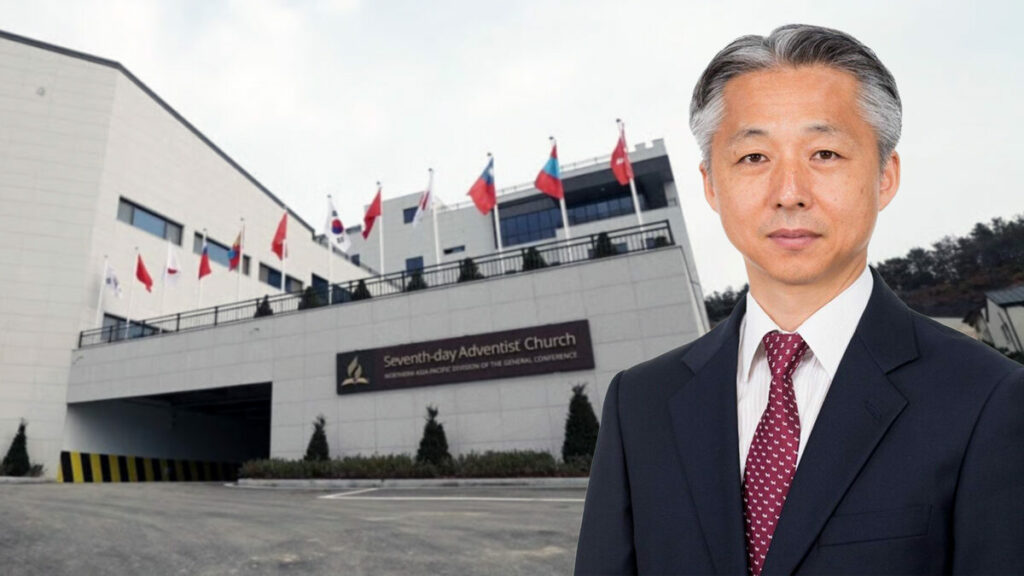
Kim SunHwan Elected Northern Asia-Pacific Division President
Former division leader returns with international mission experience
From the World Church
Kim SunHwan Elected Northern Asia-Pacific Division President
Former division leader returns with international mission experience
 From the World Church
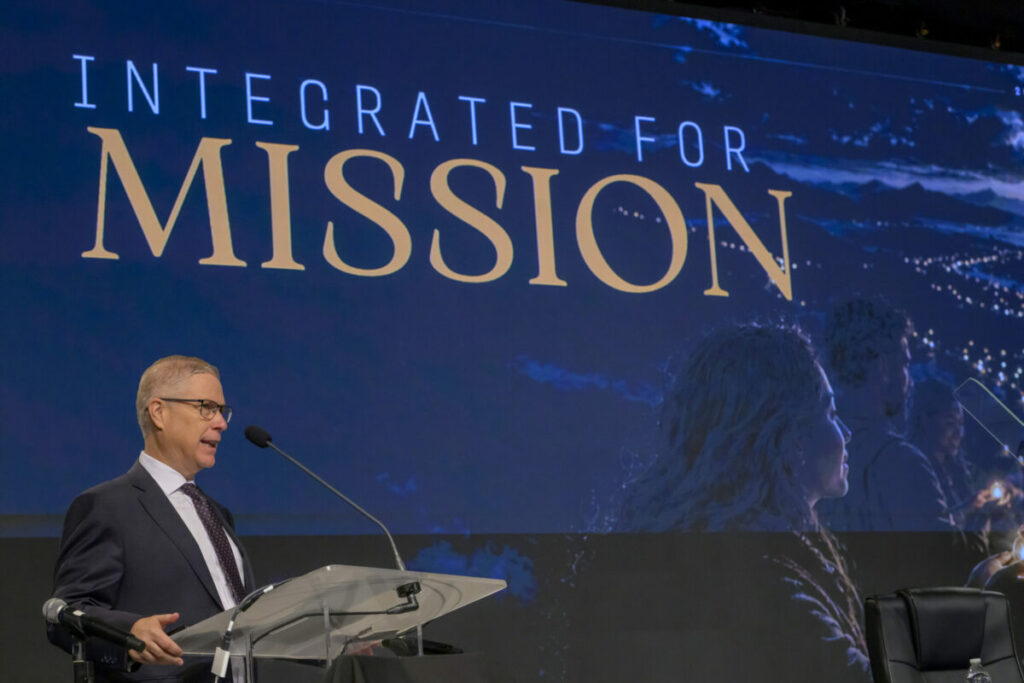
Secretariat Report Calls Adventists to Take World Mission Seriously
Rick McEdward and his team suggest going all in to fulfill God’s commission.
From the World Church
Secretariat Report Calls Adventists to Take World Mission Seriously
Rick McEdward and his team suggest going all in to fulfill God’s commission.