
Church Construction Can Have a Spiritual Purpose, Adventist Leader Says
September 24, 2026 | Bogota, Colombia | Marcos Paseggi, Adventist Review
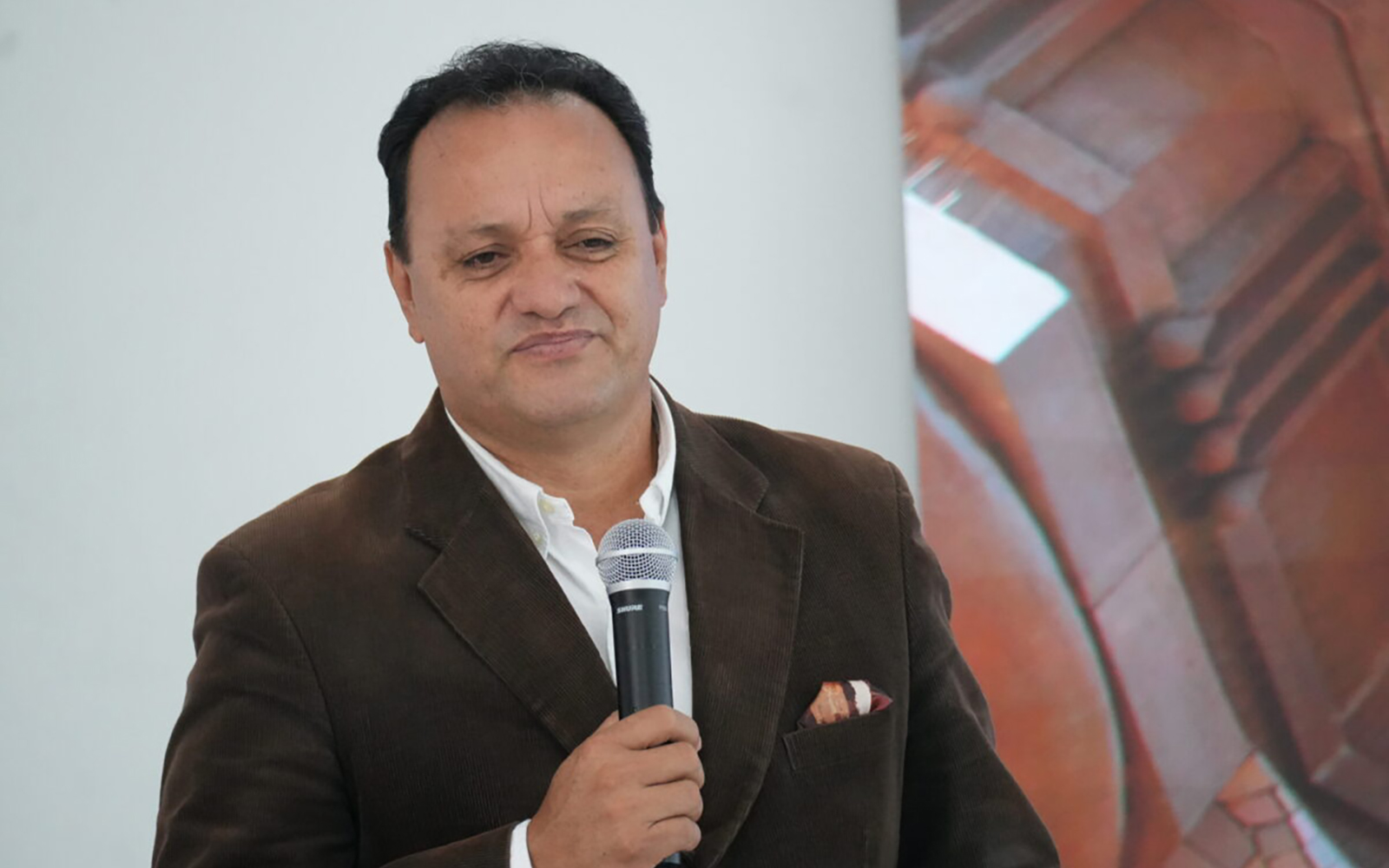
“There are moments God calls His people to preach,” said Henry Beltran, president of the South Colombian Union Conference. “There are moments God calls His people to go. And there are moments God calls His people to serve. But there are moments that God says, ‘Build the temple.’ ”
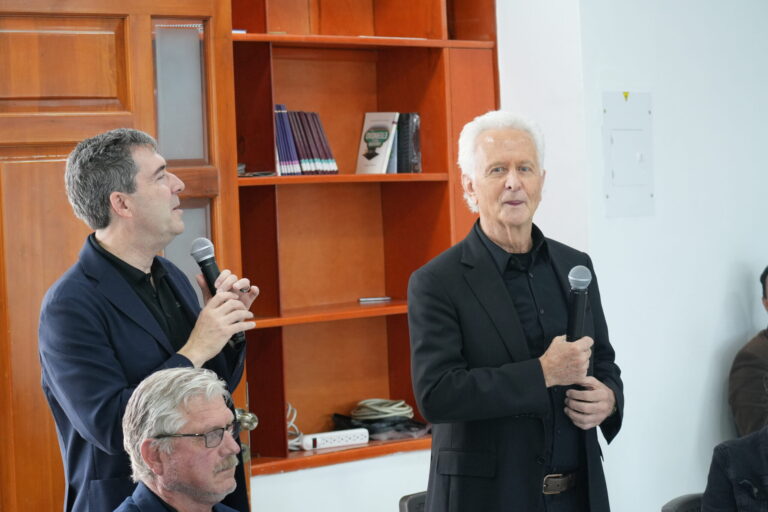
Beltran’s words provided the biblical rationale for church building construction during a meeting of regional church leaders with Maranatha Volunteers International leaders in Bogota, Colombia, August 17, just one week after the earthquake that affected several Colombian cities. The meeting, which took place at the regional church headquarters, discussed opportunities for the lay-led supporting ministry that builds churches and schools and digs water wells around the world.
A Spiritual Purpose
Based on the biblical message of the prophet Haggai, Beltran read what God told the people of Israel when they returned from exile after the temple had been destroyed. He read, “ ‘Go up to the mountains and bring wood and build the temple, that I may take pleasure in it and be glorified,’ says the Lord” (Haggai 1:8). “God told them to go up to the mountains and bring wood to build the temple,” Beltran emphasized. After this, God said He would be glorified.
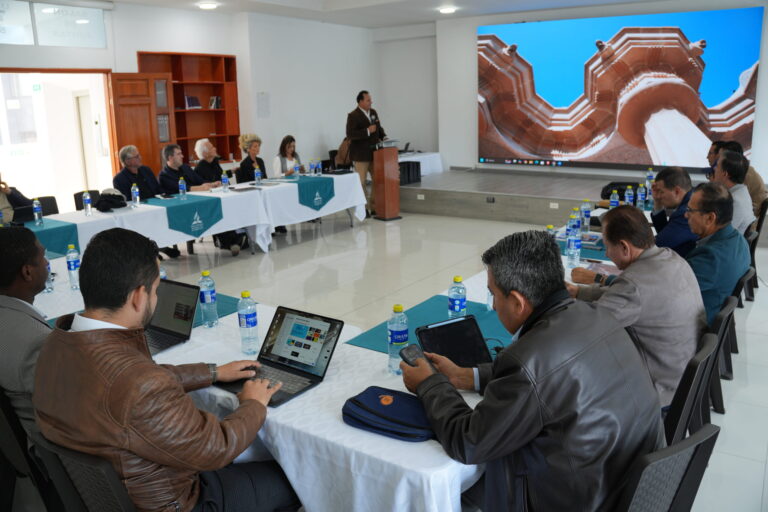
“Construction had a spiritual purpose,” Beltran said. “It was not just about walls, about getting a project done. It was about building a temple for God’s glory.”
He explained that a church building can become a permanent center of evangelism, a space for worship, a shelter for service, and a school of discipleship. “Because even though the church is made up of people, it needs a physical space to fulfill its mission,” Beltran said.
Why a Church Building Is Essential
Beltran explained that “in a church building, the Word is preached, baptisms take place, and leaders are trained.” He added: “Children learn about the Bible, young people find their place, and families receive assistance and support.” According to Beltran, a church building is also an optimal place to hold small group meetings, and a place in which lonely people can find fellowship and community.
Mission infrastructure—a church building—fulfills an essential role in the time of the end, before the second coming of Jesus, Beltran said. In that sense, he emphasized, “evangelism and church construction are part of the same movement. Through church buildings, mission is multiplied. Because it’s not about walls, but about community service.”
Church Buildings as Part of the Mission Process
During his presentation Beltran shared a report about health clinics and evangelistic meetings in the territory he leads, explaining that recent baptisms of 1,220 people in Ibagué and Tolima demand new discipleship efforts and the need for new members to help plant 10 new congregations.
All of this also demands the construction of new church buildings, he emphasized. “We preach to reach, but we built to establish,” he said.
A Man on a Motorbike
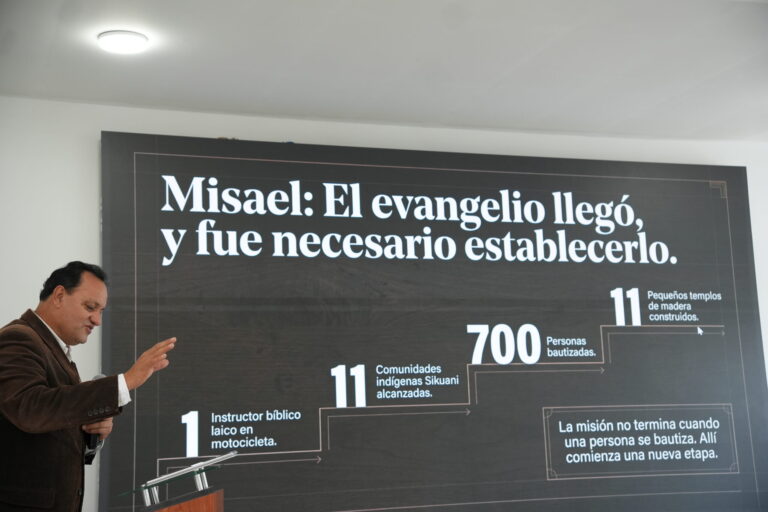
As part of his presentation, Beltran shared an example of how mission and church building go hand in hand. He recounted the story of Misael, an Adventist lay member who owns only a motorbike. Beltran shared how Misael decided to go to 11 indigenous Sikuani villages in the territory of the East Los Llanos Conference. Misael “learned about their culture, ate with them and slept [where they slept],” Beltran shared. “God then began to open doors.”
Beltran shared that Misael arrived in those small villages as a Bible instructor, but he also took food, clothes, and Bibles to the people he visited. Working faithfully, Misael managed to reach thousands of people, and 700 were baptized.
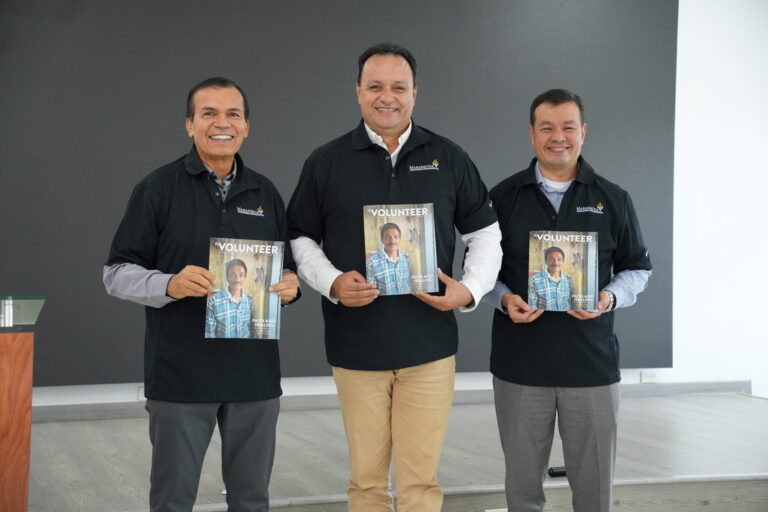
But “mission doesn’t end when a person gets baptized,” Beltran reminded leaders following his presentation. On the contrary, “a new stage starts right away.” It is the reason the new members in those villages soon built 11 small wooden churches in which they could meet, he reported.
The Supporting Role of Maranatha
In that regard Beltran highlighted the combined efforts of local ministry and supporting ministries with an international imprint such as Maranatha.
“An evangelist opens their Bible, a pastor baptizes, and one church eventually plants another,” he summarized. On the other hand, “ministries such as Maranatha build a place people can gather to study the Bible, a church building to disciple new members, and thus provide a home for that new congregation.”
Addressing Maranatha leaders, he emphasized that the leaders’ presence has been an answer to 20 years of earnest prayers. “You are the answer so we can move forward in fulfilling the church’s mission in the South Colombia Union,” he said.
What Should Our Answer Be?
Going back to the message given through Haggai, Beltran reminded leaders: “Three human actions are needed: going up—we must go; bring—we must contribute; and build—we must work.”
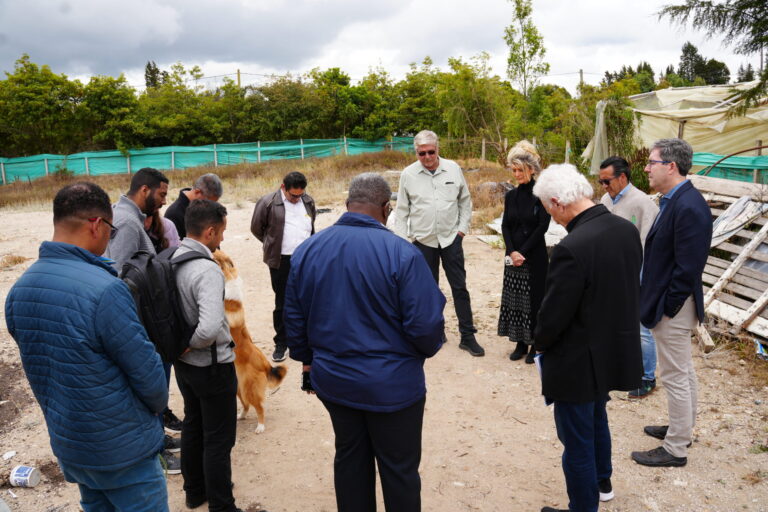
When we understand that we have that call, what can we say? Beltran asked. “We can say only, ‘Lord, here are our hands so we can work together to rebuild,’ ” he said.
Beltran pointed out that because of the recent earthquake in Colombia, more than 30 church buildings were affected. “Some roofs fell, walls were cracked, and now there are brethren who don’t have a place to meet,” he shared.
The Bible makes clear that when we do what God requests, His name will be glorified, Beltran emphasized. “His name will be glorified in a child who learns the Bible, in the family who prays, in the person who arrives without hope to find it, and in a congregation that grows and multiplies,” he said. “May we, together, go, purchase materials, survey lots, and build temples to fulfill God’s mission. ”
Related news
 From the Headquarters
World Pathfinder Day
The following message is addressed to the Seventh-day Adventist Church in Inter-America by Abner De los Santos, president of the Inter-American Division. — IAD…
From the Headquarters
World Pathfinder Day
The following message is addressed to the Seventh-day Adventist Church in Inter-America by Abner De los Santos, president of the Inter-American Division. — IAD…
 From the Field
Adventist Students Across Inter-America Set for Bible Contest
Finalists from across Inter-America will compete online Sept. 22, testing their knowledge of Genesis and Ellen G. White’s Patriarchs and Prophets. September 16, 2026…
From the Field
Adventist Students Across Inter-America Set for Bible Contest
Finalists from across Inter-America will compete online Sept. 22, testing their knowledge of Genesis and Ellen G. White’s Patriarchs and Prophets. September 16, 2026…
 From the World Church
Hope Starts Here: Compassion in Action
September 15, 2026 | Silver Spring, Maryland, United States | By Paulo Lopes, President, ADRA International There is a word we use often in…
From the World Church
Hope Starts Here: Compassion in Action
September 15, 2026 | Silver Spring, Maryland, United States | By Paulo Lopes, President, ADRA International There is a word we use often in…