Colombian Government Seeks Adventist Expertise in Spiritual Care Training
Ministry of the Interior invites Adventist leaders to share their chaplaincy experience and requests an academic training proposal for religious leaders.
September 14, 2026 | Medellín, Colombia | Cristin Serrano and Inter-American Division News
The Colombian government is looking to the Seventh-day Adventist Church for expertise in strengthening spiritual care for religious leaders who serve people during emergencies and crises.
During a national chaplaincy gathering in Bogotá on Aug. 26, the Ministry of the Interior invited Adventist leaders to share the church’s experience in chaplaincy training and asked Adventist University of Colombia to develop an academic proposal that could serve leaders from different religious denominations.
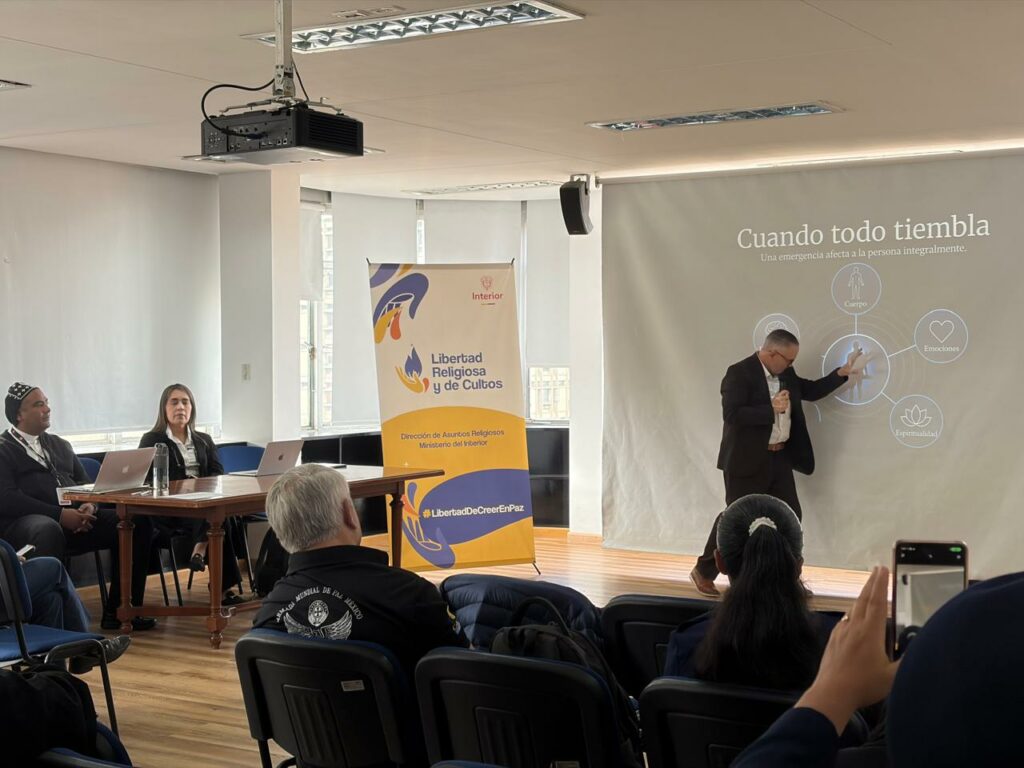
Pastor Iván H. Omaña, Adventist Chaplaincy Ministries director for the General Conference, speaks during the National Chaplaincy Meeting and Interreligious Humanitarian Network of Colombia in Bogotá, Colombia. [Photo: North Colombia Union Communication]
Representatives of several faith communities attended the National Chaplaincy Meeting and Interreligious Humanitarian Network of Colombia, which focused on strengthening spiritual support for people and families facing crisis.
The Adventist delegation was led by Pastor Iván H. Omaña, Adventist Chaplaincy Ministries director and president of the Adventist Chaplaincy Institute at the General Conference, who served as a guest speaker.
Joining him were Milena Rey Alba, representing Colombia Adventist University; Mauricio Buitrago, chaplaincy ministries director of the North Colombian Union; Jair Flores, religious liberty director; and Ludwing Morales, chaplaincy ministries director for the South Colombian Union.
Together, they shared the church’s experience in chaplaincy training and explored how Adventist educational resources could help equip religious leaders to provide spiritual care in times of crisis.
Sharing Chaplaincy Experience
The relationship with the Ministry of the Interior began months earlier through discussions on religious affairs. When organizers learned that Omaña would be in Colombia, they invited him to speak at the national gathering.
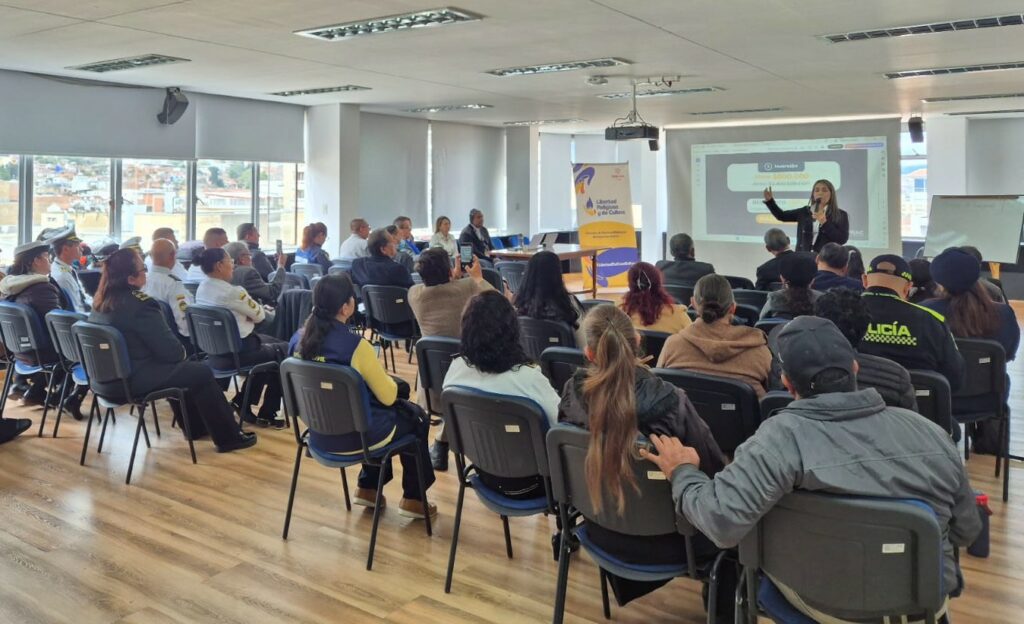
Adventist Church representatives and participants attend the National Chaplaincy Meeting and Interreligious Humanitarian Network of Colombia at the Ministry of the Interior in Bogotá, Colombia. [Photo: North Colombia Union Communication]
“We were not invited to tell others how to do their work, but to sit at the table, listen, learn, and share what our global experience can contribute,” Omaña said.
Buitrago said the invitation reflects interest in the Adventist Church’s established approach to chaplaincy, which combines academic preparation, ministerial experience, and specialized training.
“We are a church committed to service, a church that is also highly organized and has a strong educational structure, and that is what we want to make available to the country,” he said.
Training for Spiritual Care
A key outcome of the meeting was an opportunity for the Colombia Adventist University to present an academic training option.
Rey Alba introduced a 120-hour online diploma program in spiritual care, consisting of 10 modules designed to provide religious leaders with practical knowledge and tools for accompanying people through difficult circumstances.
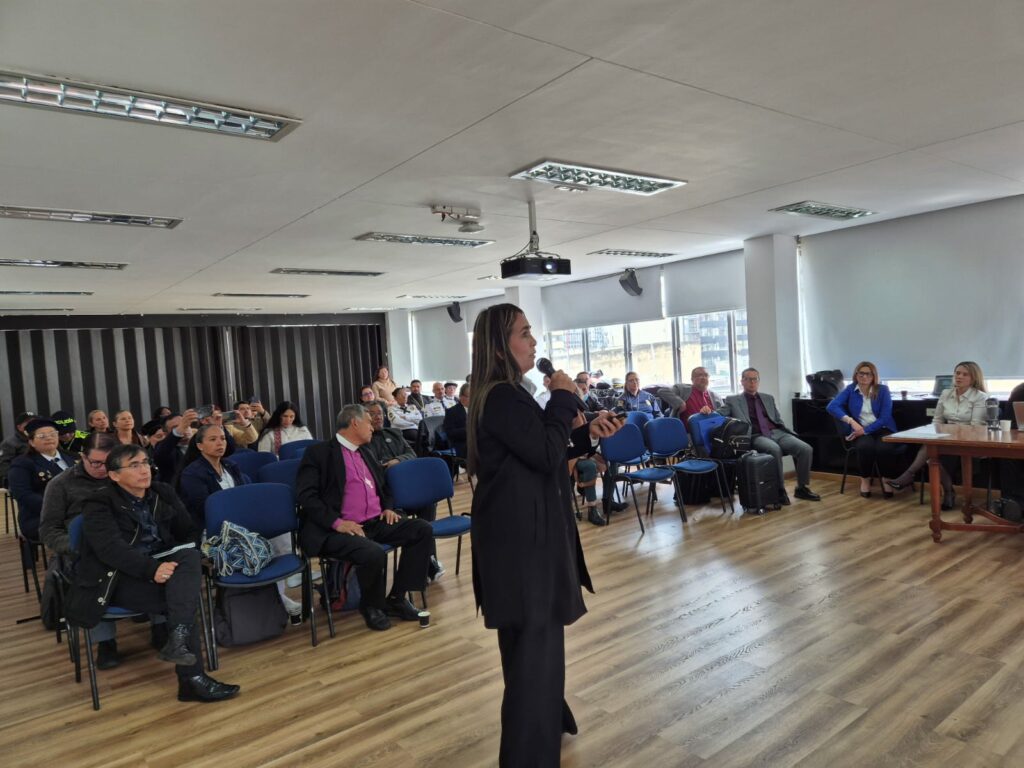
Milena Rey Alba of Colombia Adventist University speaks during the National Chaplaincy Meeting and Interreligious Humanitarian Network of Colombia in Bogotá, Colombia. [Photo: North Colombia Union]
“The diploma is in spiritual care, not chaplaincy,” Buitrago said.
Professional chaplaincy requires more extensive academic and ministerial preparation. According to the standards presented by Adventist representatives, professional chaplains are expected to have theological education, graduate studies, ministerial experience, and clinical pastoral education. The proposed diploma would instead serve as an introductory training opportunity.
The program would not be limited to Adventists. The Ministry invited the church to contribute to the training of religious leaders and chaplaincy directors from different denominations, including representatives of Pentecostal, Orthodox, and other Christian communities who attended the meeting.
Expanding Opportunities for Service
Buitrago said chaplaincy in Colombia is still developing and expressed hope that Adventist professionals will eventually have greater opportunities to serve in hospitals, prisons, the military, and other community settings.
“I dream of having chaplains in the military, in prisons, in hospitals, in the community, and in so many other areas,” he said.
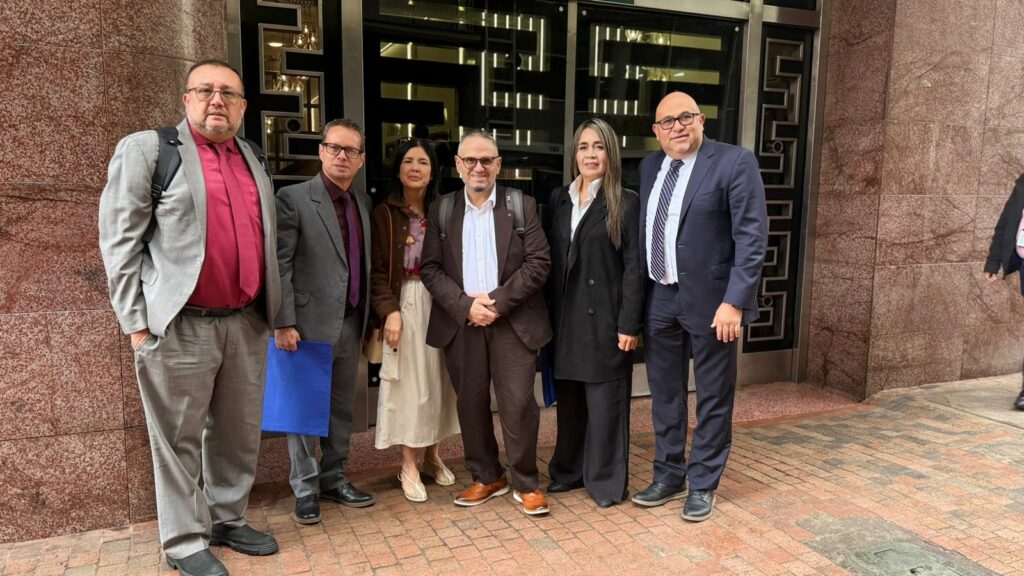
Adventist Church representatives attend the National Chaplaincy Meeting and Interreligious Humanitarian Network of Colombia in Bogotá, Colombia. Pictured from left are Jair Flores, Pastor Mauricio Buitrago, Liliana de Omaña, Pastor Iván H. Omaña, Milena Rey Alba, and Pastor Ludwing Morales. [Photo: North Colombia Union]
Church leaders were careful, however, to clarify that no formal agreement currently exists between the Ministry of the Interior and Colombia Adventist University. The government provided a platform for the university to present its spiritual-care training proposal to religious leaders across the country, with each denomination free to decide whether to participate.
According to Milena Rey Alba, discussions are now underway with denominations interested in the training. Separate conversations have also begun with religious leaders interested in opportunities for professional theological education.
For Adventist leaders, the invitation represents an opportunity to place the church’s experience in education, chaplaincy, and spiritual care at the service of a wider community while helping equip religious leaders to better support people facing crisis, Buitrago said.