
Content Creators Must Put People Before Metrics
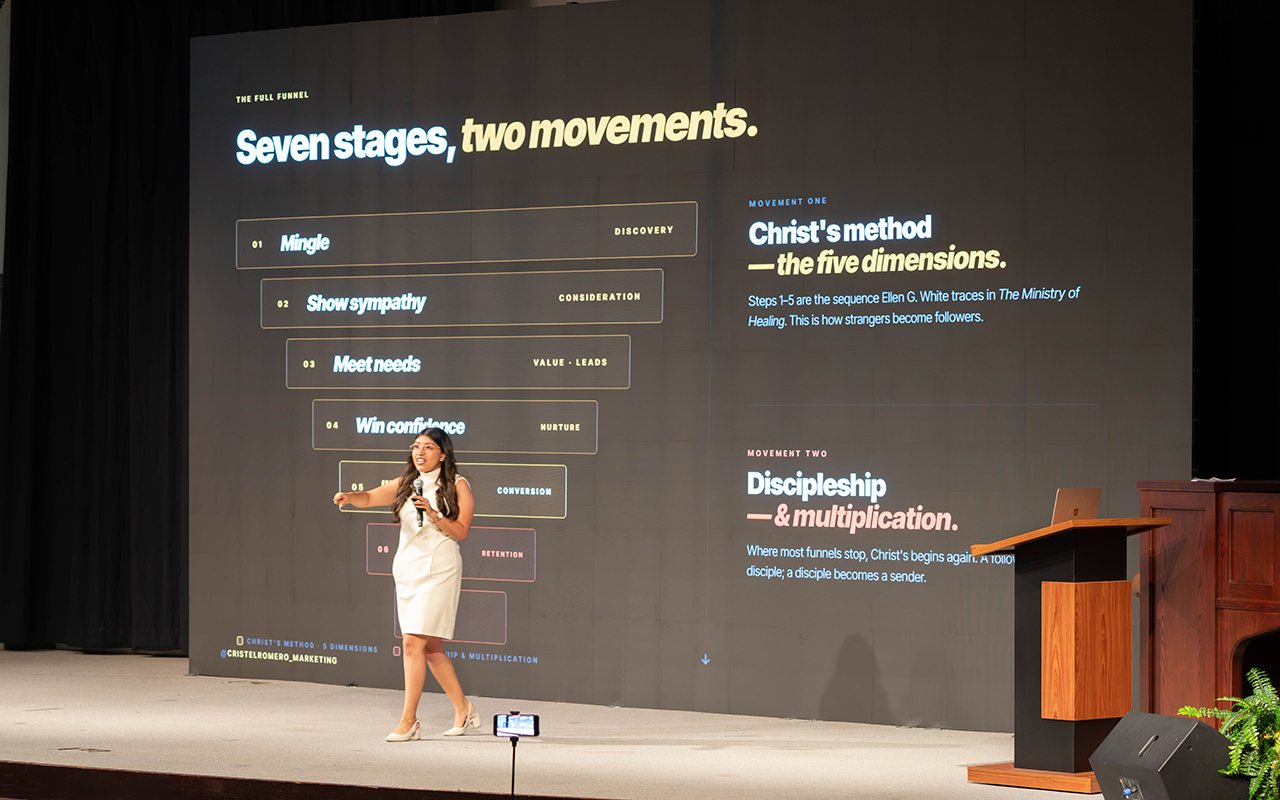
Cristel Romero of Mexico urges creators to turn the trust they build online into meaningful relationships that meet needs and lead people toward Jesus.
July 30, 2026 | Maryland, United States | Libna Stevens, Inter-American Division News
For content creators accustomed to measuring their impact through views, followers, likes, and engagement, Cristel Romero, a content marketing strategist and audiovisual producer of the Inter-Oceanic Mexican Union, offered a different measure of success, that is the person behind the number.
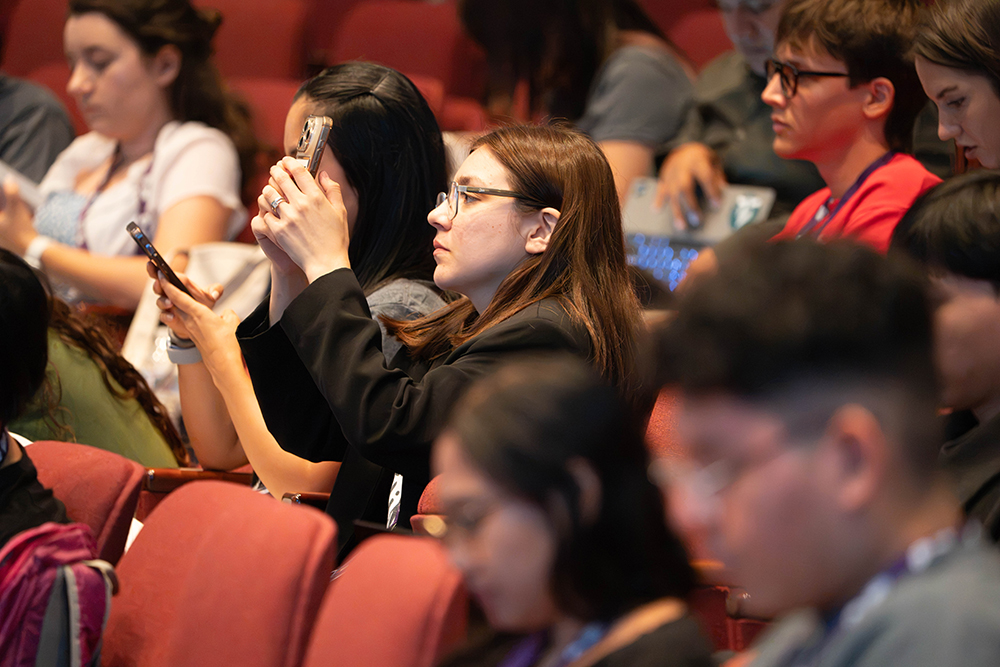
Speaking to nearly 200 content creators and influencers during the Seventh-day Adventist Church’s Creator Summit in Silver Spring, Maryland on July 23, Romero challenged participants to rethink how they use social media for mission, beginning with the trust audiences place in them and the needs of the people they hope to reach.
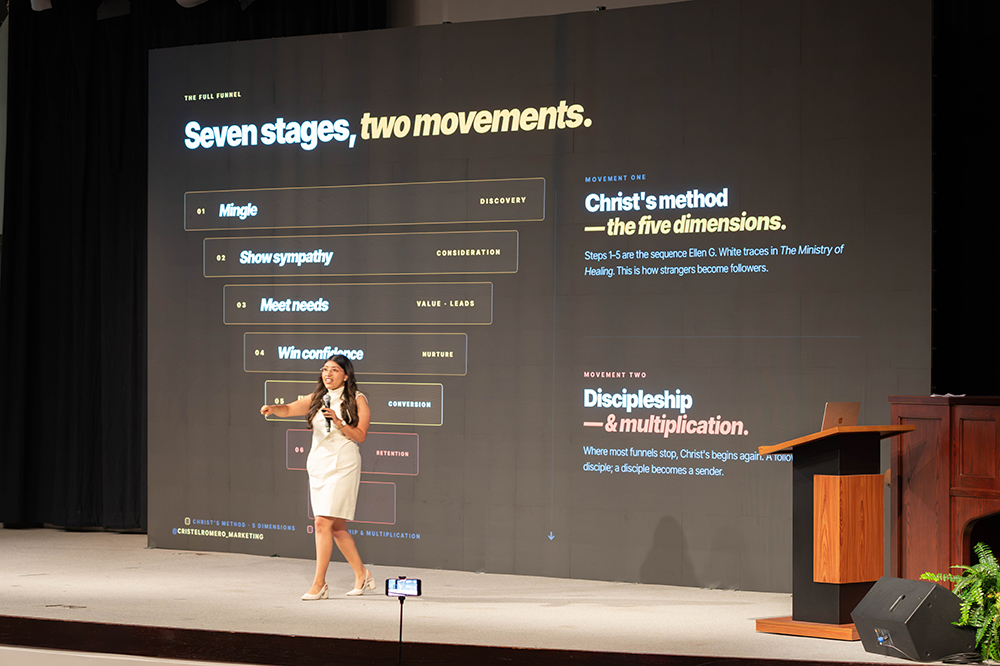
That trust, she suggested, gives Christian creators an opportunity that extends far beyond producing successful content. It can provide an opening to understand people, serve their needs, build relationships, and ultimately introduce them to Jesus.
Rethinking Success Online
Romero, whose work includes marketing and ministry, told participants that effective outreach begins by shifting attention away from what an organization or creator wants to promote and toward the people they are trying to serve.
She contrasted that approach with a numbers-driven mentality focused primarily on gaining more followers, views, reach, or other measurable results.
“You can make Christian content with a salesman’s mindset,” Romero warned. “You can use Jesus as your product, and you can use souls as your market. And I don’t want that.”
Instead, she encouraged creators to begin with their audience—their needs, fears, struggles, and barriers—and ask a fundamentally different question.
“What is this person going through?” Romero said. “And how can I serve them so well that they can trust me enough to let me talk about eternity?”
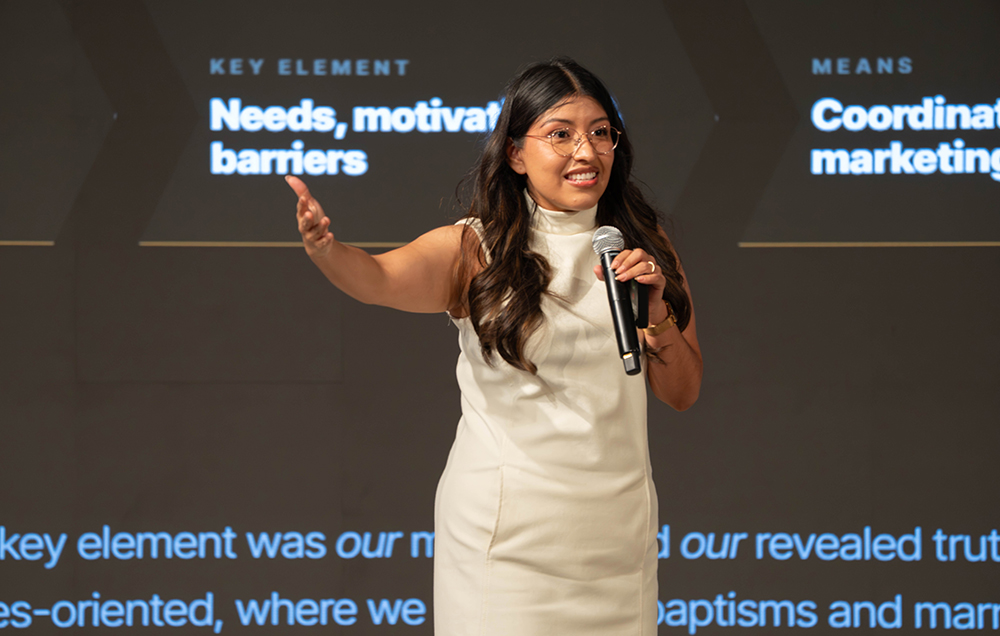
The order matters, she said.
“He showed His sympathy. He ministered to their needs. He won their confidence. And only then He said, ‘Follow me.’ Only then,” Romero emphasized. “This is a method. This is a sequence. It is a deliberate order.”
Moving Beyond Viral Content
Romero gave creators a seven-stage framework for turning digital contact into discipleship, connecting principles of content marketing with Christ’s method of reaching people. The process begins with mingling, showing sympathy, meeting needs, and winning confidence before moving toward an invitation to follow Christ and, ultimately, discipleship and multiplication.
For Romero, the framework challenges creators to see viral content as an entry point rather than the goal. A video may introduce someone to a creator or ministry, she said, but meaningful digital mission requires intentionally helping people move from initial awareness toward trust, relationship, and spiritual growth.
“Your viral videos are super good,” Romero said, referring to the first stage of the process. “We need to reach all people in all these stages.”
The progression also requires creators to move beyond simply producing content to becoming personally invested in the people they reach.
That investment, she said, reflects Christ’s own willingness to enter humanity’s pain and give everything for others.
When a Digital Connection Becomes Personal
Romero illustrated the principle through an experience at her own local church.
While promoting a church event through targeted social media advertising, Romero and her team received a message from a woman who lived just two blocks from the congregation. An online conversation helped her decide to attend the event.
The woman, Lupita, had moved to the city four years earlier and had no family or close friends nearby, Romero said. When a church member welcomed her with a hug, she began to cry.
“Nobody had hugged her in four years,” Romero said.
What began with an online advertisement became a relationship. Lupita was eventually baptized, became part of a women’s group Romero leads, and entered a mentoring relationship with her.
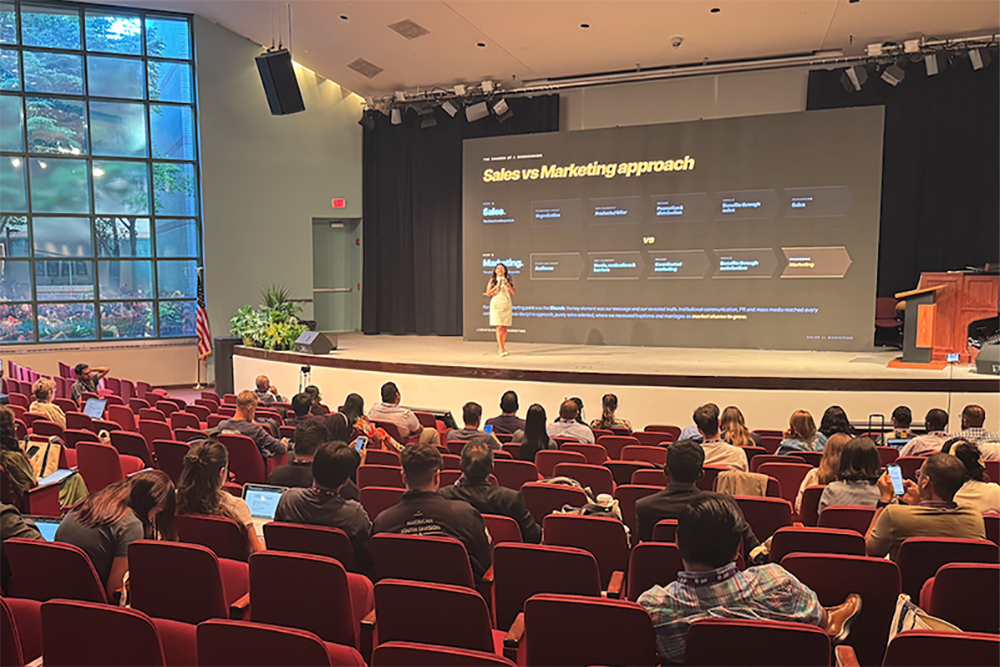
During a gathering in a park, Lupita noticed another woman sitting alone and appearing distressed. She approached the stranger and invited her to join the group. The woman was going through a difficult divorce while caring for two children, and Lupita began talking with her about Jesus.
For Romero, the moment demonstrated what digital mission is ultimately intended to accomplish: not simply generating engagement, but helping disciples become disciple-makers.
A Face Behind Every Number
Romero acknowledged that moving from digital engagement to genuine relationships can require significant time, energy, and personal investment. But she reminded creators that Christian service is rooted in Christ’s example. “Jesus did it for you,” she said. “Stepping into our pain, stepping into our world, cost Him everything.”
That perspective, she said, should also shape how content creators measure the impact of their work. While analytics can help determine whether content is reaching an audience, numbers alone cannot define the purpose of ministry.
Watching Lupita reach out to another woman and begin sharing Jesus with her brought that distinction into focus for Romero.
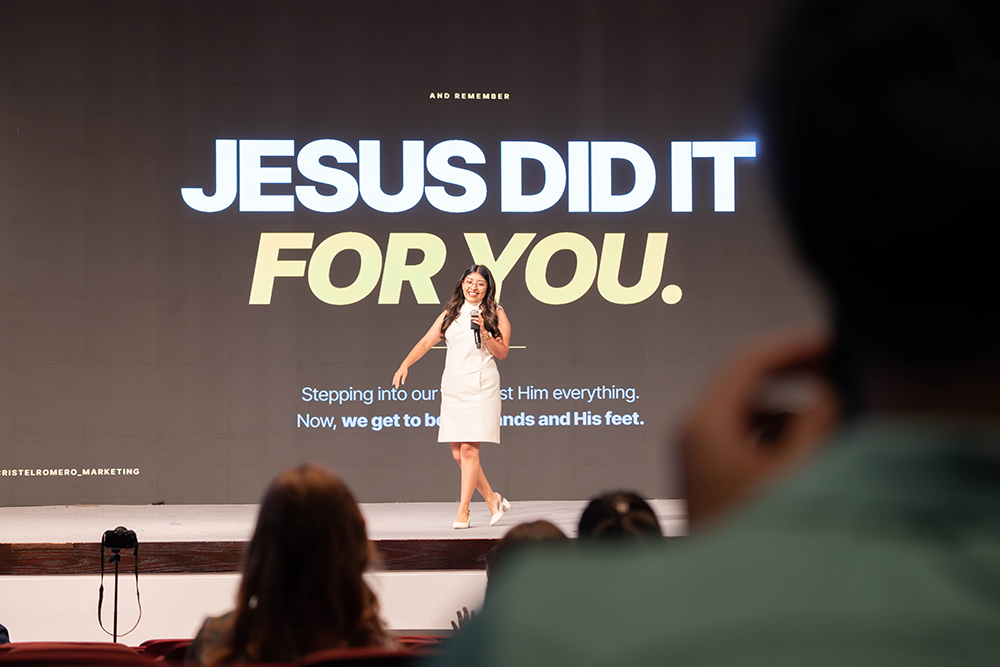
She closed by challenging creators to measure their influence not simply by the size of their following, but by their willingness to invest in the people their platforms allow them to reach.
“I pray for us to be … the generation willing to pay the price to love people,” Romero said. “Jesus doesn’t care about your numbers. He doesn’t care about your followers,” Romero said. “But He does care about people.”
“I pray for us to be … the generation willing to pay the price to love people.”
Related news
 From the Field
Online Evangelistic Campaign Reaches More Than 300,000 Across Venezuela
Nationwide digital initiative mobilizes thousands of church members and leads to baptisms across the country. October 20, 2026 | CARACAS, Venezuela | East Venezuela…
From the Field
Online Evangelistic Campaign Reaches More Than 300,000 Across Venezuela
Nationwide digital initiative mobilizes thousands of church members and leads to baptisms across the country. October 20, 2026 | CARACAS, Venezuela | East Venezuela…
 From the World Church
Official Statement Affirms Importance of the Bible and Sharing God’s Word
General Conference president Erton Köhler encourages church leaders to share widely.
From the World Church
Official Statement Affirms Importance of the Bible and Sharing God’s Word
General Conference president Erton Köhler encourages church leaders to share widely.
 From the World Church
Young Messengers of Hope Preach at Annual Council
Four young people preached during Annual Council as part of the OneVoice27 Messengers of Hope initiative.
From the World Church
Young Messengers of Hope Preach at Annual Council
Four young people preached during Annual Council as part of the OneVoice27 Messengers of Hope initiative.