
IAD Secretary’s Report Highlights Evangelistic Growth, Calls for Stronger Member Engagement

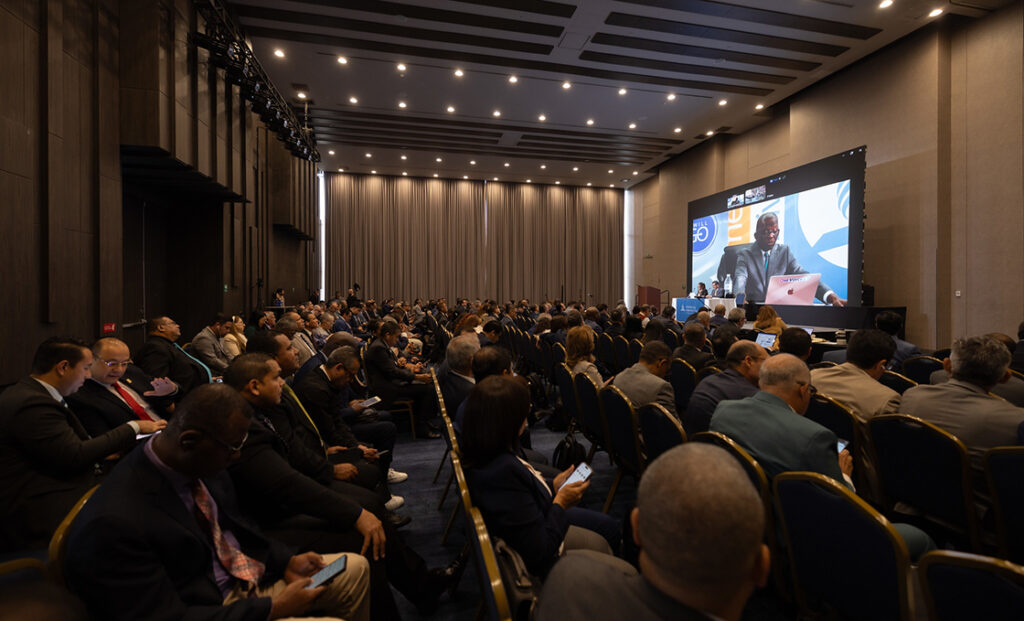
Annual Council leaders examine rising baptisms, declining recorded membership and youth attendance concerns, emphasizing the need for stronger discipleship, retention and pastoral care across Inter-America.
November 3, 2026 | Bogotá, Colombia | Libna Stevens, Inter-American Division News
“In the ledger of Heaven, statistics are not cold administrative numbers. Every digit represents a soul, every graph tells a story of divine grace, and every table reflects a church laboring in the harvest field.”
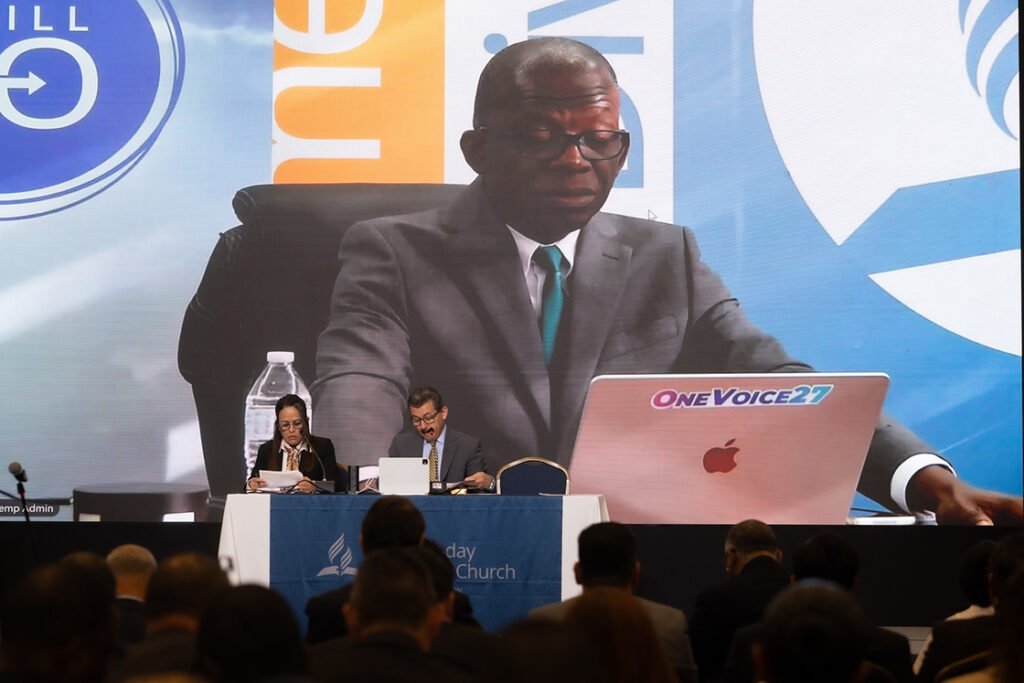
With those words, Inter-American Division (IAD) Executive Secretary Pierre Caporal set the tone for the Secretariat’s report to more than 200 executive committee members during Annual Council on November 2, 2026, in Bogotá, Colombia.
Caporal emphasized that “the Working Policy is one of the glues that keep the church organization united,” pointing to the importance of shared principles and coordinated mission across the territory.
Drawing on the Apostle Paul’s call to glorify God “with one mind and one voice” on Romans 15:5-6, Caporal recalled the division’s founding in Balboa, Panama, in 1922, when church pioneers faced the challenge of uniting a territory separated by vast oceans, differing colonial languages and political borders.
“Human wisdom suggested that unity across the Caribbean, Central America, and northern South America was impossible,” Caporal said. “Yet, bound by one blessed hope, our forefathers chose to speak with one voice.”
Evangelistic Gains Amid Membership Declines
Against that backdrop of long-term growth, the latest membership figures revealed a more complex picture.
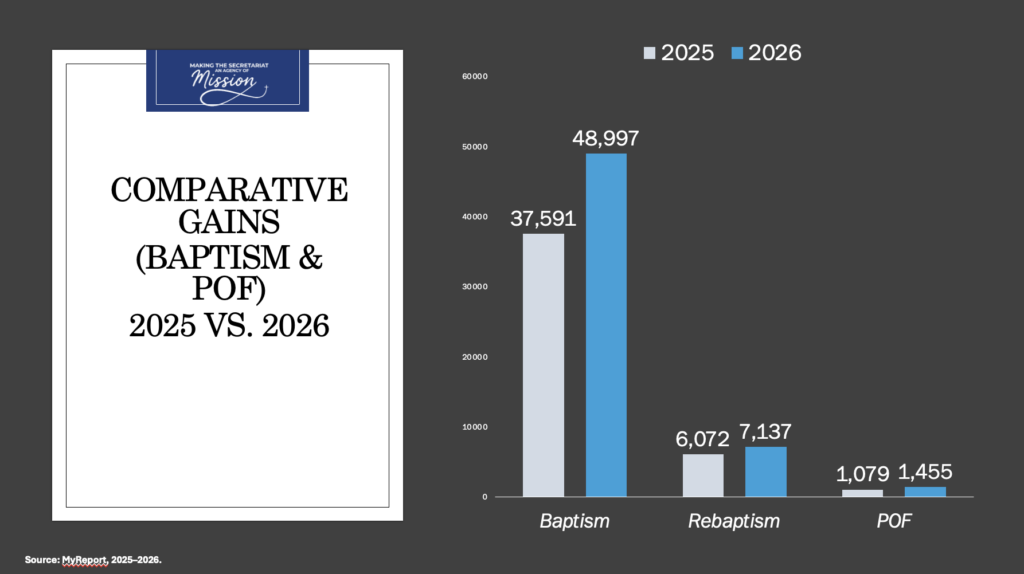
Janelle Scantlebury-Smith, IAD associate secretary, presented statistics comparing the third quarters of 2025 and 2026, highlighting evangelistic gains alongside challenges in membership retention.
Baptisms increased from 37,591 to 48,997, while re-baptisms rose from 6,072 to 7,137. Professions of faith also increased, from 1,079 to 1,455. Together, the three categories represented an increase of nearly 29 percent in accessions, from approximately 44,700 to 57,600.
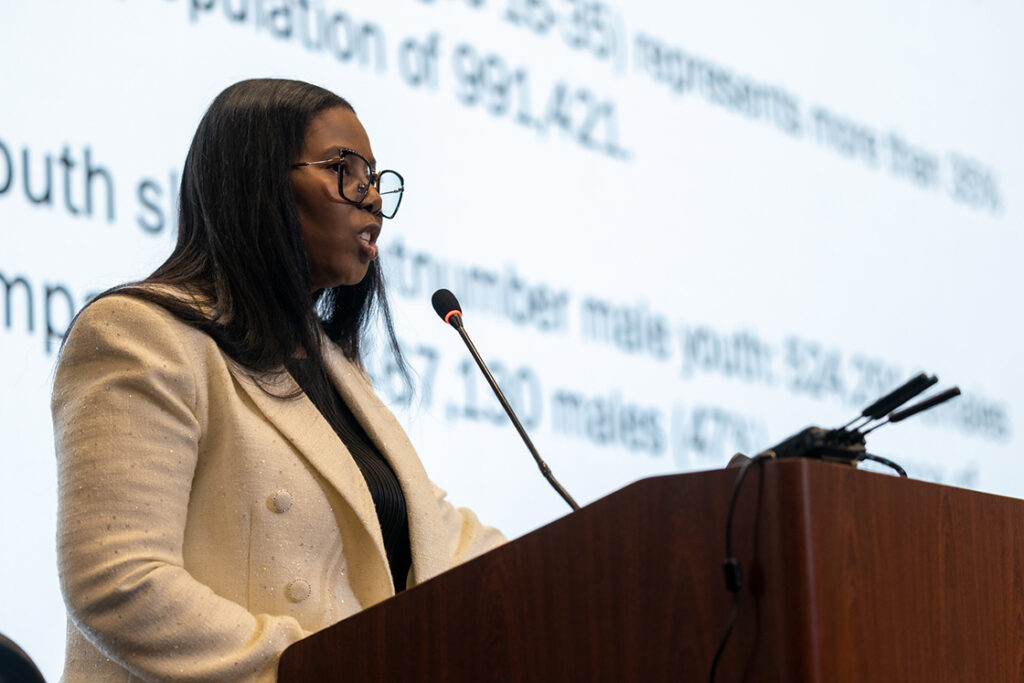
“If accessions are increasing, why are we simultaneously seeing an overall decline in recorded membership?” Scantlebury-Smith asked.
She reported that membership losses and removals decreased by 55 percent, from 82,157 to 36,768, but cautioned that the reduction largely reflected fewer administrative adjustments rather than necessarily improved retention.
The figures, she said, should prompt administrators to examine not only how many people are joining the church, but how effectively it is caring for those already on its membership rolls. As of the third quarter of 2026, the division had a recorded membership of 3,714,687.
Young people ages 16 to 35 account for more than 35 percent of the IAD’s recorded membership, according to the data.
The report identified 991,421 members in that age group, but only 169,894, approximately 17 percent, were classified as attending church regularly.
The remaining 821,527, or 83 percent, were recorded in other attendance categories. Scantlebury-Smith cautioned that the figures do not necessarily indicate that all are inactive, since some may attend elsewhere or have membership classifications awaiting updates.
She called for a careful review to establish their status and identify opportunities for pastoral care.
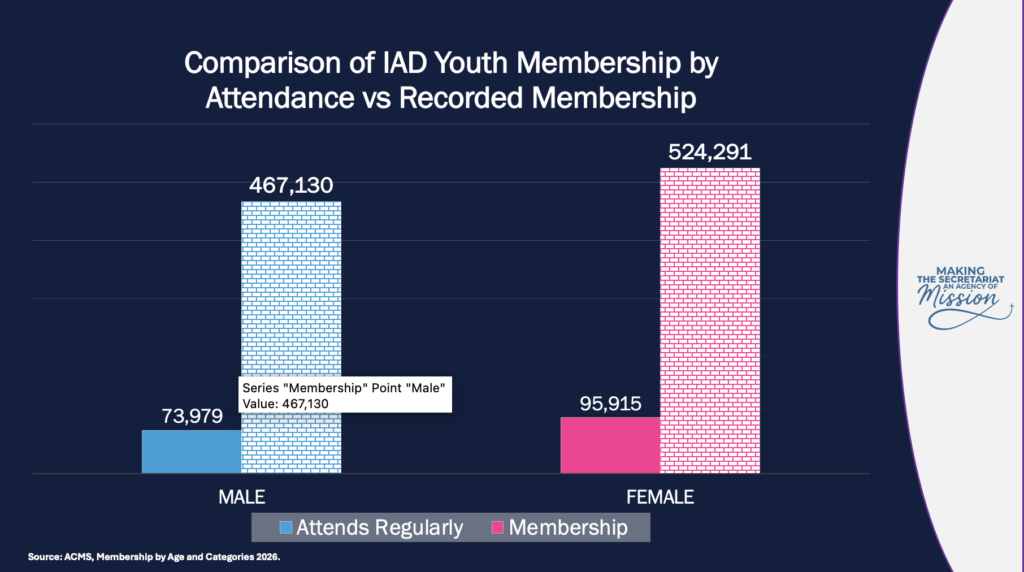
“Are they engaged? Are we discipling them? And are we mobilizing them for mission?” she asked.
Strengthening Membership Care and Accountability
IAD Undersecretary Álvaro Niño reported progress in the General Membership Review (GER), an initiative designed to identify members who have become disconnected from their congregations and provide opportunities for restoration.
Niño reported a 68.6 percent increase in member classifications compared with the previous year, emphasizing that the review should serve as a strategy for pastoral care rather than simply correcting membership records.
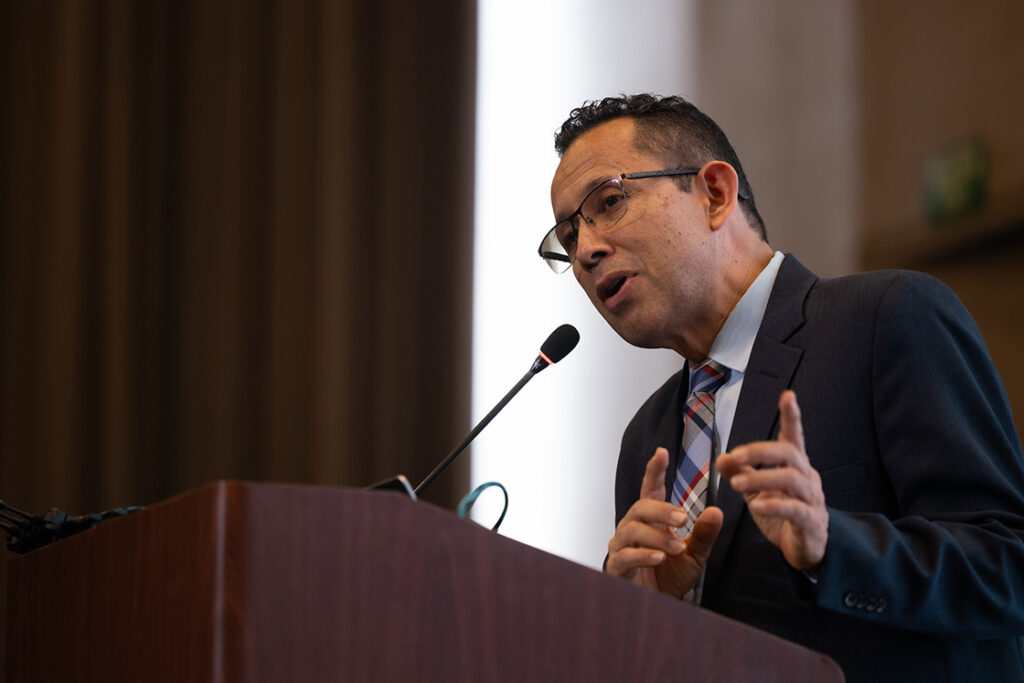
As of September 2026, the Adventist Church Management System (ACMS) contained approximately 3.5 million member records, with 86.7 percent of congregations registering activity in the system, underscoring the need for continued training and more complete reporting.
The report also noted progress on the Encyclopedia of Seventh-day Adventists, with 380 of the 461 documents assigned to the division completed.
Mission Initiatives Engage Young Volunteers
Samuel Telemaque, IAD Adventist Mission director, highlighted cross-cultural initiatives to reach communities with limited Adventist presence while engaging young adults in missionary service.
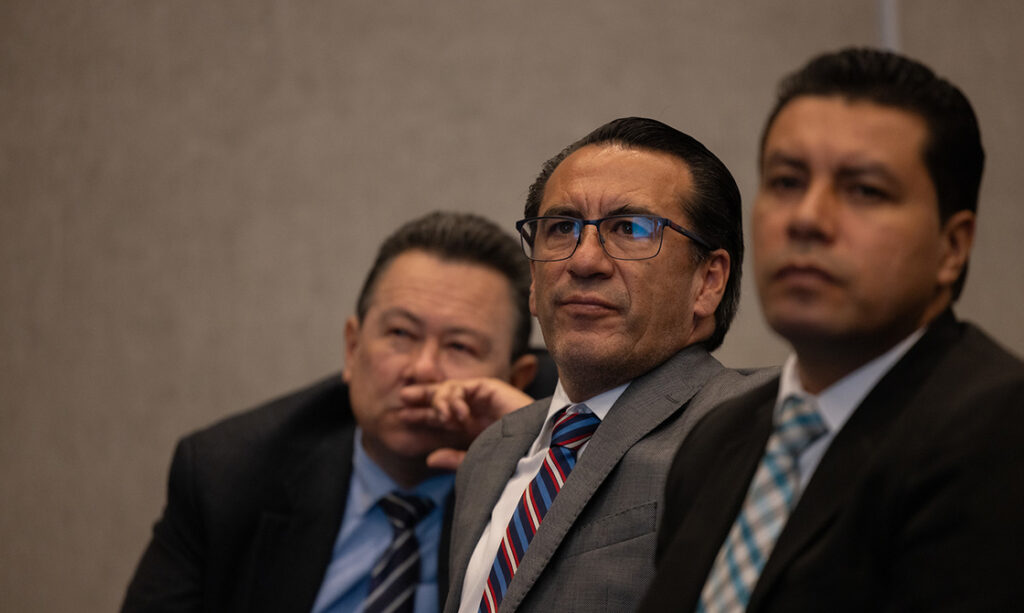
Telemaque reported that 75 young volunteers from 14 unions established 10 congregations during a 10-day mission initiative in French Guiana, following six months of preparation.
“52 souls were baptized, and the new churches are continuing to add new members,” he said.
He added that 40 volunteers had since begun planting churches among difficult-to-reach populations, underscoring the initiative’s impact on youth engagement.
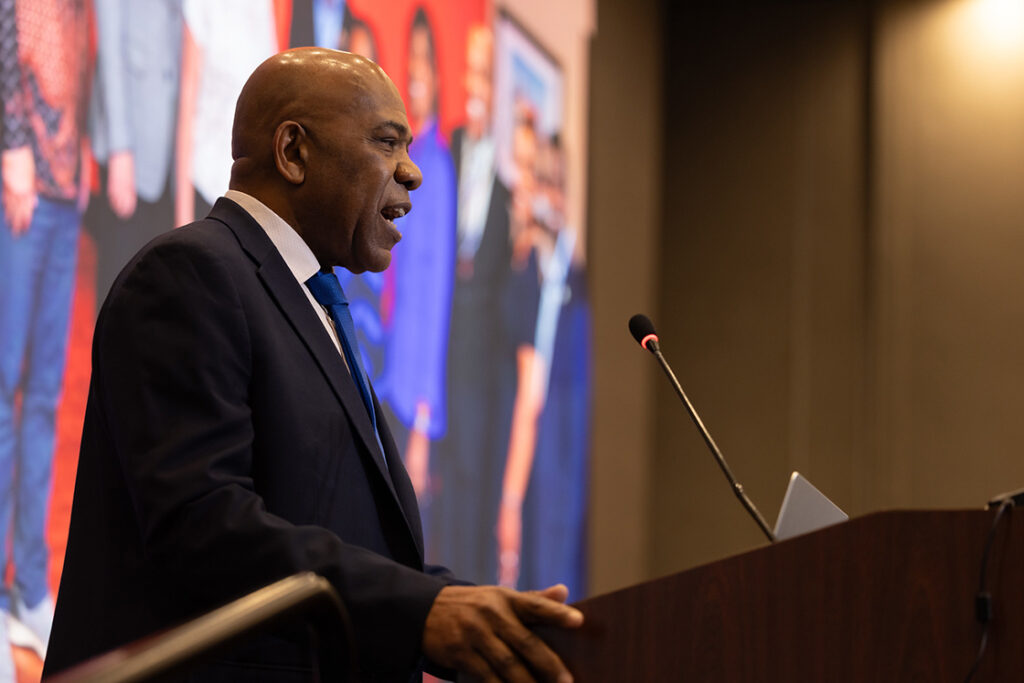
He also highlighted partnerships for intercultural mission training and expanded volunteer opportunities across the division.
A Strategic Direction for 2027
Concluding the report, Caporal outlined the Secretariat’s priorities for the remainder of the 2025–2030 quinquennium, including missionary mobilization, secretarial training, church planting, discipleship, membership review and digital transformation.

Caporal also called for full ACMS integration across all 25 unions and stronger coordination between administrative work and evangelism.
He emphasized that membership reviews should focus on identifying, visiting and reclaiming disconnected members rather than simply removing names from church records.
Leaders Urge Youth Engagement and Pastoral Care
Following the report, executive committee members raised concerns about youth engagement and the need for stronger pastoral care.
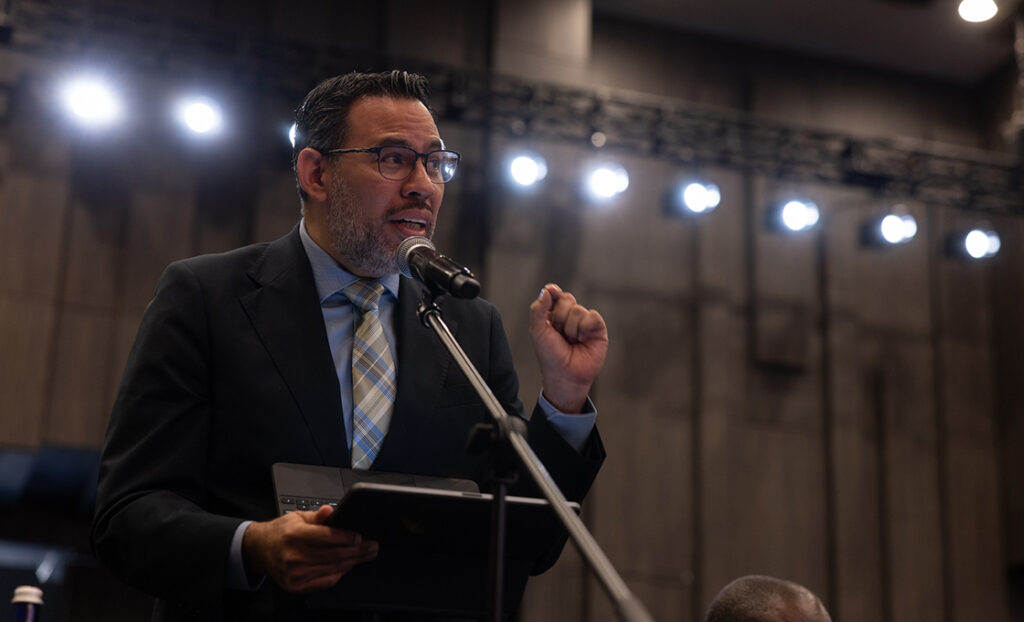
He expressed concern about young people losing their connection with local congregations after transitioning from Pathfinder clubs to university, particularly those attending non-Adventist institutions.
Torreblanca called for greater investment in Public Campus Ministries (PCM) and more intentional support during that transition.
“Are we being relevant to the youth?” he asked. “The world is moving very fast.” He urged leaders to respond with more than programs. “We need answers. And we need a commitment.”
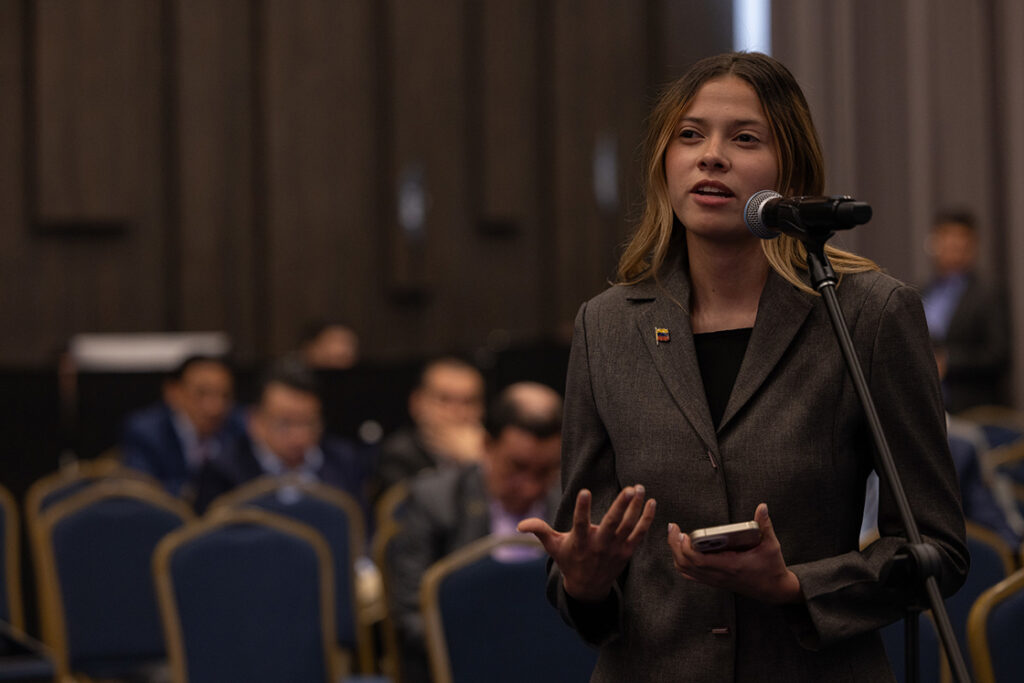
IAD President Abner De los Santos acknowledged the challenges while emphasizing that many young people remain actively involved in church life.
“We have to walk together with them,” he said, calling for sustained support.
General Conference Associate Secretary Gerson Santos acknowledged concerns over youth disengagement but pointed to increased baptisms and rebaptisms as encouraging signs of evangelistic growth. He also commended the Secretariat’s efforts to strengthen professionalism through training and evaluations, emphasizing the importance of accurate records in providing pastoral care.
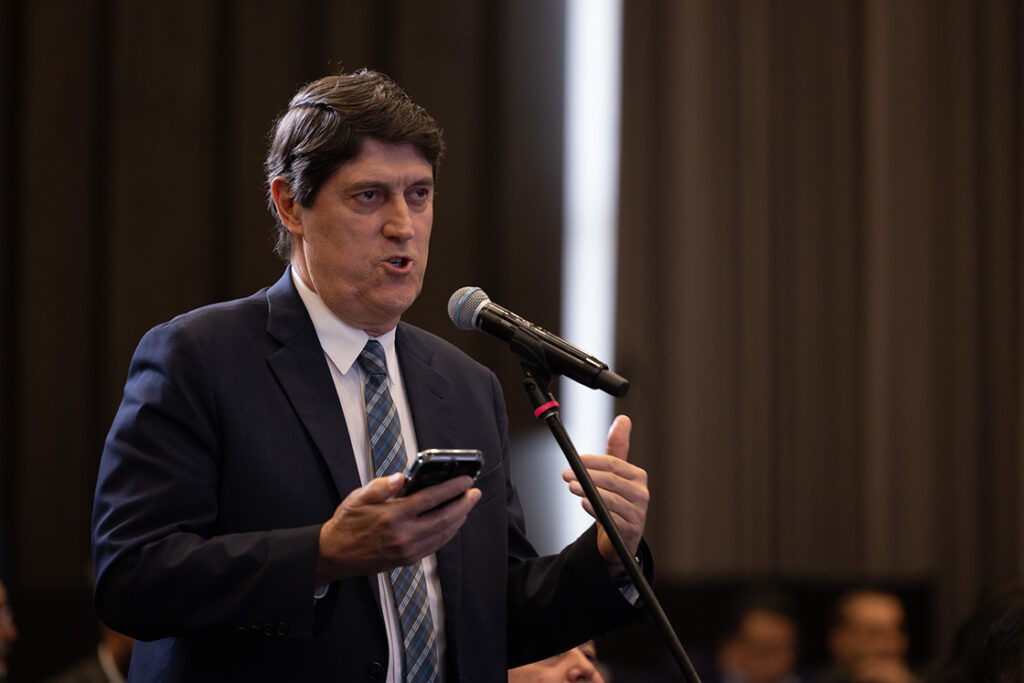
He also called for reconciling discrepancies between ACMS data and official statistical reports to improve accuracy and member care.
Echoing that concern, IAD Ministerial Secretary Josney Rodríguez cautioned that an abundance of church programs and events can divert attention from nurturing members and supporting their spiritual growth.
“We need to continue remembering that we are pastors,” Rodríguez said, urging leaders to prioritize personal attention and spiritual care over activities and numerical growth.
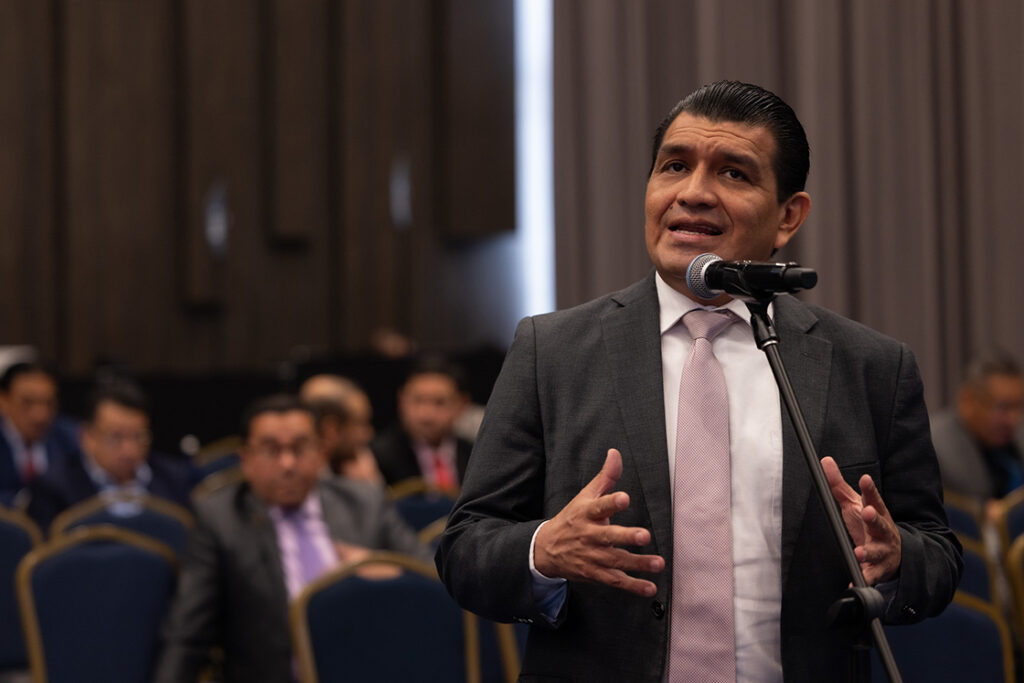
He cited a recent Pathfinder camporee in Chiapas that resulted in approximately 1,000 baptisms, with young people and their counselors actively involved in bringing candidates to Christ. Bouchot emphasized that youth gatherings should celebrate ongoing missionary efforts rather than serve as isolated events.
Luis Aguillón, executive secretary of the El Salvador Union, recommended including longer-term retention measurements in future reports, while IAD Stewardship Director Roberto Herrera emphasized strengthening local congregations to nurture members amid continued church growth.
IAD Stewardship Director Roberto Herrera, , likewise emphasized strengthening local congregations as places where members can develop spiritually, noting that rapid church growth brings an equally important responsibility to nurture those who join.
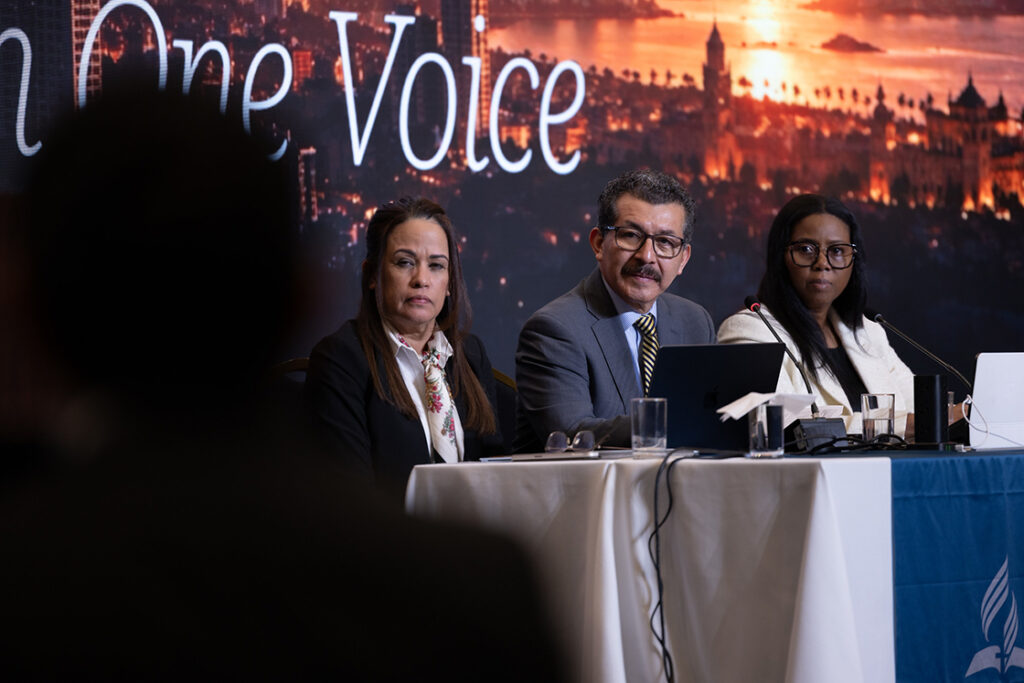
The executive committee voted to formally accept the Secretariat’s report.
Related news
 From the World Church
GC Associate Treasurer Tim Aka Dies
He was a thought leader at the intersection of finances and spirituality
 From the Headquarters
‘The Mission We Lead Must Be the Mission We Live,’ Adventist Leader Says
Robert Osei-Bonsu urges Inter-American leaders to personally embrace evangelism, discipleship and service.
 From the World Church
Is It Possible to Get Rid of a Disease?
Adventist lifestyle physician shares tips to stop and even reverse some chronic conditions.