Presenter Shares a Simple Secret to Connect With Secular Populations
At church-planting summit, Johann De Dier calls “to be present” in order to reach out.
June 11, 2026 | Port of Spain, Trinidad and Tobago | Marcos Paseggi, for Inter-American Division and Adventist Review
Getting to know secular people before ministering to them is essential if Seventh-day Adventists think of reaching them with a message of healing and hope in something better. It was the emphasis of a May 29 presentation by Johann De Dier, a lay person with a corporate background who recently became an Adventist pastor in Panama City, Panama.
“We need to get to know them, to understand them” De Dier said. “You can’t just go to them and start talking about Jesus and give them a Bible study. You have to serve them first.”
During the Intercultural Mission Church Planting Summit in Port of Spain, Trinidad and Tobago, De Dier discussed the secular mindset and how he’s implementing some of those ideas and methods in a new counseling center in an urban setting.
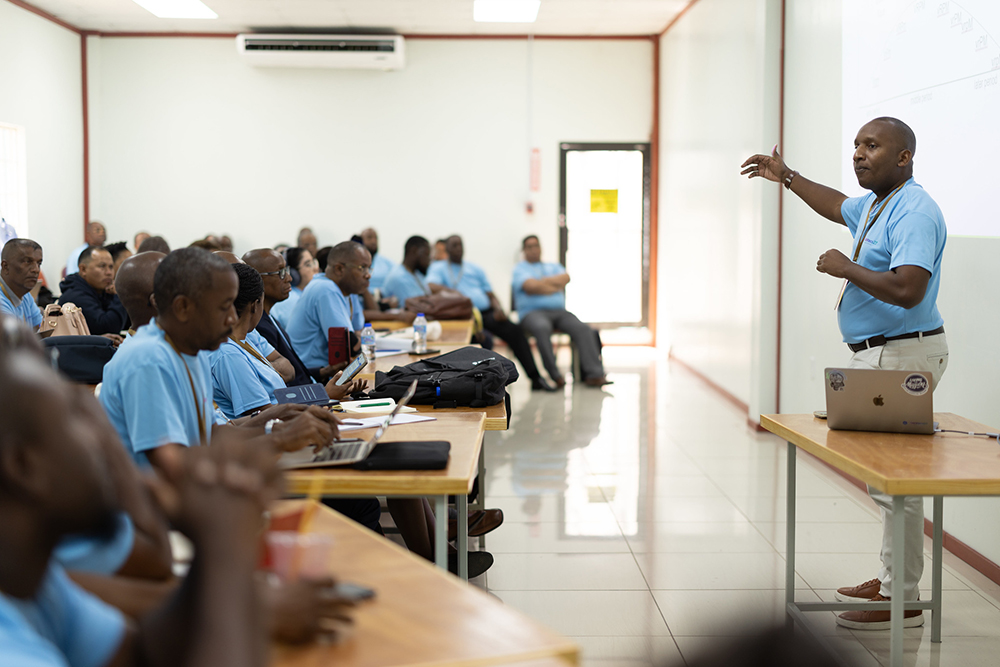
During the Intercultural Mission Church Planting Summit in Port of Spain, Trinidad and Tobago, May 29, Johann De Dier discussed what Seventh-day Adventists can do to connect with secular populations. [Photo: Curtis Henry/IAD]
De Dier explained that one of the barriers we have unfortunately created when connecting with secular people is assumptions. “Assumptions about secular people kill effective mission,” he emphasized.
One assumption is that they don’t care about spiritual things, or that “we need to fix” secular people. De Dier explained that it’s not the case. “They must distrust institutions, but they are spiritually curious. They are willing to sit down and listen about your faith experience.”
De Dier listed other characteristics of secular people, who, he emphasized, are “persuaded by relevance, authenticity, and relationships instead of labels.” At the same time, secular people are often looking for a place to belong, he said. “They value belonging over beliefs—being part of a club or joint activity—. And they are hungry for intimacy.”
Wise and Non-Judgmental in Our Approach
De Dier quoted Adventist Church co-founder Ellen G. White, who in Principles for Christian Leaders wrote, “The people of every country have their own peculiar, distinctive characteristics, and it is necessary that men should be wise in order that they may know how to adapt themselves to the peculiar ideas of the people, and so introduce the truth that they may do them good.”1
He explained, “There’s nothing wrong with people having other ideas—that’s not the problem. But we need to be wise in how we approach them.”
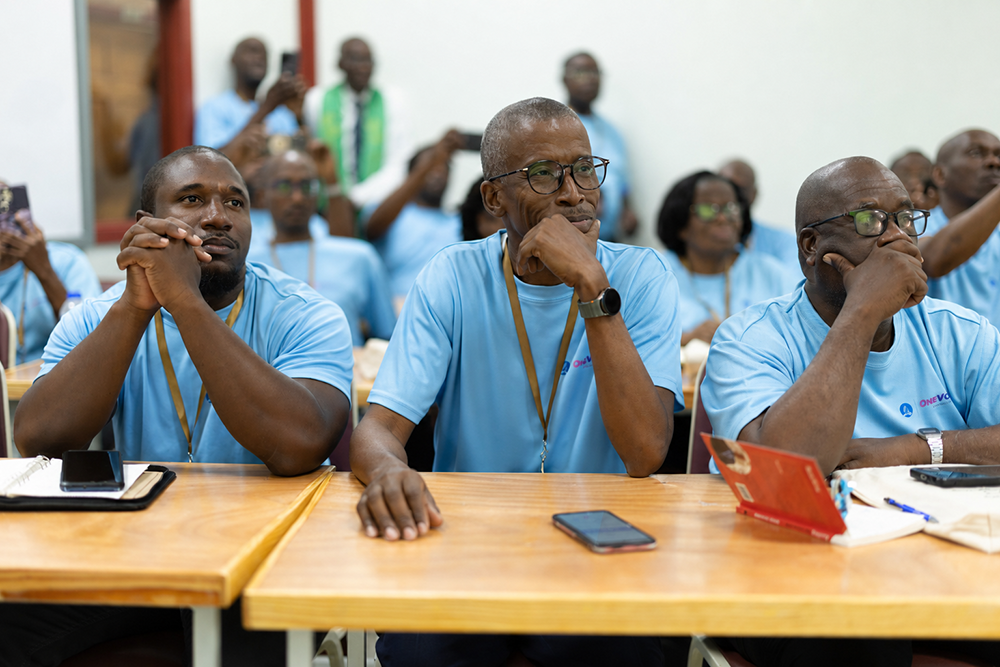
Attendees listen as Johann De Dier presents on understanding secular mindsets and building relationships before sharing the gospel during the Intercultural Mission Church Planting Summit in Port of Spain, Trinidad and Tobago, on May 29. [Photo: Curtis Henry/IAD]
In that regard, “it’s not about watering down our beliefs and doctrines, but in how to adapt our approach,” De Dier said, and asked, “How can we connect with [secular people] in a contextualized way that can make them fall in love with Jesus?”
Developing Cultural Intelligence
Next, De Dier referred to the current discussion on the importance of CQ, or cultural intelligence. “Cultural intelligence can be more relevant when connecting with secular people, because it helps us to move past what we can or want to do to ask, ‘what is it that they need?’” he said.
De Dier briefly explained the various aspects of CQ, including cognitive—what do I know about their culture?, and physical—how do I adapt my behavior based on what I know about their culture. But then there’s the emotional aspect, he said, which is to discuss how I manage discomfort, confusion, and differences without withdrawing or judging.
“Having cultural intelligence gives way to a very, very important aspect, which is cultural observation,” De Dier explained. He quoted Paul’s example in Acts 17, when he looked around to find ways to connect with the people there. “I imagine Paul walking around and making mental notes,” De Dier shared. “He doesn’t go to Athens and start preaching without observing. He observes, and then he reaches based on what he has observed.”
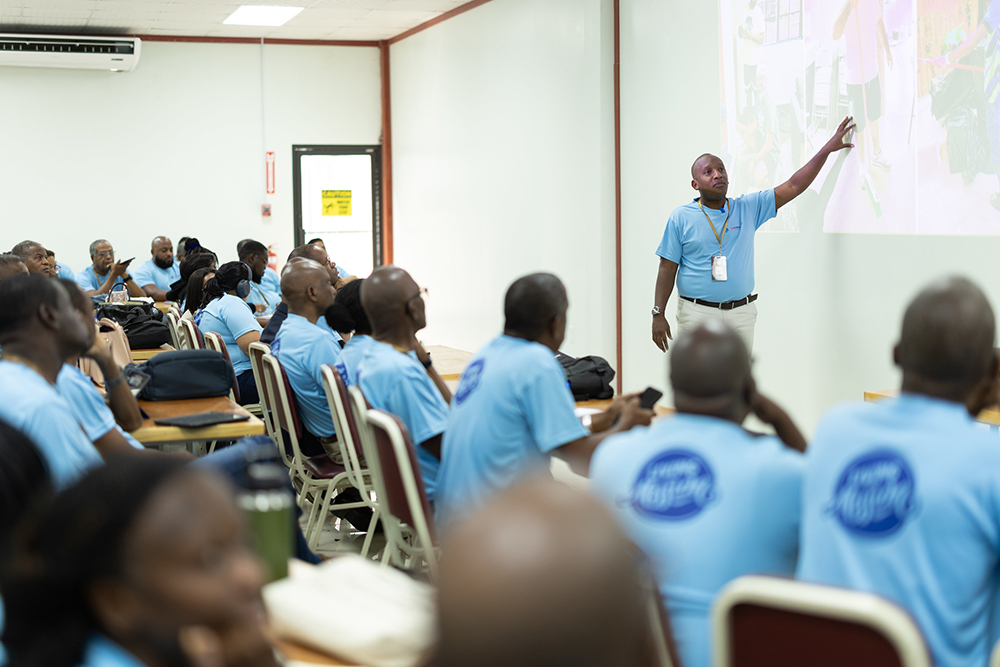
“You can’t just go to secular people and start talking about Jesus and give them a Bible study. You have to serve them first,” Johann De Dier said in his May 29 presentation. [Photo: Curtis Henry/IAD]
How We Can Do It
According to De Dier, there are two simple methods to increase our awareness and observation skills. He discussed the first one, which, he said, is just “being present and paying attention.” He explained, “Sit down and listen. What are people reacting to? Go to the supermarket. What are people talking about? Go to the barber. Look for patterns. Observe how people interact with each other… What are they suffering from? What are they pushing through social media? What are the values of their hearts? What are their needs?”
This is the essence of incarnational ministry, De Dier said, what Jesus did when he moved from heaven to this earth to seek and save the lost.
How It Works in Practice
De Dier then shared about the ReVIVE family counseling and center of influence—an urban missional church—in an urban neighborhood in Panama City. Launched in 2022, the initiative came on the heels of a digital family ministry with inspiring content and life advice in the form of a podcast and short videos that De Dier and his wife had started in 2019.
“We noticed that young people, Millennials, were having a lot of issues in their marriages,” De Dier shared. And then people began to contact them on social media. “They would tell us the same thing, ‘Do you offer counseling? Do you do therapy?’”
He shared how they began to wonder whether there was a church—Adventist or otherwise—which was providing those services people so desperately needed. “If these people need help, where do they go?” the De Diers wondered.
It was the genesis of ReVIVE, a family counseling center in Panama City to help urban dwellers who struggle in their marriages and families. As the rationale for the initiative, De Dier quoted White again, who wrote, “We must do more than we have done to reach the people of our cities. We are not to erect large buildings in these cities, but over and over again the light has been given that plants should be made in every city.”2
De Dier was happy to report that they have already offered more than 400 hours of counseling. “And how did it all start?” he asked. “By observing, watching…. That led to a beautiful space with two offices… and a church started in that space. Just because we observed and decided to be present.”
1 Principles for Christian Leaders (Nampa, Id.: Pacific Press Publ. Assn., 2018), p. 226.
2 Manuscript Releases, vol. 4 (Ellen G. White Estate, 1990), p. 283.