
A Church Where Children are Safe
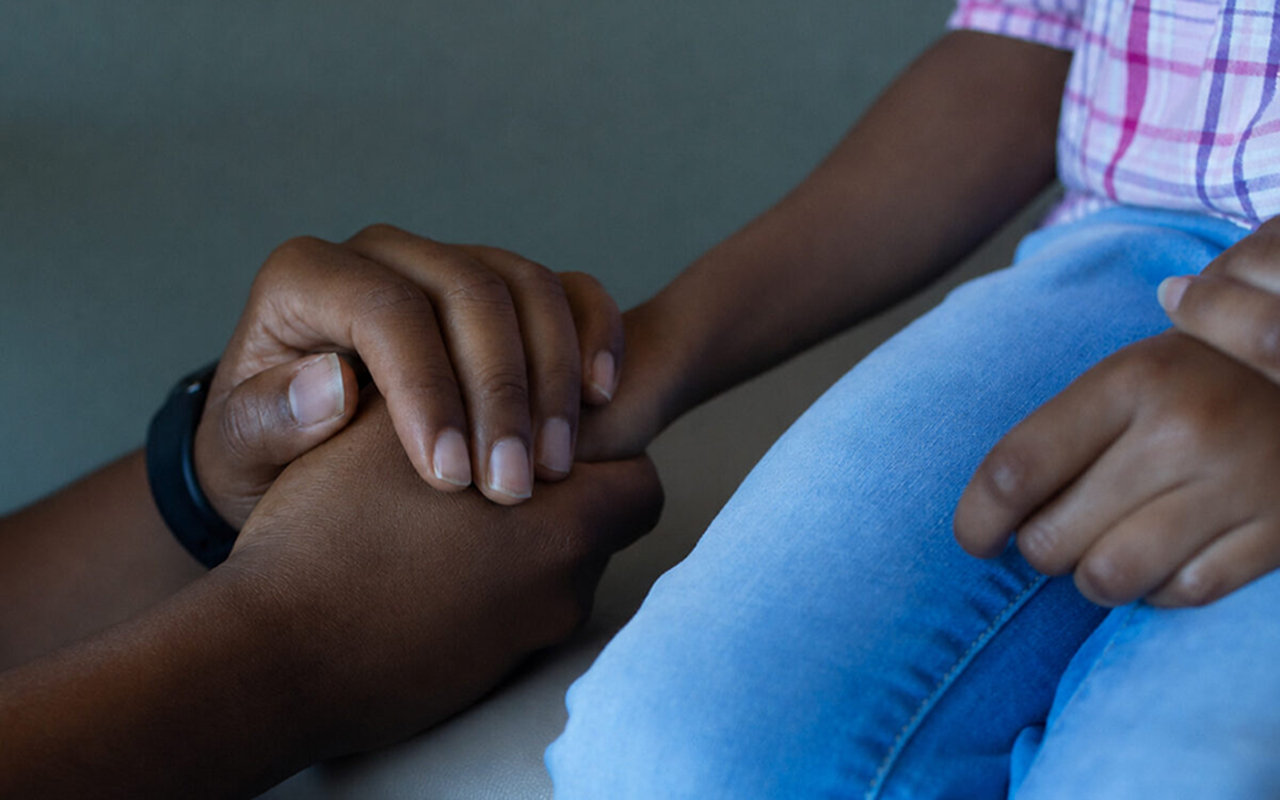
Instances of abuse happen in the Adventist Church. We need to protect better.
August 10, 2026 | Silver Spring, Maryland, United States | Wilona Karimabadi, Adventist Risk Management
“That doesn’t happen here.”
“This is the one place where my kids can run around free.”
“There have never been problems like that in our church.”
If you, like many Seventh-day Adventists, have regarded your churches, schools, and youth activities as the only safe spaces left in this world, you may need to reevaluate that notion.
If our places of worship, fellowship, and education were always bastions of Christlike behavior, we could say that. But the truth is, incidents of sexual abuse of children and adults have occurred, and still do, in some of our centers of faith and worship. The short story is this: Seventh-day Adventists as a faith group are not immune. But together we can change things.
During the last General Conference Session, many visitors to Adventist Risk Management’s (ARM) exhibit hall booth exclaimed with surprise: “I had no idea our church has an insurance and risk management company.” Born of a need to provide insurance solutions for a rapidly growing church, ARM’s service has expanded worldwide. ARM’s work also focuses extensively on preventing problems before they happen. In our business, that is called “risk mitigation.”
What are we focusing on when speaking specifically about child protection? At a foundational level, it is about ensuring that the children within our churches, in kids’ ministries, and on our school campuses are protected from all harm. These efforts are centered on the prevention of bullying and violence, and spiritual, mental, physical, and sexual abuse. It has become increasingly more crucial, then, for all adults working with children not only to be background checked but also to receive training in abuse prevention and spotting the signs of it, as well as the necessity of believing victims and mandatory reporting.
Start With Home Training
The safety of our children starts at home. From the time your children can talk, speak openly about their bodies and their private parts. Use the correct anatomical names as often as possible, as this helps reduce stigma around naming these areas. Why is this important? Because in the event your child needs to tell you that something wrong has happened, they should have the confidence to communicate clearly what has occurred and where.
The concept of body autonomy should be instilled in children from their earliest days. This term means that a child understands that their body belongs to them, that no one has the right to touch it without consent, and that protecting themselves is their right. For Sabbath School, Adventurer and Pathfinder clubs, music leaders, and teachers in the classroom, communicating care to the kids in your care does not need to involve physical touch. This is something that must be taught at home. Grownups should ask children if it’s OK to give them a hug, fist bump, or high five as a greeting or expression of happiness and encouragement, and to grant that—if consent is given—in the presence of others, never alone with a child.
Parents can underscore this training with conversations that build up a child’s knowledge of their treasured place in the heart of Christ. Remind them frequently of how they are made in the image of their Creator and given free will to think and speak up for themselves. Teach them that their bodies are nothing to be ashamed of; that they are special, private, and worthy of the best care. And most important, create a culture of openness and honesty that allows your kids to feel safe to speak freely without fear of negative repercussions.
Safe and Unsafe Touch
For a long time the phrase “good touch and bad touch” was used to describe physical contact with children as appropriate or inappropriate. These terms can, however, be confusing. As adults, we know there are many sensations of the human body that feel good—even for children. Thus, if a child is being touched inappropriately, yet may experience sensations that are physically not negative, it can be confusing for that child to report that something bad has occurred. Predators know this and use that deception to convince their victims that something that feels good isn’t wrong. The better choice of terminology, then, is to teach children the concepts of safe touch versus unsafe touch as they relate to personal body zones.
Personal body zones are the areas of the mouth, chest, between the legs, and buttocks that children should know are off-limits to others—grownups and other kids alike. It is appropriate, of course, to teach children that these zones are OK only for medical professionals to touch in the case of emergency interventions, such as administering CPR or first aid. In all other cases, it is not OK.
Screen All Employees and Volunteers
People who choose to work with children are very special, often possessing specific spiritual gifts that make them a blessing to the kids in their care. But on the flip side there are predators who seek out the very spaces that many parents think are safe for their children. ARM strongly recommends the use of thorough background checks for all persons working and volunteering in a church or school setting, especially when they will encounter children.
In many conferences in the North American Division, for example, Sterling Volunteers is the preferred organization to accomplish this. But when designing a thorough screening program for volunteers and/or employees, be sure to know all your options. In the state of California, for example, Sterling Volunteers does not meet specific state law requirements. So to comply with the law, the conference uses another company, LiveScan Fingerprinting, for all volunteer and employee background screening. There, volunteers and employees must undergo LiveScan background checks for each organization they work with. That means a church volunteer who becomes a paid employee of the local Adventist school in the same community must still undergo screening, even if they have done so in the past in the same area. Within the Northern California Conference there is also strong administrative support for these stringent procedures and emphasis placed on the importance of compliance. When it comes to children, there are no processes too complex if it means keeping them safe.
Proper Supervision Matters
In addition to background checks for anyone working with children, there are very clear rules that should be followed when it comes to supervision. ARM is an advocate of the “two-person rule,” which is used in the North American Division’s Working Policy and the official Church Manual. Account executive Simona Cardwell, who regularly presents on child protection, explains the concept simply: “Two adults must always be present at all times when working with children, but the ratio of adults to children must certainly increase depending on the activity.” Simple but effective.
On Pathfinder campouts, for example, stringent rules for who stays in a tent and how those tents are supervised need to be clearly articulated. A good rule to follow is to have adults in separate “counselor” tents, with children sleeping in nearby spaces. “It’s important to have clear protocols,” says Cardwell. “These should include rules about tent access and the use of something simple, such as whistles, to report concerns. While abuse prevention is not possible 100 percent, having robust safety plans and reporting procedures can significantly reduce risks.”
Hard Conversations and Proactive Protection
In addition to the conversations about bodies, private parts, and human sexuality, there is another talk that parents and guardians must have with their children: the discussion about safety in church, because the sinful nature of the world does not exempt our places of worship and the people in them from bad things happening.
Adults must not let their guard down when it comes to proper supervision of children on a church campus, or by failing to ask more comprehensive background questions of people who may be driving children to activities or supervising campouts, etc. Nicole Broushet, pastor for children’s ministries at College View church on the campus of Union Adventist University in Nebraska, United States, incorporates this message into her communications with parents, guardians, and general church membership.
Broushet has formed a child protection advisory group to address gaps in communication and the implementation of child safety measures among church staff. “This group, which includes passionate parents, focuses on implementing decisions and creating a broader communication system around child protection,” she says. The church has also embarked on a series called “Growing Well,” which fosters safer environments for kids, both physically and emotionally. The advisory group is also tasked with quarterly conversations to keep the dialogue about child safety and protection going.
Child Safety Is Part of the Mission
With the Seventh-day Adventist Church being a worldwide movement, there must be room for discussions about child safety in culturally sensitive contexts. But regardless of how the subject is approached, conversations and action plans to protect children must occur consistently. World Church Children’s Ministries director Orathai Chureson recalls her time in a division in which a study highlighted that 35 percent of children surveyed reported previous abuse. This horrifying statistic sheds light on the need for all world fields within the church to overcome cultural norms where, as she says, “[parents] can either overly restrict child interactions or permit inappropriate behavior.” There is a great need for a balanced but “child-safety first” approach, in which empowerment and advocacy for children are priorities for the whole church. Chureson also emphasizes the need for clear documentation, training, and support for children and parents, along with an abundance of biblical and emotional care for victims.
As we work for the mission of this movement and invite people to accept the gospel, the reality of the world we live in can’t be ignored. When individuals begin to learn about the church and what it stands for, they must see a movement that stops at nothing to protect the people in it—especially children. When a church or school has a record on file that shows a failure to protect children (remember, the internet is forever), our name and mission are tarnished. As children are near and dear to the heart of Jesus, we must exemplify Him in every facet of ministry to them. Because in these last days we can’t afford not to.
Wilona Karimabadi is the manager of Communication and Resources for Adventist Risk Management, Inc.
Related news
 From the World Church
Church Construction Can Have a Spiritual Purpose, Adventist Leader Says
Union president provides the biblical rationale for building places of worship.
From the World Church
Church Construction Can Have a Spiritual Purpose, Adventist Leader Says
Union president provides the biblical rationale for building places of worship.
 From the Headquarters
World Pathfinder Day
The following message is addressed to the Seventh-day Adventist Church in Inter-America by Abner De los Santos, president of the Inter-American Division. — IAD…
From the Headquarters
World Pathfinder Day
The following message is addressed to the Seventh-day Adventist Church in Inter-America by Abner De los Santos, president of the Inter-American Division. — IAD…
 From the Field
Adventist Students Across Inter-America Set for Bible Contest
Finalists from across Inter-America will compete online Sept. 22, testing their knowledge of Genesis and Ellen G. White’s Patriarchs and Prophets. September 16, 2026…
From the Field
Adventist Students Across Inter-America Set for Bible Contest
Finalists from across Inter-America will compete online Sept. 22, testing their knowledge of Genesis and Ellen G. White’s Patriarchs and Prophets. September 16, 2026…